Braces have become a cornerstone of orthodontics, offering a solution for misaligned teeth and jaws. These days, orthodontic treatments aren’t just for teens—of the 4 million Americans who currently wear braces, 25% are adults. At The Mini Dental Implant Center of America in Cleveland, TN, we provide various options that cater to each patient’s unique needs, regardless of age.
Understanding Braces and Their Importance
Braces are dental devices that correct issues like crowded or crooked teeth, over and underbites, gapped teeth, and misaligned jaws. Their primary goal is not just cosmetic improvement but also enhancing oral health. Proper alignment of teeth and jaws is crucial for speech, chewing, and long-term dental health.
Braces apply continuous, mild pressure to slowly guide teeth into their proper positions. This process involves brackets attached to each tooth that are connected by a wire. As the teeth shift, the surrounding bone adapts to the exerted pressure. The exact mechanics of how the teeth move varies based on the type of system used.Braces in Cleveland, TN Center for Cosmetic Dentistry
Types of Braces
Today, there are various braces options available, chosen based on individual needs and preferences:
Traditional metal: When you picture braces, you likely imagine this type. Traditional metal braces are known for their durability, effectiveness, and precision. Metal brackets are cemented onto each tooth, and a stainless steel archwire slowly moves the teeth. We provide a selection of colored bands, allowing you to minimize the visibility of your braces or showcase your personality by choosing a more vibrant option.
Ceramic: These work like traditional braces but are made from a clear, transparent ceramic material, making them less noticeable. However, they are more costly, less durable, and more likely to stain.
Lingual: Attached to the back of the teeth, these brackets and wires are kept out of view. However, this system can be expensive and requires time to adapt to changes in eating and speaking.
Self-ligating: The brackets on these braces use clips instead of elastic bands to hold the wire in place. This system reduces the pressure exerted on the teeth and eliminates the need to change out rubber bands, which can reduce time spent in the dental chair.
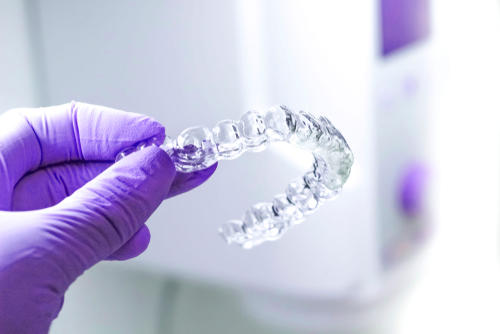
Clear aligners: Even though clear aligners like Invisalign don’t rely on a bracket and wire system, they are often called “invisible braces.” The treatment entails wearing custom transparent trays for a few weeks, progressing to the next series until the teeth are correctly repositioned.
Getting and Taking Care of Braces
Getting braces usually involves several stages, starting with a free consultation. Our experienced team of dentists will examine your teeth and discuss the best options for your situation. We’ll take X-rays and make impressions of your teeth to design your personalized treatment plan.
After fitting your brackets and wires, you’ll need regular follow-up appointments for adjustments. You may experience mild discomfort for a few days after getting your braces and right after adjustments. You can take acetaminophen (Tylenol®), but avoid nonsteroidal anti-inflammatory drugs (NSAIDs) like ibuprofen or Advil®. These contain prostaglandins, a hormone-like substance that impedes the tooth-moving process.
Living with braces requires certain adjustments, particularly in oral hygiene practices. Meticulous brushing and flossing are crucial as the metalwork can trap food particles and make it challenging to remove plaque. We recommend special flossing tools like floss picks, interdental brushes, or water flossers to help dislodge debris. It’s also essential to avoid hard or sticky foods that can cause damage, like hard, crunchy, chewy, or sticky foods and snacks. While you can chew gum with braces, you must choose a sugar-free variety with the ADA seal of approval.