
Thanksgiving Feast
CA$18.79
GREAT VALUE! A quarter of our famous Rotisserie Chicken served with stuffing, cranberry, dinner roll, our Signature Chalet Dipping Sauce, and your choice of side. PLUS, a slice of pie - we recommend our Pumpkin Pie!

Explore offerings from Swiss Chalet on 75 Kelsey Drive in St. John's, with popular thanksgiving feast - limited time!, daily deals, starters, and rotisserie chicken available at this location.
GREAT VALUE! A quarter of our famous Rotisserie Chicken served with stuffing, cranberry, dinner roll, our Signature Chalet Dipping Sauce, and your choice of side. PLUS, a slice of pie - we recommend our Pumpkin Pie!

GREAT VALUE! A breast of our famous Rotisserie Chicken served with stuffing, cranberry, dinner roll, our Signature Chalet Dipping Sauce, and your choice of side. PLUS, a slice of pie - we recommend our Pumpkin Pie!
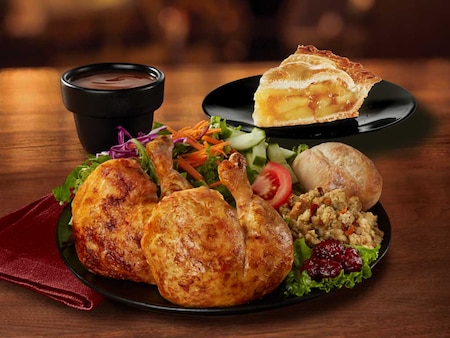
GREAT VALUE! Two legs of our famous Rotisserie Chicken served with stuffing, cranberry, dinner roll, our Signature Chalet Dipping Sauce, and your choice of side. PLUS, a slice of pie - we recommend our Pumpkin Pie!
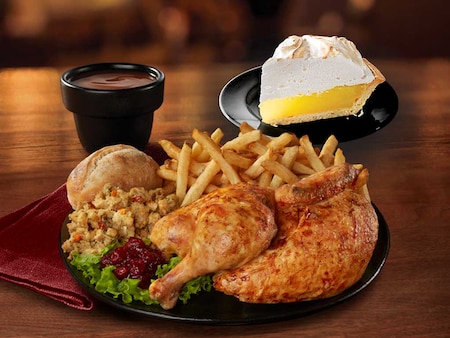
GREAT VALUE! A half of our famous Rotisserie Chicken served with stuffing, cranberry, dinner roll, our Signature Chalet Dipping Sauce, and your choice of side. PLUS, a slice of pie - we recommend our Pumpkin Pie!

GREAT VALUE! A third rack of BBQ Back Ribs served with stuffing, cranberry, dinner roll, our Signature Chalet Dipping Sauce, and your choice of side. Plus, a slice of pie - we recommend our Pumpkin Pie!

GREAT VALUE! A half rack of BBQ Back Ribs served with stuffing, cranberry, dinner roll, our Signature Chalet Dipping Sauce, and your choice of side. Plus, a slice of pie - we recommend our Pumpkin Pie!
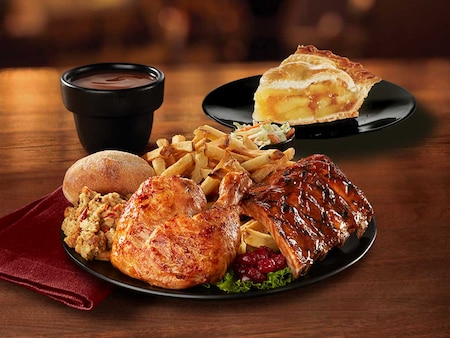
GREAT VALUE! A third rack of our BBQ Back Ribs & a Quarter Chicken served with stuffing, cranberry, dinner roll, our Signature Chalet Dipping Sauce, and your choice of side. PLUS, a slice of pie - we recommend our Pumpkin Pie!
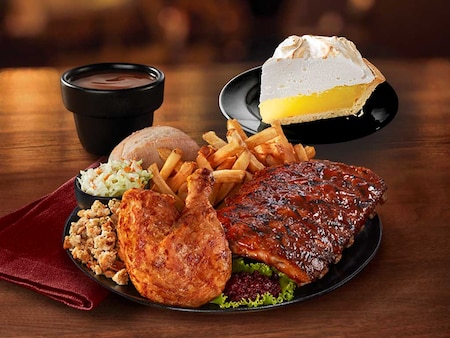
GREAT VALUE! A half rack of our BBQ Back Ribs & a Quarter Chicken served with stuffing, cranberry, dinner roll, our Signature Chalet Dipping Sauce, and your choice of side. PLUS, a slice of pie - we recommend our Pumpkin Pie!

A Thanksgiving favourite! A golden flaky crust and a delicious pumpkin filling, and dollop of whipped topping.
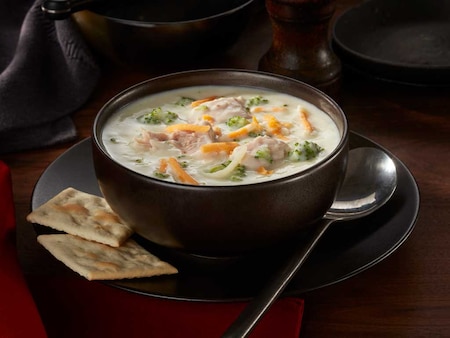
A bowl (12 oz) of rich and creamy soup, loaded with our tender broccoli, real cheddar cheese and our famous Rotisserie Chicken.
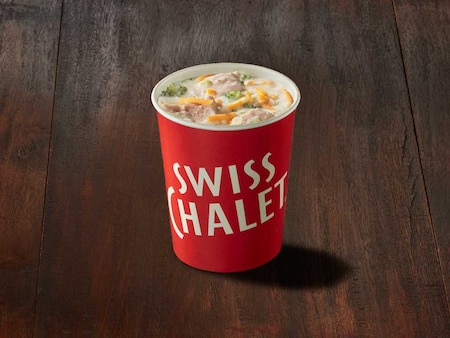
A family-size portion (32 oz) of rich and creamy soup, loaded with our tender broccoli, real cheddar cheese and our famous Rotisserie Chicken.
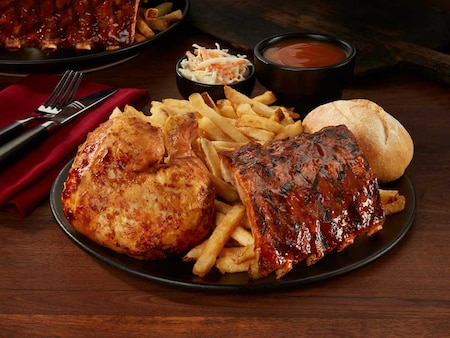
The best of both for only $19.99*! A quarter of our famous Rotisserie Chicken and a third rack of BBQ Back Ribs, basted in your choice of Smoky BBQ, or Honey Garlic sauce. Served with our Signature Chalet Dipping Sauce, creamy coleslaw, a dinner roll, and your choice of side. *$19.99 is the Dine-in and Takeout price. Delivery price of $21.99. Additional delivery fees will apply. Valid on Mondays only. Valid until December 31, 2026. White meat (-80 Cals) add $2.00 per entrée. Taxes, upgrades of sides, and beverages extra.
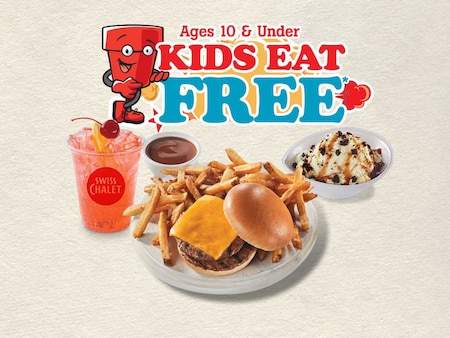
Receive a FREE* kids meal with the purchase of an adult entrée. Valid for Dine-in on Wednesdays only. *Valid until December 31, 2026. Taxes, upgrades of sides and beverages extra. NOT VALID IN COMBINATION WITH ANY OTHER OFFER OR PROMOTION. Valid at participating locations only, while supplies last. ®Registered Trademark of Recipe Unlimited Corporation.
A bowl (12 oz) of rich and creamy soup, loaded with our tender broccoli, real cheddar cheese and our famous Rotisserie Chicken.
A family-size portion (32 oz) of rich and creamy soup, loaded with our tender broccoli, real cheddar cheese and our famous Rotisserie Chicken.
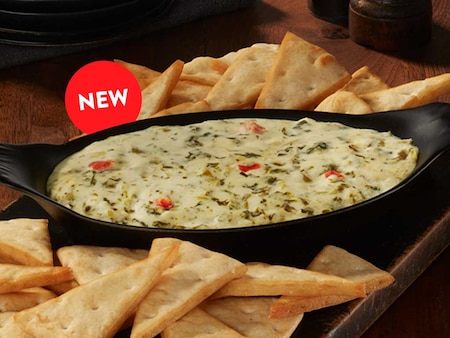
Perfect for sharing! A delicious creamy blend of four cheeses, spinach, and artichoke. Served warm with lots of pita for dipping.
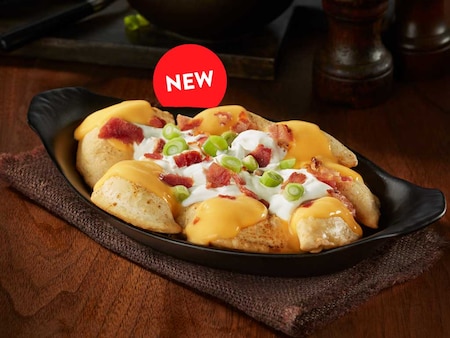
Golden and crispy perogies filled with cheese and potato then topped with sour cream, bacon, cheese sauce, and green onions.
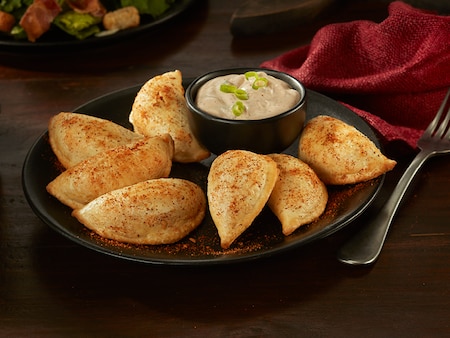
Golden and crispy perogies filled with cheese and potato, served with zesty cajun sauce for dipping. Or Make it Loaded by adding sour cream, bacon, cheese, and green onions for $1.50.
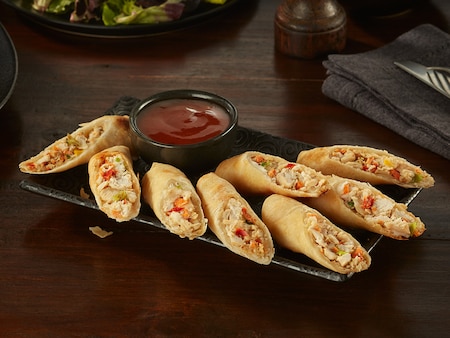
Four spring rolls, made in-house with our famous Rotisserie Chicken and bell peppers. Served with tangy plum sauce.
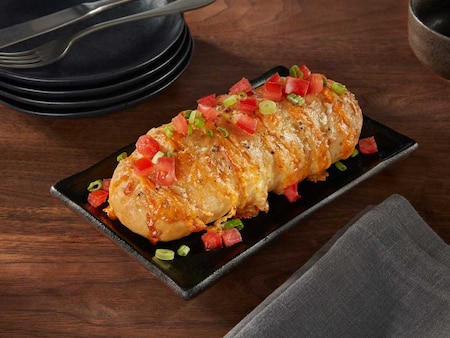
A warm oven-baked loaf stuffed with melted cheese, topped with green onions, tomatoes, and drizzled in a warm garlic sauce.
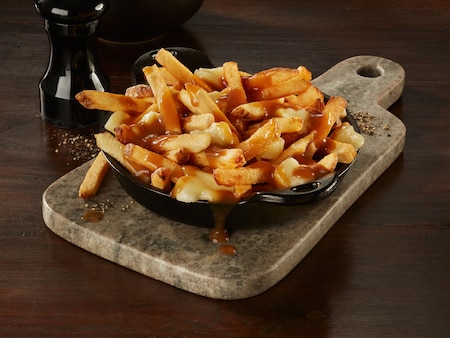
Fresh-cut fries piled high with cheese curds smothered in your choice of our homestyle gravy, or our Signature Chalet Sauce.
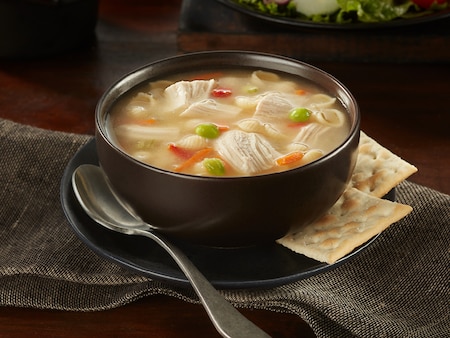
Made fresh daily with our famous Rotisserie Chicken, garden vegetables and tender noodles in a savoury chicken broth.
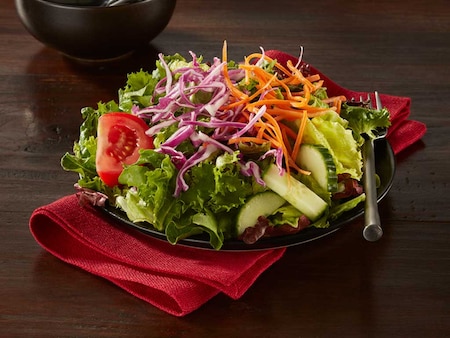
A medley of fresh mixed lettuce, tomatoes, carrots, red cabbage and cucumbers, with your choice of dressing.
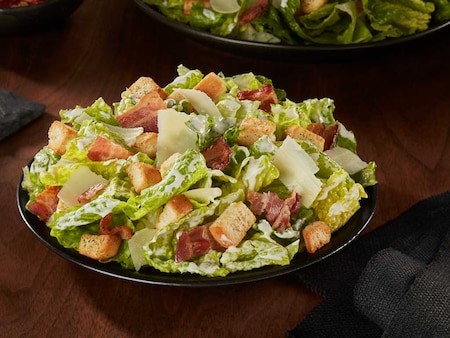
Fresh romaine lettuce tossed with our classic Caesar dressing and topped with crispy bacon, jumbo croutons, and shaved Parmesan.
GREAT VALUE! A quarter of our famous Rotisserie Chicken served with stuffing, cranberry, dinner roll, our Signature Chalet Dipping Sauce, and your choice of side. PLUS, a slice of pie - we recommend our Pumpkin Pie!
GREAT VALUE! A breast of our famous Rotisserie Chicken served with stuffing, cranberry, dinner roll, our Signature Chalet Dipping Sauce, and your choice of side. PLUS, a slice of pie - we recommend our Pumpkin Pie!
GREAT VALUE! Two legs of our famous Rotisserie Chicken served with stuffing, cranberry, dinner roll, our Signature Chalet Dipping Sauce, and your choice of side. PLUS, a slice of pie - we recommend our Pumpkin Pie!
GREAT VALUE! A half of our famous Rotisserie Chicken served with stuffing, cranberry, dinner roll, our Signature Chalet Dipping Sauce, and your choice of side. PLUS, a slice of pie - we recommend our Pumpkin Pie!
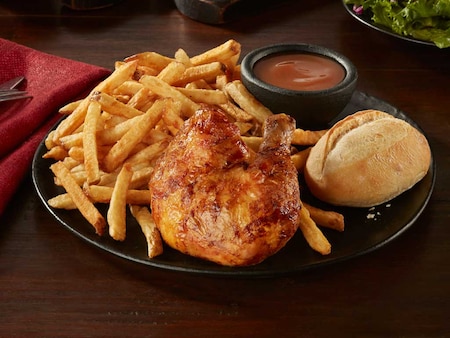
Enjoy a leg of our famous slow-roasted Rotisserie Chicken, served with our Signature Chalet Dipping Sauce, a dinner roll, and your choice of side (51 g of protein per 620 Cals). NEW! Glaze your chicken with a burst of flavour! We'll brush your chicken with your choice of Honey Garlic or Sweet Thai Chili sauce, and finish it on the grill. Served with extra sauce for dipping.
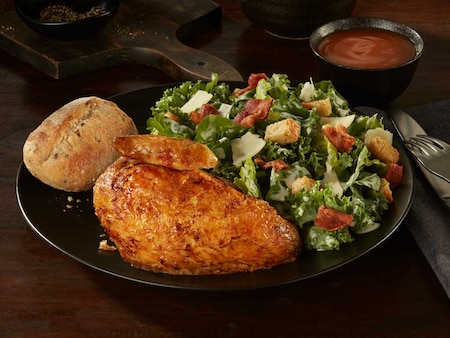
Enjoy a breast of our famous slow-roasted Rotisserie Chicken, served with our Signature Chalet Dipping Sauce, a dinner roll, and your choice of side (63 g of protein per 540 Cals). NEW! Glaze your chicken with a burst of flavour! We'll brush your chicken with your choice of Honey Garlic or Sweet Thai Chili sauce, and finish it on the grill. Served with extra sauce for dipping.
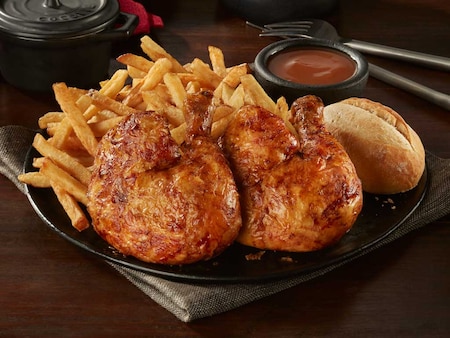
Enjoy two legs of our famous slow-roasted Rotisserie Chicken, served with our Signature Chalet Dipping Sauce, a dinner roll, and your choice of side (98 g of protein per 1050 Cals). NEW! Glaze your chicken with a burst of flavour! We'll brush your chicken with your choice of Honey Garlic or Sweet Thai Chili sauce, and finish it on the grill. Served with extra sauce for dipping.
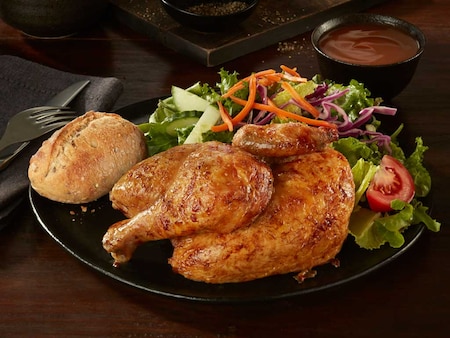
Enjoy a breast and leg of our famous slow-roasted Rotisserie Chicken, served with our Signature Chalet Dipping Sauce, a dinner roll, and your choice of side (109 g of protein per 970 Cals). NEW! Glaze your chicken with a burst of flavour! We'll brush your chicken with your choice of Honey Garlic or Sweet Thai Chili sauce, and finish it on the grill. Served with extra sauce for dipping.
GREAT VALUE! A third rack of our BBQ Back Ribs & a Quarter Chicken served with stuffing, cranberry, dinner roll, our Signature Chalet Dipping Sauce, and your choice of side. PLUS, a slice of pie - we recommend our Pumpkin Pie!
GREAT VALUE! A half rack of our BBQ Back Ribs & a Quarter Chicken served with stuffing, cranberry, dinner roll, our Signature Chalet Dipping Sauce, and your choice of side. PLUS, a slice of pie - we recommend our Pumpkin Pie!
GREAT VALUE! A third rack of BBQ Back Ribs served with stuffing, cranberry, dinner roll, our Signature Chalet Dipping Sauce, and your choice of side. Plus, a slice of pie - we recommend our Pumpkin Pie!
GREAT VALUE! A half rack of BBQ Back Ribs served with stuffing, cranberry, dinner roll, our Signature Chalet Dipping Sauce, and your choice of side. Plus, a slice of pie - we recommend our Pumpkin Pie!
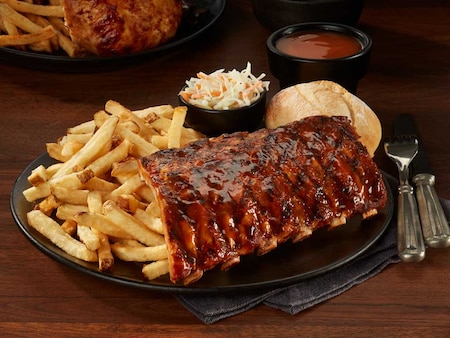
A half rack of our BBQ Back Ribs, basted in your choice of NEW! Apple Butter BBQ, Smoky BBQ or Honey Garlic sauce. Served with creamy coleslaw, a dinner roll, and your choice of side.
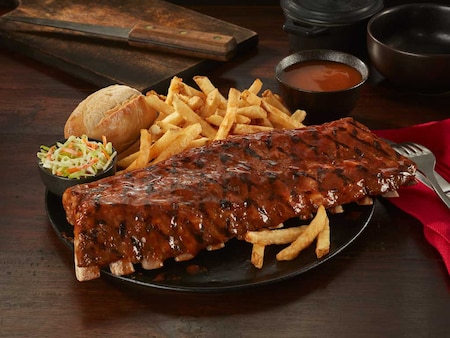
A full rack of our BBQ Back Ribs, basted in your choice of NEW! Apple Butter BBQ, Smoky BBQ or Honey Garlic sauce. Served with creamy coleslaw, a dinner roll, and your choice of side.
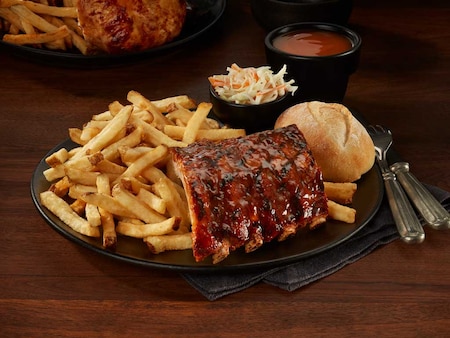
A third rack of our BBQ Back Ribs, basted in your choice of NEW! Apple Butter BBQ, Smoky BBQ or Honey Garlic sauce. Served with creamy coleslaw, a dinner roll, and your choice of side.
GREAT VALUE! A third rack of our BBQ Back Ribs & a Quarter Chicken served with stuffing, cranberry, dinner roll, our Signature Chalet Dipping Sauce, and your choice of side. PLUS, a slice of pie - we recommend our Pumpkin Pie!
GREAT VALUE! A half rack of our BBQ Back Ribs & a Quarter Chicken served with stuffing, cranberry, dinner roll, our Signature Chalet Dipping Sauce, and your choice of side. PLUS, a slice of pie - we recommend our Pumpkin Pie!
The best of both! A quarter of our famous Rotisserie Chicken and a third rack of BBQ Back Ribs, basted in your choice of NEW! Apple Butter BBQ, Smoky BBQ, or Honey Garlic sauce. Served with our Signature Chalet Dipping Sauce, creamy coleslaw, a dinner roll, your choice of side.
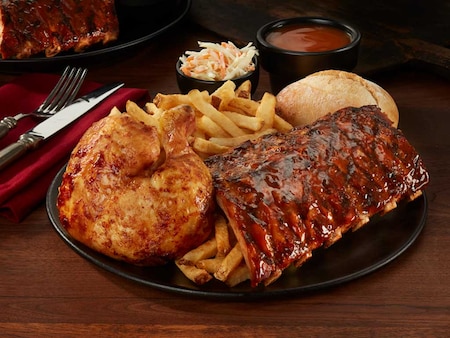
The best of both! A quarter of our famous Rotisserie Chicken and a half rack of BBQ Back Ribs, basted in your choice of NEW! Apple Butter BBQ, Smoky BBQ, or Honey Garlic sauce. Served with our Signature Chalet Dipping Sauce, creamy coleslaw, a dinner roll, your choice of side.
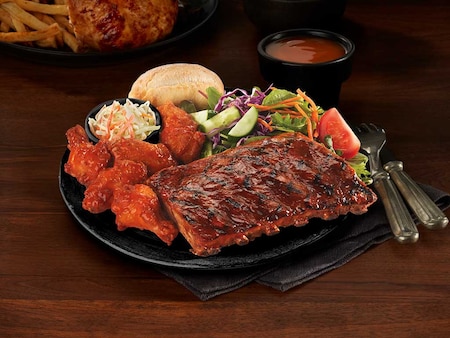
A Half Rack of BBQ Back Ribs and 5 wings tossed in your favourite sauce. Served with creamy coleslaw, a dinner roll, and your choice of side.
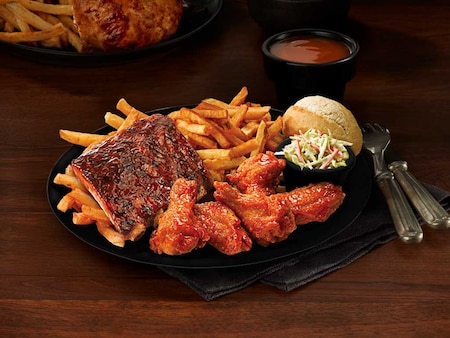
A Third Rack of BBQ Back Ribs and 5 wings tossed in your favourite sauce. Served with creamy coleslaw, a dinner roll, and your choice of side.
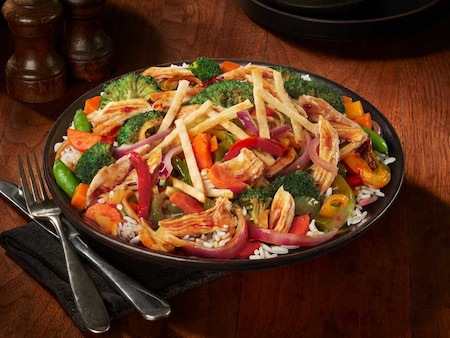
Our famous Stir Fry just got better! Rotisserie Chicken sauteed in teriyaki sauce with a hint of sweet chili with broccoli, carrots, bell peppers, onions, and celery, topped with crispy tortilla strips and green onions. Served over rice.

Our famous Stir Fry just got better! Sauteed in teriyaki sauce with a hint of sweet chili with broccoli, carrots, bell peppers, onions, and celery, topped with crispy tortilla strips and green onions. Served over rice.

Fresh lettuce, cucumber, tomatoes, kalamata olives, and red onion in a creamy Greek dressing. Topped with feta cheese, and your choice of seasoned Rotisserie Chicken or Crispy Chicken.

Fresh lettuce, cucumber, tomatoes, kalamata olives, and red onion in a creamy Greek dressing. Topped with feta cheese.

Fresh romaine lettuce, diced avocado, beans, corn, tomatoes, and red onions, tossed in our creamy Southwest dressing. Topped with shredded cheese, crispy tortilla strips, a dollop of sour cream, and your choice of seasoned Rotisserie Chicken or Crispy Chicken. Served with a garnish of lime.

Fresh romaine lettuce, diced avocado, beans, corn, tomatoes, and red onions, tossed in our creamy Southwest dressing. Topped with shredded cheese, crispy tortilla strips, a dollop of sour cream. Served with a garnish of lime.

Fresh romaine lettuce, tossed with our classic Caesar dressing and topped with crispy bacon, jumbo croutons, Parmesan cheese, and your choice of Rotisserie Chicken or Crispy Chicken.

Fresh romaine lettuce tossed with our classic Caesar dressing and topped with crispy bacon, jumbo croutons, and Parmesan cheese.
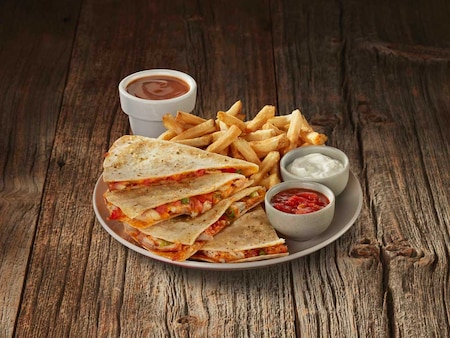
Cajun seasoned Rotisserie Chicken mixed with cheese, tomatoes, and green onions, baked in a flour tortilla. Served with your choice of side, with sour cream and salsa for dipping.
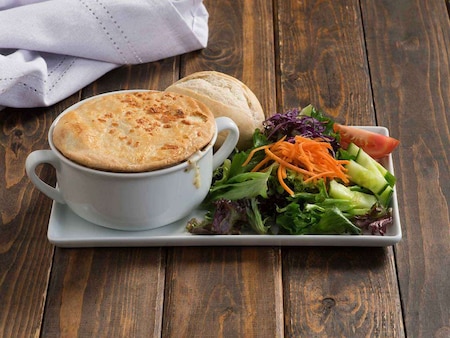
Enjoy our famous slow-roasted Rotisserie Chicken in a rich, creamy sauce and topped with a light flaky pastry. Served with a dinner roll and your choice of side.
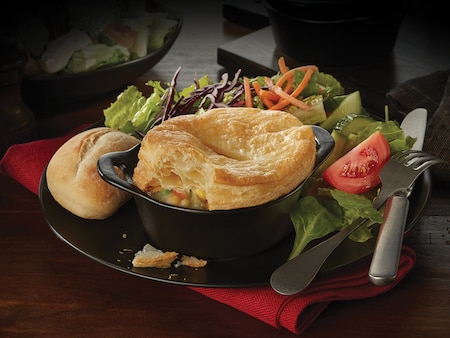
Enjoy a vegetable medley featuring sweet potato and corn in a rich, creamy sauce, topped with a light flaky pastry. Served with a dinner roll and your choice of side.

Our new and improved crispy chicken sandwich, from the Canadian Chicken experts! An all-white meat seasoned and breaded chicken breast topped with pickles and our Garlic Mesquite mayo. Served with Signature Chalet Dipping Sauce and your choice of side.

Our famous Rotiserie Chicken tossed with fresh lettuce, classic Caesar dressing, crispy bacon and Parmesan cheese, all wrapped in a flour tortilla. Served with our Signature Chalet Dipping Sauce and your choice of side.
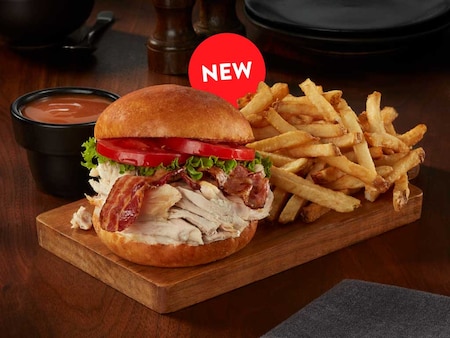
Our famous Rotisserie Chicken served hot on a toasted bun, with crispy bacon, lettuce, tomato, and mayo. Served with our Signature Chalet Dipping Sauce and your choice of side.
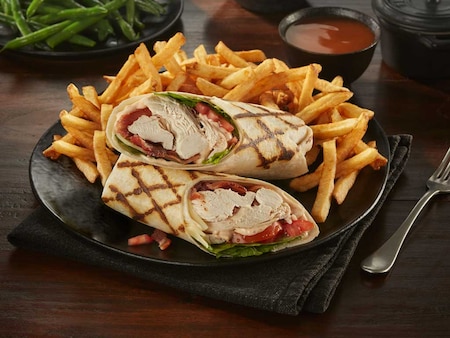
Our famous Rotisserie Chicken, Swiss cheese, crispy bacon, fresh lettuce, tomato, and Garlic Mesquite mayo, wrapped in a flour tortilla. Served chilled with our Signature Chalet Dipping Sauce, and your choice of side.
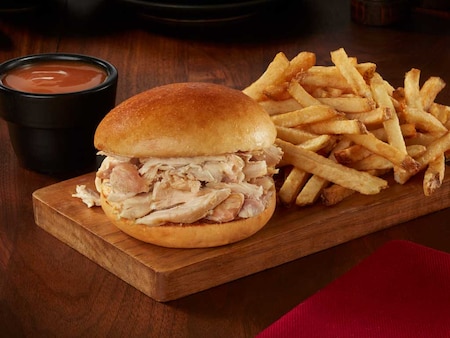
Our Famous Rotisserie Chicken served hot on a toasted bun, with our Signature Chalet Dipping Sauce and your choice of side.
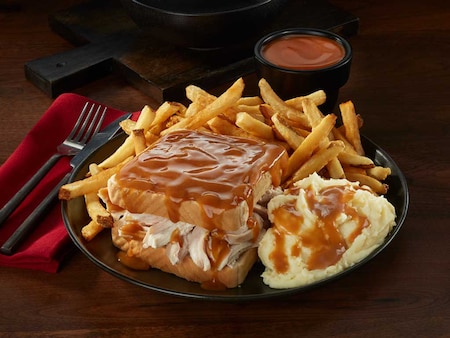
Rotisserie Chicken served hot and smothered in homestyle gravy. Served with our Signature Chalet Dipping Sauce, and two sides.
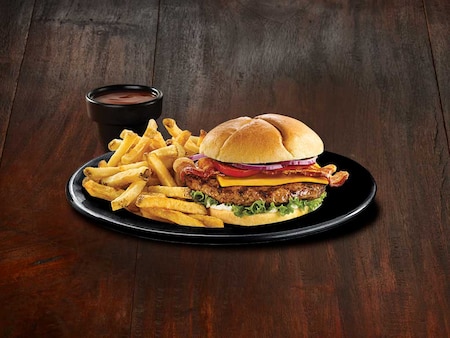
Grilled to order with crispy bacon and cheddar cheese on a toasted bun. Topped with fresh lettuce, red onion, tomato, pickles, and mayo.
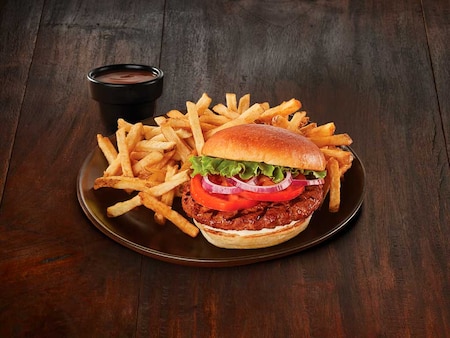
Grilled to order on a toasted bun. Topped with fresh lettuce, red onion, tomato, pickles, and mayo. Served with your choice of side.
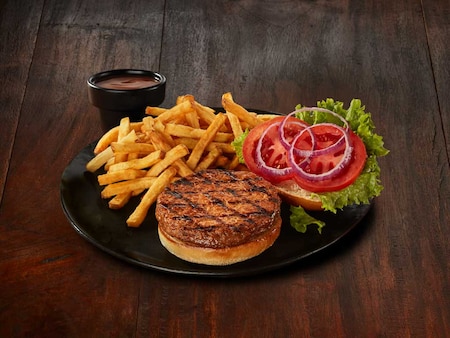
A vegetarian patty on a toasted bun, topped with fresh lettuce, red onion, tomato, pickles, and mayo. Served with your choice of side.
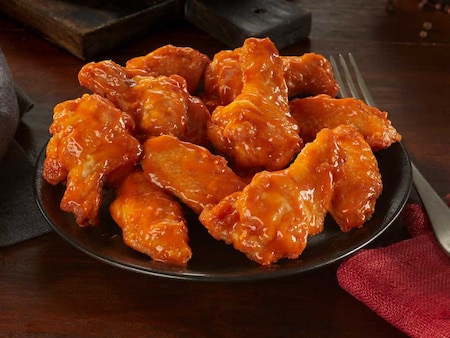
Ten Chicken Wings tossed in your choice of sauce.
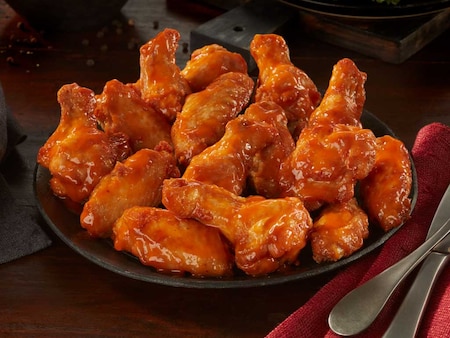
Fifteen Chicken Wings tossed in your choice of sauce.

Eight of our Chicken Wings tossed in your choice of sauce. Served with our Signature Chalet Dipping Sauce, creamy coleslaw, and your choice of side.

Twelve of our Chicken Wings tossed in your choice of sauce. Served with our Signature Chalet Dipping Sauce, creamy coleslaw, and your choice of side.
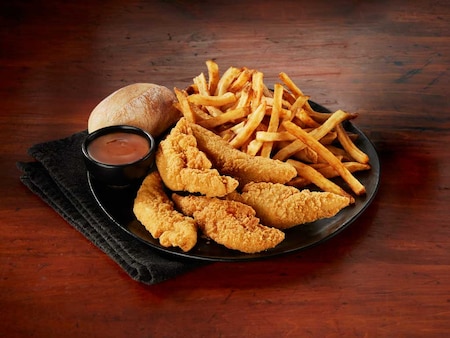
Five crispy chicken tenders served with your choice of side, a dinner roll, our signature Chalet Dipping sauce, and your choice of Plum, BBQ or Buffalo Dipping Sauce.
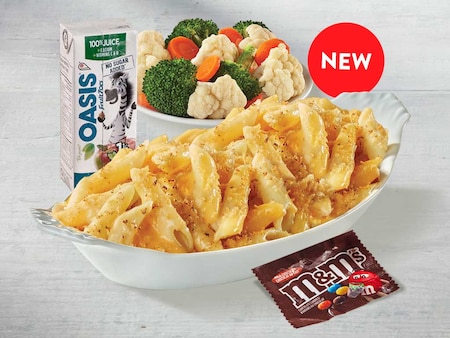
Our NEW! Mac & Cheese is cheesy, delicious, and baked to ooey gooey perfection. Served with your choice of side, an apple juice box, and Kid's treat.
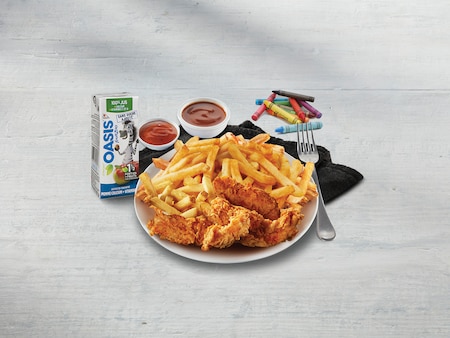
Three crispy chicken tenders served with plum sauce, your choice of side, an apple juice box, and kid's treat.
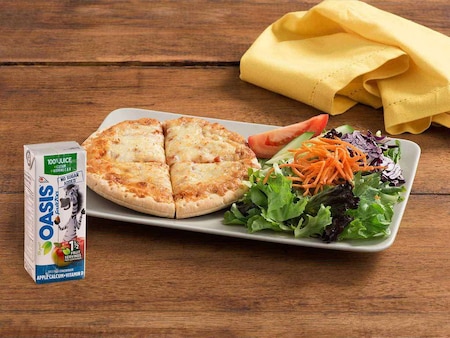
A 6 inch cheesy pizza cut into 4 small triangles served with your choice of side, an apple juice box and a sweet treat for dessert.
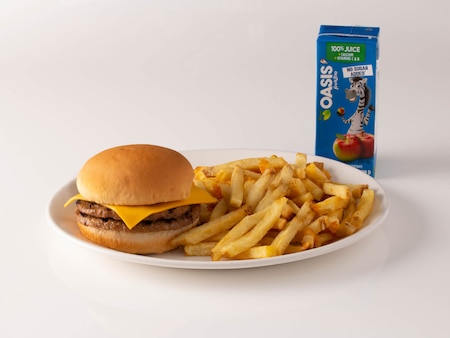
Two juicy patties topped with cheese on a lightly toasted bun served with a kids side choice, kids drink, and a kids dessert.
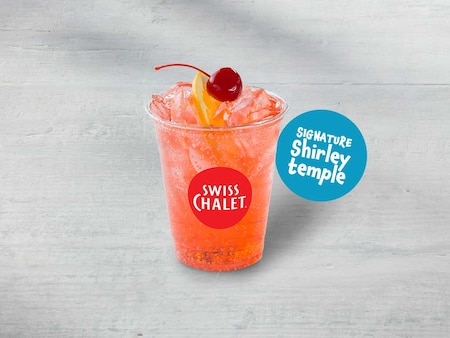
Shirley Temple
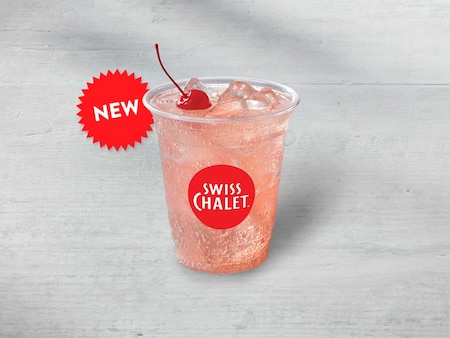
Peach Punch
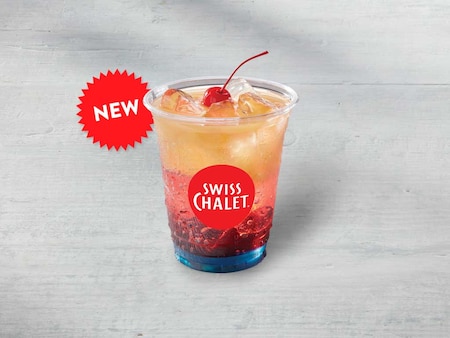
Rocket Power
A Thanksgiving favourite! A golden flaky crust and a delicious pumpkin filling, and dollop of whipped topping.
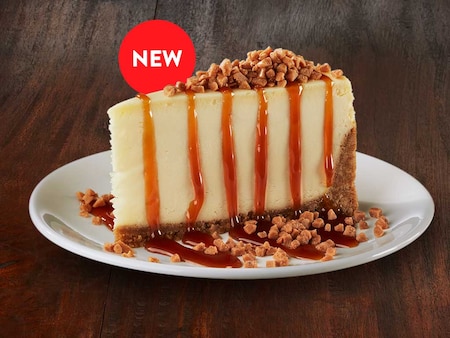
Creamy cheesecake with a graham cracker crust, topped with delicious toffee bits and drizzled with caramel sauce.
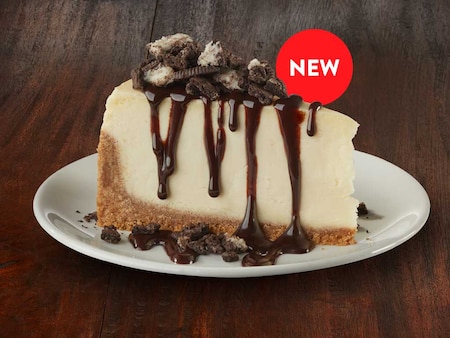
Creamy cheesecake with a graham cracker crust, topped with crushed cookies & creme chunks and drizzled with rich chocolate sauce.
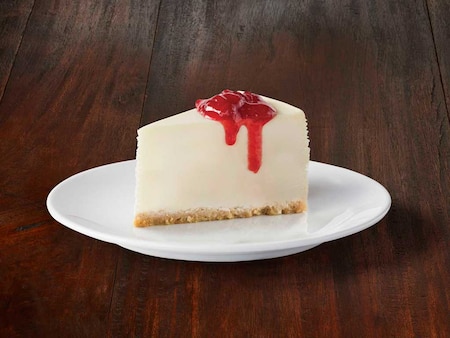
Creamy vanilla cheesecake with a graham cracker crust, topped with sweet and delicious strawberry sauce.
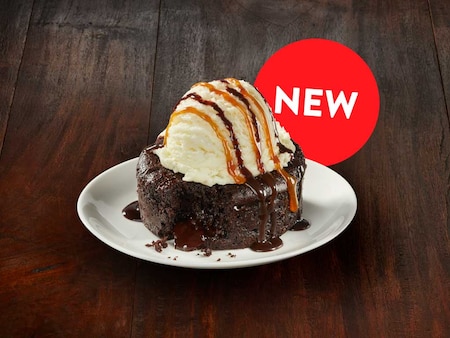
A decadent chocolate cake with a rich chocolate fudge filling. Served with a scoop of our vanilla ice cream, then drizzled with caramel & chocolate sauce. Get ready for an eruption of flavour!
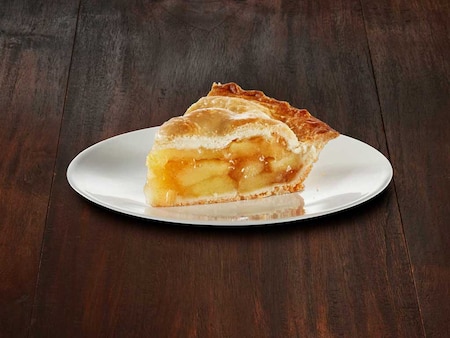
A golden pie crust filled with crisp apples.
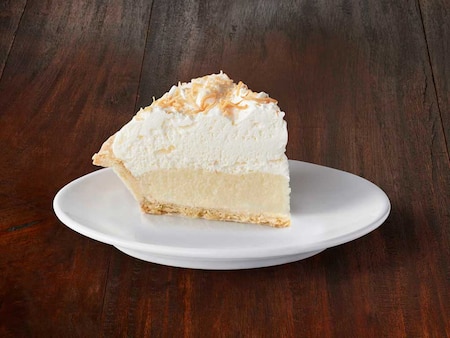
A thick and creamy coconut filling topped with whipped cream and finished with toasted coconut.
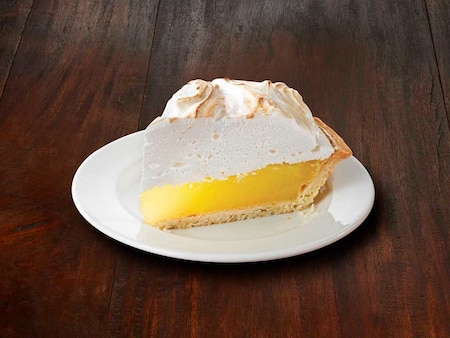
A thick layer of real zesty lemon citrus inside a graham crust, topped with fluffy golden meringue.
GREAT VALUE! A quarter of our famous Rotisserie Chicken served with stuffing, cranberry, dinner roll, our Signature Chalet Dipping Sauce, and your choice of side. PLUS, a slice of pie - we recommend our Pumpkin Pie!
GREAT VALUE! A breast of our famous Rotisserie Chicken served with stuffing, cranberry, dinner roll, our Signature Chalet Dipping Sauce, and your choice of side. PLUS, a slice of pie - we recommend our Pumpkin Pie!
GREAT VALUE! Two legs of our famous Rotisserie Chicken served with stuffing, cranberry, dinner roll, our Signature Chalet Dipping Sauce, and your choice of side. PLUS, a slice of pie - we recommend our Pumpkin Pie!
GREAT VALUE! A half of our famous Rotisserie Chicken served with stuffing, cranberry, dinner roll, our Signature Chalet Dipping Sauce, and your choice of side. PLUS, a slice of pie - we recommend our Pumpkin Pie!
GREAT VALUE! A third rack of BBQ Back Ribs served with stuffing, cranberry, dinner roll, our Signature Chalet Dipping Sauce, and your choice of side. Plus, a slice of pie - we recommend our Pumpkin Pie!
GREAT VALUE! A half rack of BBQ Back Ribs served with stuffing, cranberry, dinner roll, our Signature Chalet Dipping Sauce, and your choice of side. Plus, a slice of pie - we recommend our Pumpkin Pie!
GREAT VALUE! A third rack of our BBQ Back Ribs & a Quarter Chicken served with stuffing, cranberry, dinner roll, our Signature Chalet Dipping Sauce, and your choice of side. PLUS, a slice of pie - we recommend our Pumpkin Pie!
GREAT VALUE! A half rack of our BBQ Back Ribs & a Quarter Chicken served with stuffing, cranberry, dinner roll, our Signature Chalet Dipping Sauce, and your choice of side. PLUS, a slice of pie - we recommend our Pumpkin Pie!
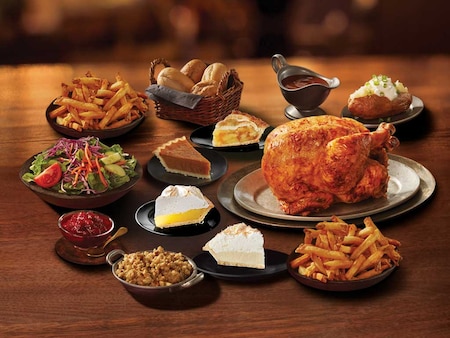
GREAT VALUE! 1 Whole Rotisserie Chicken + 4 Sides + 4 Dinner Rolls + 12 oz Signature Chalet Dipping Sauce + Cranberry + Stuffing + 4 Slices of Pie.

A Thanksgiving favourite! A golden flaky crust and a delicious pumpkin filling.
A bowl (12 oz) of rich and creamy soup, loaded with our tender broccoli, real cheddar cheese and our famous Rotisserie Chicken.
A family-size portion (32 oz) of rich and creamy soup, loaded with our tender broccoli, real cheddar cheese and our famous Rotisserie Chicken.
The best of both for only $19.99*! A quarter of our famous Rotisserie Chicken and a third rack of BBQ Back Ribs, basted in your choice of Smoky BBQ, or Honey Garlic sauce. Served with our Signature Chalet Dipping Sauce, creamy coleslaw, a dinner roll, and your choice of side. *$19.99 is the Dine-in and Takeout price. Delivery price of $21.99. Additional delivery fees will apply. Valid on Mondays only. Valid until December 31, 2026. White meat (-80 Cals) add $2.00 per entrée. Taxes, upgrades of sides, and beverages extra.
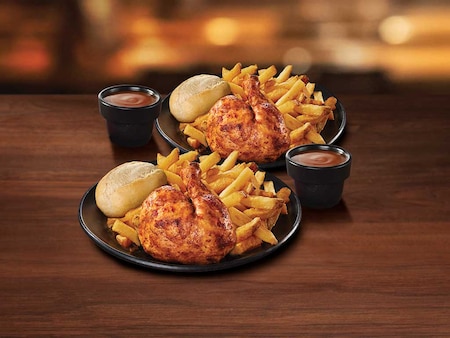
Two Quarter Chicken Dinners for $19.99* with the purchase of two beverages! Served with choice of side, a dinner roll, and our Signature Chalet Dipping Sauce. *Valid for dine in, take-out and pickup on Tuesdays only. Not valid for delivery. Valid until December 31, 2026. White meat (-80 Cals) add $2.00 per entrée. Taxes, upgrades of sides and beverages extra. Not valid in combination with any other offer, coupon or promotion. (630-1240 Cals/serving, serves 2)
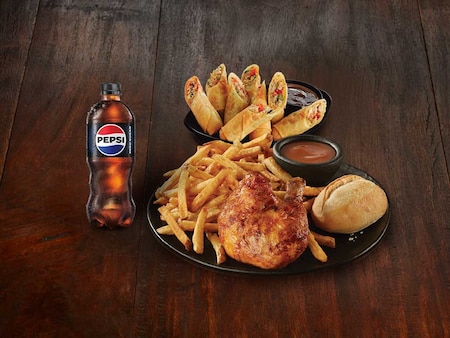
Everyone loves a dinner deal! Enjoy our classic Quarter Chicken Dinner plus an appetizer and bottle of pop.
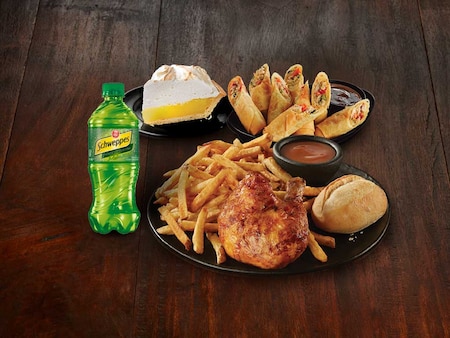
Everyone loves a dinner deal! Enjoy our classic Quarter Chicken Dinner plus an appetizer, a slice of pie and a bottle of pop.
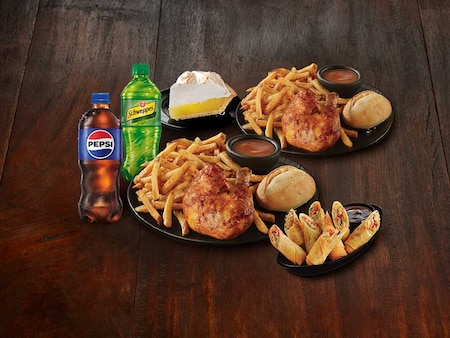
Everyone loves a dinner deal! Enjoy 2 of our classic Quarter Chicken Dinners plus 1 appetizer, 1 slice of pie and 2 bottles of pop.
A bowl (12 oz) of rich and creamy soup, loaded with our tender broccoli, real cheddar cheese and our famous Rotisserie Chicken.
A family-size portion (32 oz) of rich and creamy soup, loaded with our tender broccoli, real cheddar cheese and our famous Rotisserie Chicken.
Perfect for sharing! A delicious creamy blend of four cheeses, spinach, and artichoke. Served warm with lots of pita for dipping.
Golden and crispy perogies filled with cheese and potato then topped with sour cream, bacon, cheese sauce, and green onions.
Golden and crispy perogies filled with cheese and potato, served with zesty cajun sauce for dipping. Or Make it Loaded by adding sour cream, bacon, cheese, and green onions for $1.50.
Four spring rolls, made in-house with our famous Rotisserie Chicken and bell peppers. Served with tangy plum sauce.
A warm oven-baked loaf stuffed with melted cheese, topped with green onions, tomatoes, and drizzled in a warm garlic sauce.
Fresh-cut fries piled high with cheese curds smothered in your choice of our homestyle gravy, or our Signature Chalet Sauce.
Made fresh daily with our famous Rotisserie Chicken, garden vegetables and tender noodles in a savoury chicken broth.

Made fresh daily with our famous Rotisserie Chicken, garden vegetables, and tender noodles in a savoury chicken broth. (32 oz.)
A medley of fresh mixed lettuce, tomatoes, carrots, red cabbage and cucumbers, with your choice of dressing.
Fresh romaine lettuce tossed with our classic Caesar dressing and topped with crispy bacon, jumbo croutons, and shaved Parmesan.
GREAT VALUE! A quarter of our famous Rotisserie Chicken served with stuffing, cranberry, dinner roll, our Signature Chalet Dipping Sauce, and your choice of side. PLUS, a slice of pie - we recommend our Pumpkin Pie!
GREAT VALUE! A breast of our famous Rotisserie Chicken served with stuffing, cranberry, dinner roll, our Signature Chalet Dipping Sauce, and your choice of side. PLUS, a slice of pie - we recommend our Pumpkin Pie!
GREAT VALUE! Two legs of our famous Rotisserie Chicken served with stuffing, cranberry, dinner roll, our Signature Chalet Dipping Sauce, and your choice of side. PLUS, a slice of pie - we recommend our Pumpkin Pie!
GREAT VALUE! A half of our famous Rotisserie Chicken served with stuffing, cranberry, dinner roll, our Signature Chalet Dipping Sauce, and your choice of side. PLUS, a slice of pie - we recommend our Pumpkin Pie!
Enjoy a leg of our famous slow-roasted Rotisserie Chicken, served with our Signature Chalet Dipping Sauce, a dinner roll, and your choice of side (51 g of protein per 620 Cals). NEW! Glaze your chicken with a burst of flavour! We'll brush your chicken with your choice of Honey Garlic or Sweet Thai Chili sauce, and finish it on the grill. Served with extra sauce for dipping.
Enjoy a breast of our famous slow-roasted Rotisserie Chicken, served with our Signature Chalet Dipping Sauce, a dinner roll, and your choice of side (63 g of protein per 540 Cals). NEW! Glaze your chicken with a burst of flavour! We'll brush your chicken with your choice of Honey Garlic or Sweet Thai Chili sauce, and finish it on the grill. Served with extra sauce for dipping.
Enjoy two legs of our famous slow-roasted Rotisserie Chicken, served with our Signature Chalet Dipping Sauce, a dinner roll, and your choice of side (98 g of protein per 1050 Cals). NEW! Glaze your chicken with a burst of flavour! We'll brush your chicken with your choice of Honey Garlic or Sweet Thai Chili sauce, and finish it on the grill. Served with extra sauce for dipping.
Enjoy a breast and leg of our famous slow-roasted Rotisserie Chicken, served with our Signature Chalet Dipping Sauce, a dinner roll, and your choice of side (109 g of protein per 970 Cals). NEW! Glaze your chicken with a burst of flavour! We'll brush your chicken with your choice of Honey Garlic or Sweet Thai Chili sauce, and finish it on the grill. Served with extra sauce for dipping.
GREAT VALUE! A third rack of our BBQ Back Ribs & a Quarter Chicken served with stuffing, cranberry, dinner roll, our Signature Chalet Dipping Sauce, and your choice of side. PLUS, a slice of pie - we recommend our Pumpkin Pie!
GREAT VALUE! A half rack of our BBQ Back Ribs & a Quarter Chicken served with stuffing, cranberry, dinner roll, our Signature Chalet Dipping Sauce, and your choice of side. PLUS, a slice of pie - we recommend our Pumpkin Pie!
The best of both! A quarter of our famous Rotisserie Chicken and a third rack of BBQ Back Ribs, basted in your choice of NEW! Apple Butter BBQ, Smoky BBQ, or Honey Garlic sauce. Served with our Signature Chalet Dipping Sauce, creamy coleslaw, a dinner roll, your choice of side.
The best of both! A quarter of our famous Rotisserie Chicken and a half rack of BBQ Back Ribs, basted in your choice of NEW! Apple Butter BBQ, Smoky BBQ, or Honey Garlic sauce. Served with our Signature Chalet Dipping Sauce, creamy coleslaw, a dinner roll, your choice of side.
GREAT VALUE! A third rack of our BBQ Back Ribs & a Quarter Chicken served with stuffing, cranberry, dinner roll, our Signature Chalet Dipping Sauce, and your choice of side. PLUS, a slice of pie - we recommend our Pumpkin Pie!
GREAT VALUE! A half rack of our BBQ Back Ribs & a Quarter Chicken served with stuffing, cranberry, dinner roll, our Signature Chalet Dipping Sauce, and your choice of side. PLUS, a slice of pie - we recommend our Pumpkin Pie!
The best of both! A quarter of our famous Rotisserie Chicken and a third rack of BBQ Back Ribs, basted in your choice of NEW! Apple Butter BBQ, Smoky BBQ, or Honey Garlic sauce. Served with our Signature Chalet Dipping Sauce, creamy coleslaw, a dinner roll, your choice of side.
The best of both! A quarter of our famous Rotisserie Chicken and a half rack of BBQ Back Ribs, basted in your choice of NEW! Apple Butter BBQ, Smoky BBQ, or Honey Garlic sauce. Served with our Signature Chalet Dipping Sauce, creamy coleslaw, a dinner roll, your choice of side.
GREAT VALUE! A third rack of BBQ Back Ribs served with stuffing, cranberry, dinner roll, our Signature Chalet Dipping Sauce, and your choice of side. Plus, a slice of pie - we recommend our Pumpkin Pie!
GREAT VALUE! A half rack of BBQ Back Ribs served with stuffing, cranberry, dinner roll, our Signature Chalet Dipping Sauce, and your choice of side. Plus, a slice of pie - we recommend our Pumpkin Pie!
A half rack of our BBQ Back Ribs, basted in your choice of NEW! Apple Butter BBQ, Smoky BBQ or Honey Garlic sauce. Served with creamy coleslaw, a dinner roll, and your choice of side.
A full rack of our BBQ Back Ribs, basted in your choice of NEW! Apple Butter BBQ, Smoky BBQ or Honey Garlic sauce. Served with creamy coleslaw, a dinner roll, and your choice of side.
A third rack of our BBQ Back Ribs, basted in your choice of NEW! Apple Butter BBQ, Smoky BBQ or Honey Garlic sauce. Served with creamy coleslaw, a dinner roll, and your choice of side.
A Half Rack of BBQ Back Ribs and 5 wings tossed in your favourite sauce. Served with creamy coleslaw, a dinner roll, and your choice of side.
A Third Rack of BBQ Back Ribs and 5 wings tossed in your favourite sauce. Served with creamy coleslaw, a dinner roll, and your choice of side.
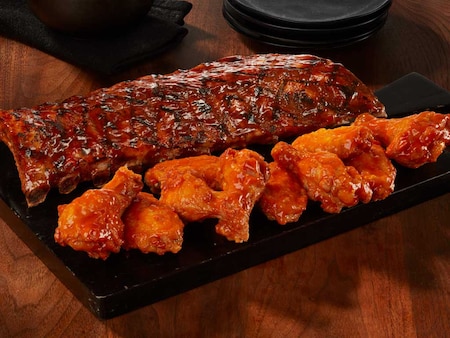
Full Rack of fall-off-the-bone BBQ Back Ribs & 10 wing pieces tossed in your choice of sauce.
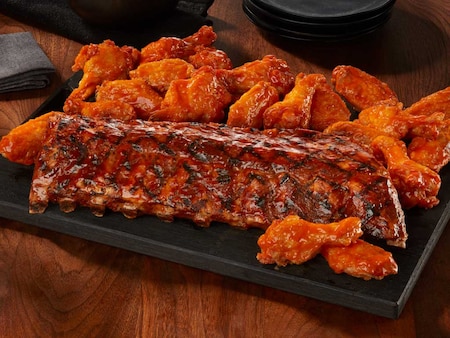
Full Rack of fall-off-the-bone BBQ Back Ribs & 20 wing pieces tossed in your choice of sauce.
Our famous Stir Fry just got better! Rotisserie Chicken sauteed in teriyaki sauce with a hint of sweet chili with broccoli, carrots, bell peppers, onions, and celery, topped with crispy tortilla strips and green onions. Served over rice.
Our famous Stir Fry just got better! Sauteed in teriyaki sauce with a hint of sweet chili with broccoli, carrots, bell peppers, onions, and celery, topped with crispy tortilla strips and green onions. Served over rice.
Fresh lettuce, cucumber, tomatoes, kalamata olives, and red onion in a creamy Greek dressing. Topped with feta cheese, and your choice of seasoned Rotisserie Chicken or Crispy Chicken.
Fresh lettuce, cucumber, tomatoes, kalamata olives, and red onion in a creamy Greek dressing. Topped with feta cheese.
Fresh romaine lettuce, diced avocado, beans, corn, tomatoes, and red onions, tossed in our creamy Southwest dressing. Topped with shredded cheese, crispy tortilla strips, a dollop of sour cream, and your choice of seasoned Rotisserie Chicken or Crispy Chicken. Served with a garnish of lime.
Fresh romaine lettuce, diced avocado, beans, corn, tomatoes, and red onions, tossed in our creamy Southwest dressing. Topped with shredded cheese, crispy tortilla strips, a dollop of sour cream. Served with a garnish of lime.
Fresh romaine lettuce, tossed with our classic Caesar dressing and topped with crispy bacon, jumbo croutons, Parmesan cheese, and your choice of Rotisserie Chicken or Crispy Chicken.
Fresh romaine lettuce tossed with our classic Caesar dressing and topped with crispy bacon, jumbo croutons, and Parmesan cheese.
Cajun seasoned Rotisserie Chicken mixed with cheese, tomatoes, and green onions, baked in a flour tortilla. Served with your choice of side, with sour cream and salsa for dipping.
Our new and improved crispy chicken sandwich, from the Canadian Chicken experts! An all-white meat seasoned and breaded chicken breast topped with pickles and our Garlic Mesquite mayo. Served with Signature Chalet Dipping Sauce and your choice of side.
Our famous Rotiserie Chicken tossed with fresh lettuce, classic Caesar dressing, crispy bacon and Parmesan cheese, all wrapped in a flour tortilla. Served with our Signature Chalet Dipping Sauce and your choice of side.
Our famous Rotisserie Chicken served hot on a toasted bun, with crispy bacon, lettuce, tomato, and mayo. Served with our Signature Chalet Dipping Sauce and your choice of side.
Our famous Rotisserie Chicken, Swiss cheese, crispy bacon, fresh lettuce, tomato, and Garlic Mesquite mayo, wrapped in a flour tortilla. Served chilled with our Signature Chalet Dipping Sauce, and your choice of side.
Our Famous Rotisserie Chicken served hot on a toasted bun, with our Signature Chalet Dipping Sauce and your choice of side.
Rotisserie Chicken served hot and smothered in homestyle gravy. Served with our Signature Chalet Dipping Sauce, and two sides.
Grilled to order with crispy bacon and cheddar cheese on a toasted bun. Topped with fresh lettuce, red onion, tomato, pickles, and mayo.
A vegetarian patty on a toasted bun, topped with fresh lettuce, red onion, tomato, pickles, and mayo. Served with your choice of side.
Grilled to order on a toasted bun. Topped with fresh lettuce, red onion, tomato, pickles, and mayo. Served with your choice of side.
Ten Chicken Wings tossed in your choice of sauce.
Fifteen Chicken Wings tossed in your choice of sauce.
Eight of our Chicken Wings tossed in your choice of sauce. Served with our Signature Chalet Dipping Sauce, creamy coleslaw, and your choice of side.
Twelve of our Chicken Wings tossed in your choice of sauce. Served with our Signature Chalet Dipping Sauce, creamy coleslaw, and your choice of side.
Five crispy chicken tenders served with your choice of side, a dinner roll, our signature Chalet Dipping sauce, and your choice of Plum, BBQ or Buffalo Dipping Sauce.
GREAT VALUE! 1 Whole Rotisserie Chicken + 4 Sides + 4 Dinner Rolls + 12 oz Signature Chalet Dipping Sauce + Cranberry + Stuffing + 4 Slices of Pie.
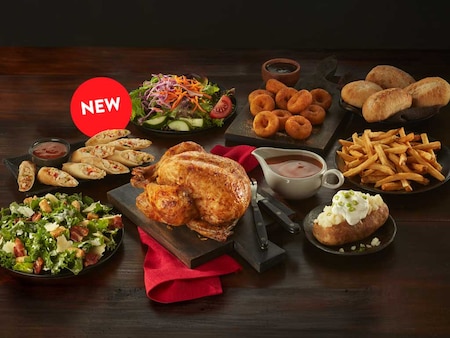
New and improved! A Whole Rotisserie Chicken served with your choice of 4 sides, 4 dinner rolls, 12 oz Signature Chalet Dipping Sauce, PLUS! your choice of Spring Rolls or Perogies AND 10 Mini Donuts - perfect for sharing.
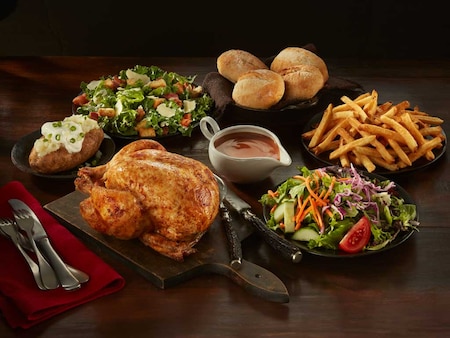
A whole Rotisserie Chicken served with your choice of 4 individual sides, 4 dinner rolls, and 12 oz Signature Chalet dipping sauce. NEW! Glaze your chicken with a burst of flavour! We'll brush your whole chicken with your choice of Honey Garlic or Sweet Thai Chili sauce, and finish it on the grill. Served with extra sauce for dipping.
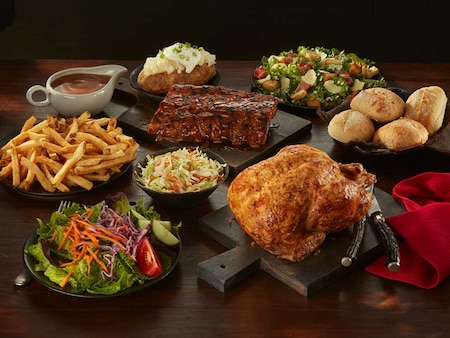
A whole Rotisserie Chicken and half rack BBQ Back Ribs served with your choice of 4 individual sides, 4 dinner rolls, and 12 oz Signature Chalet dipping sauce. NEW! Glaze your chicken with a burst of flavour! We'll brush your whole chicken with your choice of Honey Garlic or Sweet Thai Chili sauce, and finish it on the grill. Served with extra sauce for dipping.
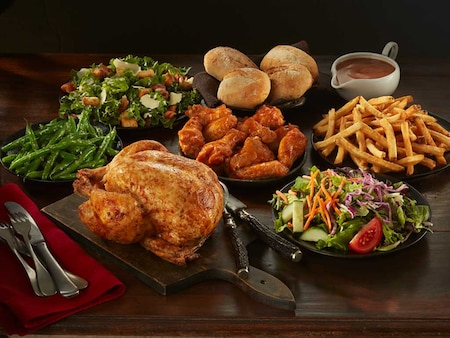
A whole Rotisserie Chicken and 10 wing pieces served with your choice of 4 individual sides, 4 dinner rolls, and 12 oz Signature Chalet dipping sauce. NEW! Glaze your chicken with a burst of flavour! We'll brush your whole chicken with your choice of Honey Garlic or Sweet Thai Chili sauce, and finish it on the grill. Served with extra sauce for dipping.
Full Rack of fall-off-the-bone BBQ Back Ribs & 10 wing pieces tossed in your choice of sauce.
Full Rack of fall-off-the-bone BBQ Back Ribs & 20 wing pieces tossed in your choice of sauce.
Our NEW! Mac & Cheese is cheesy, delicious, and baked to ooey gooey perfection. Served with your choice of side, an apple juice box, and Kid's treat.
Three crispy chicken tenders served with plum sauce, your choice of side, an apple juice box, and kid's treat.
A 6 inch cheesy pizza cut into 4 small triangles served with your choice of side, an apple juice box and a sweet treat for dessert.
Two juicy patties topped with cheese on a lightly toasted bun served with a kids side choice, kids drink, and a kids dessert.
A Thanksgiving favourite! A golden flaky crust and a delicious pumpkin filling.
Creamy cheesecake with a graham cracker crust, topped with delicious toffee bits and drizzled with caramel sauce.
Creamy cheesecake with a graham cracker crust, topped with crushed cookies & creme chunks and drizzled with rich chocolate sauce.
Creamy vanilla cheesecake with a graham cracker crust, topped with sweet and delicious strawberry sauce.
A golden pie crust filled with crisp apples.

10 golden brown mini donuts tossed in cinnamon sugar, and served with caramel sauce for dipping.
A thick and creamy coconut filling topped with whipped cream and finished with toasted coconut.
A thick layer of real zesty lemon citrus inside a graham crust, topped with fluffy golden meringue.

Add 3 oz of our famous stuffing to your meal.

Add 1 oz our delicious cranberry to your meal.
A bowl (12 oz) of rich and creamy soup, loaded with our tender broccoli, real cheddar cheese and our famous Rotisserie Chicken.
A family-size portion (32 oz) of rich and creamy soup, loaded with our tender broccoli, real cheddar cheese and our famous Rotisserie Chicken.
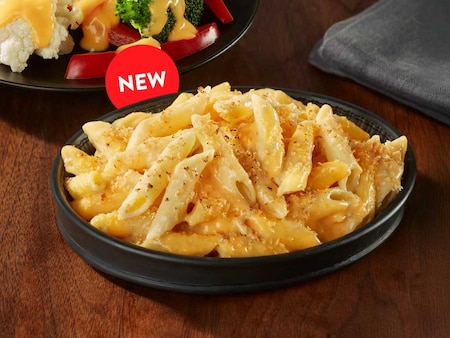
NEW! Mac & Cheese is cheesy and delicious, topped with bread crumbs and baked to perfection.
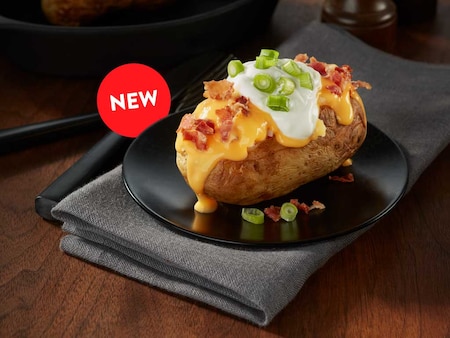
Warm oven-baked potato topped with crispy bacon, cheese sauce, sour cream, and chives.

A side of creamy mashed potatoes topped with cheese sauce, bacon, sour cream, and chives.

A side of our famous fresh-cut fries topped with cheese sauce, bacon, sour cream and chives to your side!
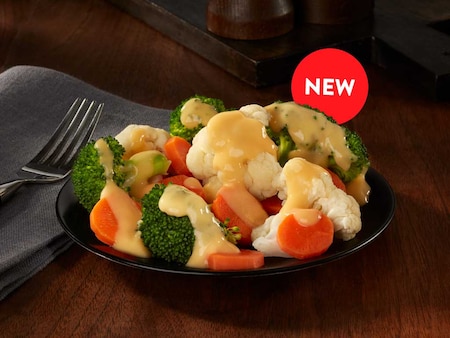
A fresh medley of broccoli, cauliflower, and carrots topped with cheese sauce.
Made fresh daily with our famous Rotisserie Chicken, garden vegetables and tender noodles in a savoury chicken broth.
Made fresh daily with our famous Rotisserie Chicken, garden vegetables, and tender noodles in a savoury chicken broth. (32 oz.)
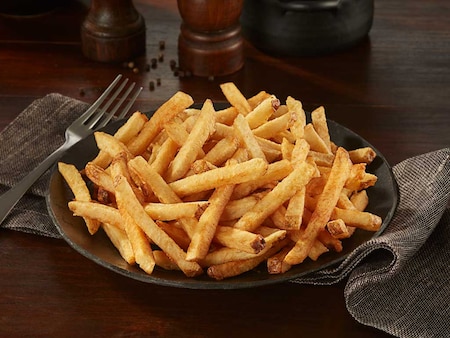
Add an extra side of our famous fresh-cut fries
Fresh-cut fries piled high with cheese curds smothered in your choice of our homestyle gravy, or our Signature Chalet Sauce.
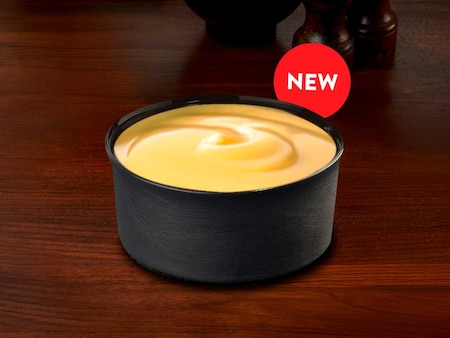
Add 2 ounces of cheese sauce.

Add an extra Oven Baked Potato on the side.

Add an extra side of creamy Mashed Potatoes.
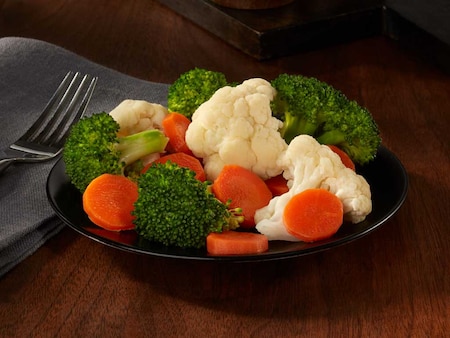
A fresh medley of broccoli, cauliflower, and carrots.
A medley of fresh mixed lettuce, tomatoes, carrots, red cabbage and cucumbers, with your choice of dressing.
Fresh romaine lettuce tossed with our classic Caesar dressing and topped with crispy bacon, jumbo croutons, and shaved Parmesan.

Add an extra side of our Creamy Coleslaw.

Chalet Dipping Sauce (32 OZ.)
GREAT VALUE! A quarter of our famous Rotisserie Chicken served with stuffing, cranberry, dinner roll, our Signature Chalet Dipping Sauce, and your choice of side. PLUS, a slice of pie - we recommend our Pumpkin Pie!
GREAT VALUE! A breast of our famous Rotisserie Chicken served with stuffing, cranberry, dinner roll, our Signature Chalet Dipping Sauce, and your choice of side. PLUS, a slice of pie - we recommend our Pumpkin Pie!
GREAT VALUE! Two legs of our famous Rotisserie Chicken served with stuffing, cranberry, dinner roll, our Signature Chalet Dipping Sauce, and your choice of side. PLUS, a slice of pie - we recommend our Pumpkin Pie!
GREAT VALUE! A half of our famous Rotisserie Chicken served with stuffing, cranberry, dinner roll, our Signature Chalet Dipping Sauce, and your choice of side. PLUS, a slice of pie - we recommend our Pumpkin Pie!
GREAT VALUE! A third rack of BBQ Back Ribs served with stuffing, cranberry, dinner roll, our Signature Chalet Dipping Sauce, and your choice of side. Plus, a slice of pie - we recommend our Pumpkin Pie!
GREAT VALUE! A half rack of BBQ Back Ribs served with stuffing, cranberry, dinner roll, our Signature Chalet Dipping Sauce, and your choice of side. Plus, a slice of pie - we recommend our Pumpkin Pie!
GREAT VALUE! A third rack of our BBQ Back Ribs & a Quarter Chicken served with stuffing, cranberry, dinner roll, our Signature Chalet Dipping Sauce, and your choice of side. PLUS, a slice of pie - we recommend our Pumpkin Pie!
GREAT VALUE! A half rack of our BBQ Back Ribs & a Quarter Chicken served with stuffing, cranberry, dinner roll, our Signature Chalet Dipping Sauce, and your choice of side. PLUS, a slice of pie - we recommend our Pumpkin Pie!
GREAT VALUE! 1 Whole Rotisserie Chicken + 4 Sides + 4 Dinner Rolls + 12 oz Signature Chalet Dipping Sauce + Cranberry + Stuffing + 4 Slices of Pie.
A Thanksgiving favourite! A golden flaky crust and a delicious pumpkin filling.
A bowl (12 oz) of rich and creamy soup, loaded with our tender broccoli, real cheddar cheese and our famous Rotisserie Chicken.
A family-size portion (32 oz) of rich and creamy soup, loaded with our tender broccoli, real cheddar cheese and our famous Rotisserie Chicken.
The best of both for only $19.99*! A quarter of our famous Rotisserie Chicken and a third rack of BBQ Back Ribs, basted in your choice of Smoky BBQ, or Honey Garlic sauce. Served with our Signature Chalet Dipping Sauce, creamy coleslaw, a dinner roll, and your choice of side. *$19.99 is the Dine-in and Takeout price. Delivery price of $21.99. Additional delivery fees will apply. Valid on Mondays only. Valid until December 31, 2026. White meat (-80 Cals) add $2.00 per entrée. Taxes, upgrades of sides, and beverages extra.
Everyone loves a dinner deal! Enjoy our classic Quarter Chicken Dinner plus an appetizer and bottle of pop.
Everyone loves a dinner deal! Enjoy our classic Quarter Chicken Dinner plus an appetizer, a slice of pie and a bottle of pop.
Everyone loves a dinner deal! Enjoy 2 of our classic Quarter Chicken Dinners plus 1 appetizer, 1 slice of pie and 2 bottles of pop.
A bowl (12 oz) of rich and creamy soup, loaded with our tender broccoli, real cheddar cheese and our famous Rotisserie Chicken.
A family-size portion (32 oz) of rich and creamy soup, loaded with our tender broccoli, real cheddar cheese and our famous Rotisserie Chicken.
Perfect for sharing! A delicious creamy blend of four cheeses, spinach, and artichoke. Served warm with lots of pita for dipping.
Golden and crispy perogies filled with cheese and potato then topped with sour cream, bacon, cheese sauce, and green onions.
Golden and crispy perogies filled with cheese and potato, served with zesty cajun sauce for dipping. Or Make it Loaded by adding sour cream, bacon, cheese, and green onions for $1.50.
Four spring rolls, made in-house with our famous Rotisserie Chicken and bell peppers. Served with tangy plum sauce.
A warm oven-baked loaf stuffed with melted cheese, topped with green onions, tomatoes, and drizzled in a warm garlic sauce.
Fresh-cut fries piled high with cheese curds smothered in your choice of our homestyle gravy, or our Signature Chalet Sauce.
Made fresh daily with our famous Rotisserie Chicken, garden vegetables and tender noodles in a savoury chicken broth.
Made fresh daily with our famous Rotisserie Chicken, garden vegetables, and tender noodles in a savoury chicken broth. (32 oz.)
A medley of fresh mixed lettuce, tomatoes, carrots, red cabbage and cucumbers, with your choice of dressing.
Fresh romaine lettuce tossed with our classic Caesar dressing and topped with crispy bacon, jumbo croutons, and shaved Parmesan.
GREAT VALUE! A quarter of our famous Rotisserie Chicken served with stuffing, cranberry, dinner roll, our Signature Chalet Dipping Sauce, and your choice of side. PLUS, a slice of pie - we recommend our Pumpkin Pie!
GREAT VALUE! A breast of our famous Rotisserie Chicken served with stuffing, cranberry, dinner roll, our Signature Chalet Dipping Sauce, and your choice of side. PLUS, a slice of pie - we recommend our Pumpkin Pie!
GREAT VALUE! Two legs of our famous Rotisserie Chicken served with stuffing, cranberry, dinner roll, our Signature Chalet Dipping Sauce, and your choice of side. PLUS, a slice of pie - we recommend our Pumpkin Pie!
GREAT VALUE! A half of our famous Rotisserie Chicken served with stuffing, cranberry, dinner roll, our Signature Chalet Dipping Sauce, and your choice of side. PLUS, a slice of pie - we recommend our Pumpkin Pie!
Enjoy a leg of our famous slow-roasted Rotisserie Chicken, served with our Signature Chalet Dipping Sauce, a dinner roll, and your choice of side (51 g of protein per 620 Cals). NEW! Glaze your chicken with a burst of flavour! We'll brush your chicken with your choice of Honey Garlic or Sweet Thai Chili sauce, and finish it on the grill. Served with extra sauce for dipping.
Enjoy a breast of our famous slow-roasted Rotisserie Chicken, served with our Signature Chalet Dipping Sauce, a dinner roll, and your choice of side (63 g of protein per 540 Cals). NEW! Glaze your chicken with a burst of flavour! We'll brush your chicken with your choice of Honey Garlic or Sweet Thai Chili sauce, and finish it on the grill. Served with extra sauce for dipping.
Enjoy two legs of our famous slow-roasted Rotisserie Chicken, served with our Signature Chalet Dipping Sauce, a dinner roll, and your choice of side (98 g of protein per 1050 Cals). NEW! Glaze your chicken with a burst of flavour! We'll brush your chicken with your choice of Honey Garlic or Sweet Thai Chili sauce, and finish it on the grill. Served with extra sauce for dipping.
Enjoy a breast and leg of our famous slow-roasted Rotisserie Chicken, served with our Signature Chalet Dipping Sauce, a dinner roll, and your choice of side (109 g of protein per 970 Cals). NEW! Glaze your chicken with a burst of flavour! We'll brush your chicken with your choice of Honey Garlic or Sweet Thai Chili sauce, and finish it on the grill. Served with extra sauce for dipping.
GREAT VALUE! A third rack of our BBQ Back Ribs & a Quarter Chicken served with stuffing, cranberry, dinner roll, our Signature Chalet Dipping Sauce, and your choice of side. PLUS, a slice of pie - we recommend our Pumpkin Pie!
GREAT VALUE! A half rack of our BBQ Back Ribs & a Quarter Chicken served with stuffing, cranberry, dinner roll, our Signature Chalet Dipping Sauce, and your choice of side. PLUS, a slice of pie - we recommend our Pumpkin Pie!
The best of both! A quarter of our famous Rotisserie Chicken and a third rack of BBQ Back Ribs, basted in your choice of NEW! Apple Butter BBQ, Smoky BBQ, or Honey Garlic sauce. Served with our Signature Chalet Dipping Sauce, creamy coleslaw, a dinner roll, your choice of side.
The best of both! A quarter of our famous Rotisserie Chicken and a half rack of BBQ Back Ribs, basted in your choice of NEW! Apple Butter BBQ, Smoky BBQ, or Honey Garlic sauce. Served with our Signature Chalet Dipping Sauce, creamy coleslaw, a dinner roll, your choice of side.
GREAT VALUE! A third rack of our BBQ Back Ribs & a Quarter Chicken served with stuffing, cranberry, dinner roll, our Signature Chalet Dipping Sauce, and your choice of side. PLUS, a slice of pie - we recommend our Pumpkin Pie!
GREAT VALUE! A half rack of our BBQ Back Ribs & a Quarter Chicken served with stuffing, cranberry, dinner roll, our Signature Chalet Dipping Sauce, and your choice of side. PLUS, a slice of pie - we recommend our Pumpkin Pie!
The best of both! A quarter of our famous Rotisserie Chicken and a third rack of BBQ Back Ribs, basted in your choice of NEW! Apple Butter BBQ, Smoky BBQ, or Honey Garlic sauce. Served with our Signature Chalet Dipping Sauce, creamy coleslaw, a dinner roll, your choice of side.
The best of both! A quarter of our famous Rotisserie Chicken and a half rack of BBQ Back Ribs, basted in your choice of NEW! Apple Butter BBQ, Smoky BBQ, or Honey Garlic sauce. Served with our Signature Chalet Dipping Sauce, creamy coleslaw, a dinner roll, your choice of side.
GREAT VALUE! A third rack of BBQ Back Ribs served with stuffing, cranberry, dinner roll, our Signature Chalet Dipping Sauce, and your choice of side. Plus, a slice of pie - we recommend our Pumpkin Pie!
GREAT VALUE! A half rack of BBQ Back Ribs served with stuffing, cranberry, dinner roll, our Signature Chalet Dipping Sauce, and your choice of side. Plus, a slice of pie - we recommend our Pumpkin Pie!
A half rack of our BBQ Back Ribs, basted in your choice of NEW! Apple Butter BBQ, Smoky BBQ or Honey Garlic sauce. Served with creamy coleslaw, a dinner roll, and your choice of side.
A full rack of our BBQ Back Ribs, basted in your choice of NEW! Apple Butter BBQ, Smoky BBQ or Honey Garlic sauce. Served with creamy coleslaw, a dinner roll, and your choice of side.
A third rack of our BBQ Back Ribs, basted in your choice of NEW! Apple Butter BBQ, Smoky BBQ or Honey Garlic sauce. Served with creamy coleslaw, a dinner roll, and your choice of side.
A Half Rack of BBQ Back Ribs and 5 wings tossed in your favourite sauce. Served with creamy coleslaw, a dinner roll, and your choice of side.
A Third Rack of BBQ Back Ribs and 5 wings tossed in your favourite sauce. Served with creamy coleslaw, a dinner roll, and your choice of side.
Full Rack of fall-off-the-bone BBQ Back Ribs & 10 wing pieces tossed in your choice of sauce.
Full Rack of fall-off-the-bone BBQ Back Ribs & 20 wing pieces tossed in your choice of sauce.
Our famous Stir Fry just got better! Rotisserie Chicken sauteed in teriyaki sauce with a hint of sweet chili with broccoli, carrots, bell peppers, onions, and celery, topped with crispy tortilla strips and green onions. Served over rice.
Our famous Stir Fry just got better! Sauteed in teriyaki sauce with a hint of sweet chili with broccoli, carrots, bell peppers, onions, and celery, topped with crispy tortilla strips and green onions. Served over rice.
Fresh lettuce, cucumber, tomatoes, kalamata olives, and red onion in a creamy Greek dressing. Topped with feta cheese, and your choice of seasoned Rotisserie Chicken or Crispy Chicken.
Fresh lettuce, cucumber, tomatoes, kalamata olives, and red onion in a creamy Greek dressing. Topped with feta cheese.
Fresh romaine lettuce, diced avocado, beans, corn, tomatoes, and red onions, tossed in our creamy Southwest dressing. Topped with shredded cheese, crispy tortilla strips, a dollop of sour cream, and your choice of seasoned Rotisserie Chicken or Crispy Chicken. Served with a garnish of lime.
Fresh romaine lettuce, diced avocado, beans, corn, tomatoes, and red onions, tossed in our creamy Southwest dressing. Topped with shredded cheese, crispy tortilla strips, a dollop of sour cream. Served with a garnish of lime.
Fresh romaine lettuce, tossed with our classic Caesar dressing and topped with crispy bacon, jumbo croutons, Parmesan cheese, and your choice of Rotisserie Chicken or Crispy Chicken.
Fresh romaine lettuce tossed with our classic Caesar dressing and topped with crispy bacon, jumbo croutons, and Parmesan cheese.
Cajun seasoned Rotisserie Chicken mixed with cheese, tomatoes, and green onions, baked in a flour tortilla. Served with your choice of side, with sour cream and salsa for dipping.
Our new and improved crispy chicken sandwich, from the Canadian Chicken experts! An all-white meat seasoned and breaded chicken breast topped with pickles and our Garlic Mesquite mayo. Served with Signature Chalet Dipping Sauce and your choice of side.
Our famous Rotiserie Chicken tossed with fresh lettuce, classic Caesar dressing, crispy bacon and Parmesan cheese, all wrapped in a flour tortilla. Served with our Signature Chalet Dipping Sauce and your choice of side.
Our famous Rotisserie Chicken served hot on a toasted bun, with crispy bacon, lettuce, tomato, and mayo. Served with our Signature Chalet Dipping Sauce and your choice of side.
Our famous Rotisserie Chicken, Swiss cheese, crispy bacon, fresh lettuce, tomato, and Garlic Mesquite mayo, wrapped in a flour tortilla. Served chilled with our Signature Chalet Dipping Sauce, and your choice of side.
Our Famous Rotisserie Chicken served hot on a toasted bun, with our Signature Chalet Dipping Sauce and your choice of side.
Rotisserie Chicken served hot and smothered in homestyle gravy. Served with our Signature Chalet Dipping Sauce, and two sides.
Grilled to order with crispy bacon and cheddar cheese on a toasted bun. Topped with fresh lettuce, red onion, tomato, pickles, and mayo.
A vegetarian patty on a toasted bun, topped with fresh lettuce, red onion, tomato, pickles, and mayo. Served with your choice of side.
Grilled to order on a toasted bun. Topped with fresh lettuce, red onion, tomato, pickles, and mayo. Served with your choice of side.
Ten Chicken Wings tossed in your choice of sauce.
Fifteen Chicken Wings tossed in your choice of sauce.
Eight of our Chicken Wings tossed in your choice of sauce. Served with our Signature Chalet Dipping Sauce, creamy coleslaw, and your choice of side.
Twelve of our Chicken Wings tossed in your choice of sauce. Served with our Signature Chalet Dipping Sauce, creamy coleslaw, and your choice of side.
Five crispy chicken tenders served with your choice of side, a dinner roll, our signature Chalet Dipping sauce, and your choice of Plum, BBQ or Buffalo Dipping Sauce.
GREAT VALUE! 1 Whole Rotisserie Chicken + 4 Sides + 4 Dinner Rolls + 12 oz Signature Chalet Dipping Sauce + Cranberry + Stuffing + 4 Slices of Pie.
New and improved! A Whole Rotisserie Chicken served with your choice of 4 sides, 4 dinner rolls, 12 oz Signature Chalet Dipping Sauce, PLUS! your choice of Spring Rolls or Perogies AND 10 Mini Donuts - perfect for sharing.
A whole Rotisserie Chicken served with your choice of 4 individual sides, 4 dinner rolls, and 12 oz Signature Chalet dipping sauce. NEW! Glaze your chicken with a burst of flavour! We'll brush your whole chicken with your choice of Honey Garlic or Sweet Thai Chili sauce, and finish it on the grill. Served with extra sauce for dipping.
A whole Rotisserie Chicken and half rack BBQ Back Ribs served with your choice of 4 individual sides, 4 dinner rolls, and 12 oz Signature Chalet dipping sauce. NEW! Glaze your chicken with a burst of flavour! We'll brush your whole chicken with your choice of Honey Garlic or Sweet Thai Chili sauce, and finish it on the grill. Served with extra sauce for dipping.
A whole Rotisserie Chicken and 10 wing pieces served with your choice of 4 individual sides, 4 dinner rolls, and 12 oz Signature Chalet dipping sauce. NEW! Glaze your chicken with a burst of flavour! We'll brush your whole chicken with your choice of Honey Garlic or Sweet Thai Chili sauce, and finish it on the grill. Served with extra sauce for dipping.
Full Rack of fall-off-the-bone BBQ Back Ribs & 10 wing pieces tossed in your choice of sauce.
Full Rack of fall-off-the-bone BBQ Back Ribs & 20 wing pieces tossed in your choice of sauce.
Our NEW! Mac & Cheese is cheesy, delicious, and baked to ooey gooey perfection. Served with your choice of side, an apple juice box, and Kid's treat.
Three crispy chicken tenders served with plum sauce, your choice of side, an apple juice box, and kid's treat.
A 6 inch cheesy pizza cut into 4 small triangles served with your choice of side, an apple juice box and a sweet treat for dessert.
Two juicy patties topped with cheese on a lightly toasted bun served with a kids side choice, kids drink, and a kids dessert.
A Thanksgiving favourite! A golden flaky crust and a delicious pumpkin filling.
Creamy cheesecake with a graham cracker crust, topped with delicious toffee bits and drizzled with caramel sauce.
Creamy cheesecake with a graham cracker crust, topped with crushed cookies & creme chunks and drizzled with rich chocolate sauce.
Creamy vanilla cheesecake with a graham cracker crust, topped with sweet and delicious strawberry sauce.
A golden pie crust filled with crisp apples.
10 golden brown mini donuts tossed in cinnamon sugar, and served with caramel sauce for dipping.
A thick and creamy coconut filling topped with whipped cream and finished with toasted coconut.
A thick layer of real zesty lemon citrus inside a graham crust, topped with fluffy golden meringue.
Add 3 oz of our famous stuffing to your meal.
Add 1 oz our delicious cranberry to your meal.
A bowl (12 oz) of rich and creamy soup, loaded with our tender broccoli, real cheddar cheese and our famous Rotisserie Chicken.
A family-size portion (32 oz) of rich and creamy soup, loaded with our tender broccoli, real cheddar cheese and our famous Rotisserie Chicken.
NEW! Mac & Cheese is cheesy and delicious, topped with bread crumbs and baked to perfection.
Warm oven-baked potato topped with crispy bacon, cheese sauce, sour cream, and chives.
A side of creamy mashed potatoes topped with cheese sauce, bacon, sour cream, and chives.
A side of our famous fresh-cut fries topped with cheese sauce, bacon, sour cream and chives to your side!
A fresh medley of broccoli, cauliflower, and carrots topped with cheese sauce.
Made fresh daily with our famous Rotisserie Chicken, garden vegetables and tender noodles in a savoury chicken broth.
Made fresh daily with our famous Rotisserie Chicken, garden vegetables, and tender noodles in a savoury chicken broth. (32 oz.)
Add an extra side of our famous fresh-cut fries
Fresh-cut fries piled high with cheese curds smothered in your choice of our homestyle gravy, or our Signature Chalet Sauce.
Add 2 ounces of cheese sauce.
Add an extra Oven Baked Potato on the side.
Add an extra side of creamy Mashed Potatoes.
A fresh medley of broccoli, cauliflower, and carrots.
A medley of fresh mixed lettuce, tomatoes, carrots, red cabbage and cucumbers, with your choice of dressing.
Fresh romaine lettuce tossed with our classic Caesar dressing and topped with crispy bacon, jumbo croutons, and shaved Parmesan.
Add an extra side of our Creamy Coleslaw.
Chalet Dipping Sauce (32 OZ.)