Location.com logo
Brand Certified

Parnassus Preparatory School

4.1
(13 reviews)

Business Details

11201 96th Avenue North, Maple Grove, MN
55369, United States
(763) 496-1416
https://parnassusprep.com

About

Private School
At Parnassus, teachers, students, and parents share an idealistic aspiration for excellence in academic standards and character development that the ancient Greeks referred to as arête. The Parnassus community values the classical Trivium approach to education and the mission and vision of the school. Parnassus distinguishes itself by focusing on a classical liberal arts education.

Details

  • Onsite servicesAvailable
  • Free parking lotAvailable
  • Wheelchair accessible entranceAvailable
  • Wheelchair accessible restroomAvailable

Location

Parnassus Preparatory School
11201 96th Avenue North, Maple Grove, MN
55369, United States

Hours

Monday7:30 AM - 4:00 PM
Tuesday7:30 AM - 4:00 PM
Wednesday7:30 AM - 4:00 PM
Thursday7:30 AM - 4:00 PM
Friday7:30 AM - 4:00 PM
SaturdayClosed
SundayClosed

Products & Services

1 list · 27 items

Explore offerings from Parnassus Preparatory School on 11201 96th Avenue North in Maple Grove, with popular about us, classical education, our schools, and our philosophy available at this location.

Parnassus Preparatory School

27 items

About Us

Welcome to Parnassus!

We hope you will explore our website and learn more about Parnassus Preparatory School’s extraordinary classical education program. Parnassus is a tuition-free college preparatory school licensed as a K-12 school. Our teaching and learning philosophy comes alive through a classical framework centered on the liberal arts and the Trivium by engaging students with English, literature, mathematics, sciences, formal logic, philosophy, Latin, Greek, Spanish, history, geography, art history, music, arts, and more. Learn more about what distinguishes Parnassus from other schools in the Classical Education section and throughout our website. We hope you will find the information on our website helpful! Please contact us to schedule a visit and learn more about our school.

Mission and Philosophy

Mission The mission of Parnassus Preparatory School is to provide students with a classical education, grounded in the classical Trivium, that demands their best in intellectual achievement and character development. Philosophy Parnassus Preparatory School’s philosophy is that all students benefit from the highest standards of academic integrity and a rigorous, content-rich, educational program that develops their intellectual capacity, personal character, and leadership skills. The school provides an environment that fosters academic excellence through the habits of discipline and thoroughness, the willingness to work hard, and the perseverance to complete difficult tasks. Through a defined, traditional, and classical curriculum that is grounded in the Trivium, students prepare to become active, responsible leaders and members of their communities.

What is a Charter School?

A charter school is a public school that receives public education funding and is open to all children in the state in which it is located. In general, a charter school is its own school district, nonsectarian, tuition-free, and governed by a Board of Directors. Minnesota Charter Schools are: Publicly funded schools of choice: Parnassus Preparatory School is a charter school in Minnesota authorized by Friends of Education and is funded on a per-pupil basis. Usually established by a group of founders: Parnassus Preparatory School’s founding members are three parents who were interested in providing the best education to their own children and to as many other students as possible. The lack of choices available for academic excellence in the community became the driving force in their decision to make Parnassus a K-12 school. Read about “Our Story.” Site-based managed: Governance models vary from charter school to charter school. Parnassus Preparatory School’s Board of Directors has a parent-majority board comprised of up to five board members including parents, one licensed teacher teaching at the school, and one community member. Focused on one specific philosophy: Every charter school has its own mission and philosophy. Parnassus is a classical school based on the classical Trivium framework. The Parnassus philosophy is that all students benefit from the highest standards of academic integrity and from a rigorous, content-rich, educational program that develops their intellectual capacity, personal character, and leadership skills. The school provides an environment that fosters academic excellence through the habit of discipline and thoroughness, the willingness to work hard, and the perseverance to complete difficult tasks. Through a defined, traditional, classical curriculum that is grounded in the classical Trivium, students prepare to become active and responsible leaders and members of their communities. Created for a very defined purpose: Parnassus expects nothing less than the best from its students. Parnassus is a fit for parents and students who wish to make a specific educational choice for a classical education. Students who understand, and whose parents understand, the effort necessary to attain a classical education will thrive at Parnassus. Parents and students who do not agree with the Parnassus’ mission, philosophy, and policies may find that Parnassus is not the right fit for their family. In such circumstances, a different educational opportunity may be more appropriate.

Brand and Logo

Parnassus Preparatory School’s name, crest, and logo are registered trademarks with the Minnesota Secretary of State. Unauthorized use of the school name, crest, and logo is prohibited. The school was named after Mount Parnassus, the towering limestone mountain in Greece known as the home of the Muses who were the emissaries of literature, poetry, the sciences, and the arts. Our name has since become a metaphor for learning and achievement in creativity and the development of the mind. The name reflects the founders’ belief that Parnassus provides a classical academic program that produces students who are analytical thinkers, coherent writers, confident speakers, thoughtful leaders, and responsible members of their community. At Parnassus, we proudly wear our crest – to let others know that we are united in the belief that knowledge stems from an education rooted in the classical system. By wearing a common uniform and educational crest, we agree to stand together as students, learners, thinkers, scholars, and friends. The elements in our crest hold the following symbolism: The book at the top represents knowledge. The torch represents life, truth, and intelligence. The laurel represents peace and strong, lasting friendships. The colors in our crest have the following significance: Red is associated with energy, strength, power, determination, and love. Yellow (gold) is associated with joy, happiness, intellect, and energy. Blue is is often associated with depth and stability. It symbolizes trust, loyalty, wisdom, confidence, intelligence, faith, and truth.

Our Story

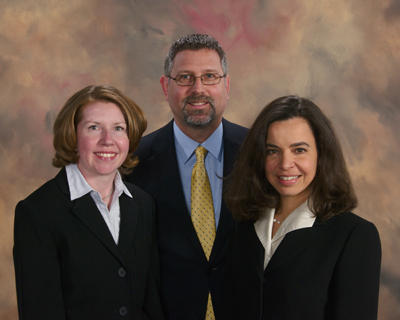
After three years of research and planning Parnassus Preparatory School opened its doors on Monday, August 22, 2011. The existence and success of the school is attributed to three founding parents, Ms. Laura Miranda Bottenfield, Mr. Greg Friess, and Ms. Heather Ross. The founders dedicated three years of their lives, with many sacrifices along the way, to make Parnassus a reality. Through different roles, the founders continue to support the school and ensure that the mission and vision is delivered. (From left to right: Ms. Heather Ross, Mr. Greg Friess, Ms. Laura Miranda Bottenfield). The founding of the school began in 2007 when Ms. Bottenfield, a resident of Maple Grove with two elementary school-aged children, realized that there were limited options for school choice beyond the traditional local public or private schools in the Northwest metro. She researched and studied schools and educational models and realized that the classical model was what she wanted for her children. The founders began the process of creating a school by drafting a plan and finding an authorizer. Ms. Bottenfield, Mr. Friess, and Ms. Ross put together a proposal for a classical school which was accepted by the well-respected charter school authorizer, Friends of Education, which focuses on classical or Core Knowledge charter schools and sponsors multiple charter schools in Minnesota. The Parnassus Preparatory School charter application was submitted to the Minnesota Department of Education (MDE) in 2009 in a competitive application process. There were 16 applicants for new charter schools in Minnesota that year. MDE approved four applications out of the 16 and Parnassus, with its well-researched and thought-out plan, received the highest score. Parnassus obtained its K-12 charter from MDE in 2010. The founders named the school after Mount Parnassus, the towering, limestone mountain in Greece that in ancient times was known as the home of the Muses, the emissaries of literature, the sciences, and the arts. It has since become a metaphor for learning, achievement, excellence, and the development of the mind. The name reflected the founders’ belief that Parnassus would provide a classical academic program that produced students who are critical thinkers, coherent writers, confident speakers, thoughtful leaders, and responsible members of their communities. From the beginning, the founders knew that Parnassus would be exceptional. The school broke the first year enrollment record for charter schools in Minnesota and has exceeded the expectations of its authorizer and parents since. Going forward, the school will continue to grow and improve as it keeps a constant eye on its mission to “provide students with a K-12 classical education grounded in the Trivium that demands their best in intellectual achievement and character development.”

School Leadership

Our Leadership Parnassus Preparatory School was founded by three parents, Ms. Laura Miranda Bottenfield, Mr. Greg Friess, and Ms. Heather Ross. The mission and vision they established for Parnassus continues to shape and influence the culture and leadership of the school. Parnassus is governed by the Board of Directors with support from Board committees. The Board policies are implemented by the Executive Director. The Board of Directors The primary function of the Board is to uphold and support the vision, mission, and philosophy of Parnassus Preparatory School. All decisions are made considering the school’s mission, philosophy, goals, and objectives. Parnassus Preparatory School’s framework document is the touchstone of all decisions. The Board must ensure its quality classical educational program is provided to all students at the school. Every decision or action taken by the Board must be made in the best interest of all Parnassus students — not what is in the interest of the Board, staff, or parents. The Board is responsible for providing strategic leadership for the school. The Board operates as a policy-maker and is a governing board. Standing Committees of the Board Parnassus Preparatory School’s standing committees are active or dormant per the request and needs of the Board. Committees have objectives, strategies, and a preferred set of experiences, skills, and backgrounds for participation in order to better serve the Board. Committees do not have voting power, but make recommendations to the Board. They report to the Board of Directors and must comply with the Open Meeting Law. Budget, Finance, and Audit Committee Governance, Nominating, and Policies Committee Munera pro Parnassus Committee (Fundraising) Advisory Groups have non-voting power, work at the request of the Executive Director or Board of Directors in support of school needs, and do not comply with Open Meeting Law. The Executive Director The Executive Director is the intellectual, academic leader of the school with a philosophical understanding of the classical Trivium liberal arts education. The Executive Director implements the curriculum as defined by the classical Trivium liberal arts tradition and is accountable to the Board of Directors. While the primary focus of this role is of the academic leader, the Executive Director is also responsible for overseeing all general operations, financial management, and establishing the overall culture of the school.

Addressing the Board

Guidelines for Audience Opportunity to Address the School Board See the meeting schedule on the Board Minutes and Reports Page for Board meeting dates and times. Click here for a PDF version of this page along with an audience comment form Each regular meeting offers an opportunity for members of the audience to address the Board of Directors. To encourage and facilitate parent and community involvement in the school, the Board of Directors of Parnassus Preparatory School provides an opportunity for members of the audience to address the Board as follows: Anyone who wishes to address the Board must complete an Audience Comment Card and submit it to the School Board Chair prior to the start of the meeting. Once the Community Comment portion of the meeting begins, no additional cards will be accepted The Board Chair (or designee) will call on each speaker who has submitted an Audience Comment Card, first calling on those addressing an item included in the current agenda, followed by those addressing topics not on the current agenda. When called upon, please state your name and topic. All remarks should be addressed to the Board as a whole, not to any specific member(s) or to any person who is not a member of the Board. If more than three individuals have organized to speak on the same topic, please designate a spokesperson who can summarize the issue. Please limit your comments to three minutes. Longer time may be granted at the discretion of the Board Chair. During this agenda item (normally not to exceed 20 minutes, subject to the discretion of the chair), the Board and administration will listen to comments and ask clarifying questions if needed. The Board will not deliberate or take action regarding requests presented at this meeting. The Board Chair, upon determining a consensus of the Board, may delegate responsibility to the school’s administration or designee to follow up with the speaker within a few days following the meeting. Comments and interactions between Board members and the public are expected to be respectful, courteous, professional, and civil. The Board Chair will be responsible for ensuring that interactions meet these standards and will disallow inappropriate interactions. Profanity, vulgarity or character abuse will not be permitted. The Board Chair or presiding officer has the authority to terminate the remarks of an individual that do not adhere to the established guidelines. Speakers may not address criticism toward an individual district employee. Minnesota Open Meeting law prohibits the Board from discussing concerns about individual employees or students in a public meeting. Please forward comments regarding individual employees or students to the Board Chair in writing.

Careers at Parnassus

Working at Parnassus Preparatory School is not a job, but a career path and journey into personal growth and development — one with great personal satisfaction from seeing the impact of the classical Trivium education on the lives of our students. Teachers are responsible for the education of their students. As role models to their students, teachers are expected to demonstrate high moral character and professionalism and to embrace the Parnassus Pillars of Character. Teachers and staff are accountable to the Executive Director and assigned administrators. They are employed at-will and operate as professionals within the guidelines established by the Executive Director and Board of Directors. These guidelines ensure that instruction will be consistent with the classical Trivium curriculum and sequence. By joining the Parnassus team, individuals will have the distinct privilege of significantly impacting students’ lives. Parnassus Preparatory School is Accepting Applications Thank you for your interest in Parnassus Preparatory School. We accept applications for all positions on an ongoing basis. Please follow these guidelines for applications: Teaching Positions: We accept applications for teaching positions at the School of Grammar, School of Logic, and School of Rhetoricl levels on an ongoing basis. Please click here for detailed information on the job requirements, application form, how to apply, and the interviewing process. You must save the PDF file to your computer before entering any data into the application form. Data entered on the web will not be saved. Non-Teaching Positions (Administrative, Paraprofessional, Administrative Support, etc.): Application for Non-Teaching Positions To apply, send completed application, cover letter, and resume with three references to contact@parnassusprep.com. Once your completed application is received you will only be contacted if you are selected to be interviewed. If you have questions regarding a specific vacancy or the status of such vacancy you should contact Ms. Richardson, our Human Resources representative, at richardson@parnassusprep.com. Notice of Non-Discrimination Parnassus Preparatory School does not discriminate on the basis of race, color, national origin, sex, disability, religion, or age in its programs and activities.

Classical Education

Classical education is a traditional, historical, time-tested education of the highest quality, which emerged from the most elevated cultures of the past.

Classical Education

A classical education cultivates wisdom and virtue by nourishing the individual with truth, beauty, and goodness. Students at Parnassus Preparatory School pursue wisdom and virtue at every level and in each of the many disciplines offered to them. Parnassus Preparatory School’s academic focus is on developing thoughtful, literate, and expressive graduates through classical education, a time-tested model that is systematic and comprehensive. Our distinction is in the liberal arts classical curriculum. LIBERAL, in liberal arts, comes from the Latin word “libertas” meaning “freedom.” The American Association for the Advancement of Science describes a liberal arts education as one that “produces persons who are open-minded; conscious of their opinions and judgments; reflective of their actions; and aware of their place in the social and natural worlds.” In short, those who are educated in the liberal arts model, are trained to think for themselves. CLASSICAL education was first developed during the Middle Ages. The original goal was to provide a systematic, memorable framework to teach human knowledge. This education has produced some of the greatest thinkers, leaders, and scientists in the Western world from the time of the Greeks through the late 19th century and beyond. Language-Based A classical education is more than just a pattern of learning. First, it is language-focused, meaning learning is accomplished through written and spoken words versus images such as videos and television. In language-focused learning, the mind needs to work harder to “decode” a symbol (words) into concepts. Images, on the other hand, allow the mind to be passive and enjoy the translation from words into already completed concepts. Mathematics and Science The study of mathematics and science is core to the Parnassus classical curriculum. Our scholars study mathematics daily and learn about the sciences throughout their academic career at Parnassus. As a classical school, Parnassus guides the students through making connections among the branches of science, between science and history, and the rules of logic. The scientific method is implemented through investigation and experimentation. Students read biographies of scientists, bringing history, mathematics, and science closer together. History – Academic Structure All knowledge is interrelated for the classical learner, and subjects are not studied in isolation. For example, the reading of Homer’s The Odyssey allows the student to consider Greek history, the nature of heroism and courage, and the development of the epic model. However, making such interdisciplinary links is no small task given the thousands of years of accumulated information, knowledge, and fields of study. A classical education at Parnassus meets this challenge by teaching history as the back bone for learning, beginning with the ancients and progressing forward to the modern period in history, science, literature, art, and music. Parnassus structures its academic program based on four periods in history. Our students study these four periods in a cycle of four years going deeper each time the history period is covered — first in the School of Grammar, followed by repeating it in the School of Logic, and finally again in the School of Rhetoric. Ancients Years Covered: 5000 BC – 400 AD Grades: 1G, 1L, 1R Integrated Curriculum: Art, History, Geography, Literature Medieval – Early Renaissance Years Covered: 400 – 1600 Grades: 2G, 2L, 2R* Integrated Curriculum: Art, History, Geography, Literature Late Renaissance – Early Modern Years Covered: 1600 – 1850 Grades: 3G, 3L, 2R* Integrated Curriculum: Art, History, Geography, Literature Modern Years Covered: 1850 – present Grades: 4G, 4L, 2R* Integrated Curriculum: Art, History, Geography, Literature *Note: 2R level students study the Medieval through Modern periods in one year, allowing 3Rs and 4Rs to take other challenging courses.


The Trivium

The term Trivium refers to the three foundational liberal arts: grammar, logic, and rhetoric. At Parnassus, we believe that the Trivium not only illustrates the the cycle of learning, but that the three phases of the Trivium also correspond to the stages of child development. Each of our three schools uses a distinct pedagogical approach tailored to the interests and abilities of students as they grow and learn. The School of Grammar The first stage of the classical Trivium, the Grammar phase, takes advantage of the young student’s great natural ability to absorb large amounts of material, whether math facts, rules of phonics, principles of science, or another language. At Parnassus, grades Prima through Fourth Level Grammar (Kindergarten – Fourth Grade in traditional schools) focus on the foundation of each subject in preparation for all future studies. In the School of Grammar, students’ lives are enriched through the study of mathematics, science, and art — including art history, music, and poetry, and through exposure to classic works of English and world literature. Click here to learn more about The School of Grammar. The School of Logic The second stage of the Trivium, known as the logic or dialectic phase, leverages the logical stage of brain development reflected in the students interest in cause-effect, analysis, and reasoning to teach students critical thinking. The Parnassus School of Logic serves First Level through Fourth Level Logic (Fifth – Eighth Grade in traditional schools). Here, students are ready to take the information they learned in the School of Grammar and make logical connections among them as they assess the importance of the academic content, question and analyze it, and seek truth. Click here to learn more about The School of Logic. The School of Rhetoric The third stage of the Trivium is the Rhetoric phase. Rhetoric is the art of communicating by expressing oneself eloquently and persuasively. In First Level through Fourth Level Rhetoric (Ninth – Twelfth Grade in traditional schools), students engage in higher-level thinking by drawing conclusions from research, analysis, and reasoning so that they are able to form and articulate their own opinions. They are challenged to effectively articulate their stance through writing and public speaking and to embody the ideas they have learned in courses such as Philosophy, Ethics, and Government & Law. Click here to learn more about The School of Rhetoric.

Trivium Grade Level Names

Levels of the Trivium Replace Traditional Grade-Level Terms Parnassus uses its own system for labeling levels rather than following the grade-level system that is used in most neighborhood schools. Likewise, many preparatory schools in the U.S., Britain, and other countries use the Sixth Form system, but since the cornerstone of a classical school is the classical Trivium (the Schools or Grammar, Logic, and Rhetoric), the Parnassus system puts the focus there. We begin with Prima (first in Latin) and label each level first through fourth, depending on the school level in which the student is studying. In other words, after Prima, students at Parnassus will always be in levels one through four. When a student progresses to a new school level, such as moving from the School of Grammar to the School of Logic, the student moves from Fourth Level Grammar to First Level Logic. School of Grammar (Begins with the Latin term, Prima, for kindergarten — “first in Latin”) Prima First Level Grammar (1G) Second Level Grammar (2G) Third Level Grammar (3G) Fourth Level Grammar (4G) School of Logic First Level Logic (1L) Second Level Logic (2L) Third Level Logic (3L) Fourth Level Logic (4L) School of Rhetoric (As with other preparatory schools, our system outlines on transcripts for universities) First Level Rhetoric (1R) Second Level Rhetoric (2R) Third Level Rhetoric (3R) Fourth Level Rhetoric (4R)

Why Study Latin and Greek?

Latin instruction is offered at all grade levels at Parnassus Preparatory School. Scholars begin studying Greek in the School of Rhetoric. All students take Latin every year starting in Prima through First Level Rhetoric (1R). Two years of classical languages (for current students) in the School of Rhetoric are required for graduation. We believe there are at least four solid reasons for classical language study. Greek and Latin Develop English and Provide a Solid Foundation for the Acquisition of Other Languages One’s reading, writing, and speaking of English is improved through learning Latin and Greek. Vocabulary is enriched, grammar is sharpened, and a sense of organization is instilled in the student. Greek and Latin equip a person with the strongest single foundation for mastering Romance languages, modern-inflected ones such as Russian and German, and even non-related tongues like Arabic, Chinese, and Japanese. Working with Latin and Greek broadens a person’s notion of structures possible in languages other than one’s own. In addition, Latin gives an individual a grip on about 80% of the vocabulary of the Romance languages — French, Italian, Portuguese, Romanian, and Spanish. About 800 million people in 57 countries speak these tongues, with Spanish being the official language of 20 nations; French of 27; and Italian, Romanian,and Portuguese of 10 other nations. The Civilizations of Greece and Rome Link Us with the Cultures of 57 Nations on Four Continents A background in the classical civilizations makes students aware of customs, values, and ideas that we have in common with Eastern and Western Europeans and with North and South Americans. Many concepts in government, religion, art, literature, and economics are shared. Familiarity with Ancient Cultures Promotes Tolerance and Understanding of Other Nations and Ways of Life When one is aware of the rich and varied culture of the Greeks and Romans, one is more likely to accept the differing customs and values of other people today. This holds true because through the study of ancient civilizations, one encounters exotic and extreme customs which were not static, but evolved over the centuries. When familiar with diversity, change, and longevity in one’s own culture, a person is more inclined to respect the views, ideologies, religions, and economic systems of others and to appreciate their rich, age-old traditions. Latin Improves College Entrance Exam Scores Students who study Latin in high school consistently score higher on the verbal portion of the SAT college entrance exam than both students who have not studied any foreign language and students who have studied other modern foreign languages.

Classical Education Myths

As thousands of parents choose a classical education for their children, many more are left with questions. Unfamiliarity with the classical method seems to have given rise to some common myths and misconceptions around the classical model. While one may find some truth in each myth, we believe concerns about classical education will begin to fade as one’s knowledge about it increases — resulting in the same enthusiasm that has motivated thousands of parents to return to this proven education method. Myth #1: Classical education was fine for back then, but now we need modern education in a modern world. Fact: Classical education teaches students facts, provides them with the logical tools to use those facts, and perfects their ability to relate those facts to others. This fundamental skill–set is more valuable today than it has ever been. Read More Myth #2: My child is not intelligent enough to attend a classical school. Fact: Students at Parnassus vary in intelligence from “exceptionally intelligent” to “below grade level.” Many parents assume that a classical education is only accessible to “gifted” children, but that is simply not the case. Read More Myth #3: Classical education is too extreme. Fact: This myth usually stems from the fact that classical education is very different from today’s conventional education. Parents are rightfully skeptical of anything that differs so boldly from the norm. Read More Myth #4: Classical education is unnecessarily difficult. Fact: Children enjoy learning. They are wired for it. Assuming that a child will not be able to succeed in a challenging environment is tempting, but simply untrue. Read More Myth #5: Classical schools seem too harsh. Fact: This myth seems to have begun with Hollywood’s negative view of anything traditional, including classical education. Read More

Resources for Families

More Information About Classical Education Below are some recommended readings regarding classical education. Dorothy Sayers’ essay and Veith and Kern’s Classical Education are quick reads and provide excellent explanations of the Trivium, classical education, and their benefits. The Lost Tools of Learning, by Dorothy Sayers The Schools We Need and Why We Don’t Have Them by E.D. Hirsch, Jr. Classical Education: The Movement Sweeping America by Gene Edward Veith and Andrew Kern The Abolition of Man by C.S. Lewis Student Services Parnassus Preparatory School offers a variety of supports to address individual student needs and provide support and resources for our families. Our vision for Student Support Services: Responsibility for all students to reach their full potential is shared by all. High expectations – both academic and behavioral – are maintained for all students. All students are provided access to our core curriculum. All students are valued members of the school community and A positive climate exists to provide a sense of belonging for all learners. We will work collaboratively with all staff, students and families, to provide the best supports and services that will enable students to thrive in the Least Restrictive Environment. Mission The mission of the Parnassus Student Services Department is to promote student achievement, based on specifically identified needs, and to prepare scholars for success in their chosen paths. Special Education Advisory Council (SEAC) Per Minnesota Statute 125A.24, Parnassus Preparatory School has established a local Special Education Advisory Council (SEAC) comprised of parents and guardians of special needs children and staff members who work with Parnassus Preparatory School special needs students and their families. This is intended to increase the involvement of parents of children with disabilities in making recommendations to the administration. The Special Education Advisory Council (SEAC) is open to all members of the Parnassus community. SEAC meetings are held throughout the year and address issues related to fulfilling the needs of Parnassus’ diverse learners. The role of SEAC is to: Represent the interests of Parnassus learners with disabilities. Advise the Special Education Department on parent involvement, current issues, program development and department priorities. Serve as an advocate for high-quality special education programs. Promote communication among family, school, and community. SEAC Meeting Schedule The meeting dates for the 2018-2019 school year is listed below. All meetings are held at 6:30pm in the Parnassus Board Room. 9/25/18 10/25/18 11/29/18 2/28/19 4/25/19 Special Education Resources for Families Total Special Education Services Plan (TSES) TSES Staff Directory 2018-2019 Restrictive Procedures Plan Procedural Safeguards Special Education Parent Handbook McKinney-Vento/Students Experiencing Homelessness The McKinney-Vento Act provides homeless and highly mobile students with certain rights so they have access to opportunities that will help them meet the same high academic standards expected of all Parnassus scholars. Homeless students live in any of the situations listed below: Children and youth who are sharing the housing of others Children and youth living in motels, hotels, trailer parks, or camping grounds due to lack of adequate alternative accommodations Living in emergency or transitional shelters Abandoned in hospitals Awaiting foster care placement Living in a public or private place not designed for humans to live Living in cars, parks, abandoned buildings, substandard housing, bus or train stations, etc. Migratory children living in any of the above circumstances Under the McKinney-Vento Act, children in homeless situations have the right to: Go to school, no matter where they live or how long they have lived there Receive transportation to and from school Enroll in school immediately Participate fully in school activities Have access to the same programs and services that are available to all other students, including transportation and supplemental educational services. Ms. Stafford, Parnassus’ Special Education Coordinator, is our McKinney-Vento coordinator. Please contact stafford@parnassusprep.com for more information.

Our Schools

Parnassus classical methods are integrated in the Trivium (grammar, logic, rhetoric) and Quadrivium (humanities and the sciences) within the Schools of Grammar, Logic, and Rhetoric.

Our Schools

The Trivium is the Cornerstone of Parnassus and Our School’s Mission Classical education is based on a three-part process of training the mind. We begin with the School of Grammar where our students spend their day learning important facts through songs, chants, and drills that systematically lay the foundation for their future study. At Parnassus, the School of Grammar begins with Prima (kindergarten) and continues through our Fourth Level of Grammar (Grade 4 in a traditional school). The students then progress to the School of Logic where they learn formal logic and are taught to think through the process of logical arguments. The scholars continue to pursue knowledge in the arts, literature, languages, history, geography, and the sciences. They learn to work collaboratively, express their opinions, and listen to others’ opinions respectfully through the Socratic method of questioning and discussion. Finally, in the School of Rhetoric, the students are ready to express their opinions and support their claims eloquently, intelligently, and respectfully in the Harkness Table discussion method. Parnassus is the first charter school in Minnesota to offer this classical approach to learning. Our young scholars study of history through original sources, literature through complete classic works, and the sciences through intensive investigations and experimentation — focusing on the understanding of the concepts and applied science. Rhetoric is the art of communicating well. Once a student has obtained knowledge of the facts (School of Grammar) and developed the skills necessary to arrange those facts into logical arguments (School of Logic), the student must then develop the skill of communicating those arguments to others (School of Rhetoric).

School of Grammar

Throughout each year in the School of Grammar, classically educated children learn the factual foundation of each subject that will serve as pegs for more complex learning in the Schools of Logic and Rhetoric. During the Prima through Fourth Level of the School of Grammar (Kindergarten – 4th grade), children are particularly adept at memorization and naturally absorb information. Young children learn songs, rhymes, and recite facts with relative ease. Because young children are so eager to memorize, we challenge them by providing substantial subject matter for them to commit to memory. At Parnassus, students learn the factual foundation of the subjects which are taught through songs, rhymes, and recitation. They learn the rules of phonics, spelling and grammar; the facts of history and geography; the vocabulary and grammar of world languages; and the foundations of science and mathematics. They also learn the basics of music and art and learn to appreciate their beauty.

School of Logic

In the School of Logic, students continue to advance in skill areas and to accumulate knowledge; however, more focus is placed on developing analytical thinking skills and the capacity for abstract thought. The logic stage is also known as the “dialectic” stage because there is more of a give-and-take conversation between students and instructors. Instructors will build upon the Socratic method of guided questions to help students learn to reason, develop conclusions, and discover relationships between fields of knowledge. Students in the First through Fourth Levels of the School of Logic (5th – 8th grades) are expected to demonstrate the ability to move beyond facts to integration and analysis. For instance, in the study of literature, the grammar stage student would be expected primarily to show comprehension, whereas the logic stage scholar is asked to interpret and evaluate the way in which multiple elements of fiction contribute to the meaning of the text. In science, we use the development and testing of hypothesis. In mathematics, we develop a student’s ability to logically orient numbers through the more abstract concepts of algebra, and geometry.

School of Rhetoric

Rhetoric is the art of communicating well. Students are expected to be clear, elegant, and reasoned communicators. In the rhetoric stage, First through Fourth-Level School of Rhetoric (9th – 12th grades) students use knowledge and critical thinking skills to write and speak with fluency, eloquence, and persuasiveness about all subjects in the curriculum. The study of history, literature, government, philosophy, ethics, art, and music appreciation have become so intertwined that they are studied together and examined through seminars in all subject areas. Advanced science, mathematics, and world languages are studied as well as rhetoric and debate. At Parnassus, the School of Rhetoric prepares students to begin to develop original arguments, support their claims, profess well-informed opinions, and debate ideas. Writing and oration are dominant modes of expression intended to persuade listeners and inspire dialogue. Students are liberated to analyze what they have learned in the prior stages of the Trivium and use that knowledge to express their own opinions.

Our Philosophy

Parnassus believes that children learn through the Classical Trivium approach of grammar, logic, and rhetoric and from a content rich curriculum.

Our Philosophy

Parnassus Preparatory School’s Philosophy of Education: An Overview The classical Trivium and the instructional methods used in each school address children’s developmental stages, challenging them to reach their highest potential. Parnassus Preparatory School’s educational philosophy is that all students benefit from the highest standards of academic integrity and from a rigorous, content-based educational program that develops their intellectual capacity and personal character. Through instructional methods that are aligned with the classical Trivium, history as the chronological backbone of the curriculum, and the integration of the humanities and advanced sciences, the school provides an environment that fosters academic excellence and builds the habits of discipline and perseverance to complete challenging tasks.

Pillars of Character

The Pillars of Character at Parnassus are an integral part of our scholars’ education. Students learn about the pillars through our literature and readings in science, history, philosophy, the arts and all other disciplines taught at Parnassus. Our scholars are encouraged to demonstrate the character pillars on a daily bases during class, recess, lunch, and when deeply engaged in Socratic or Harkness method discussions. Read below for a brief overview of our pillars of character. Citizenship To honor rules and laws and act with obedience toward authority. To give of my time and abilities to serve others. To uphold social equality and fairness through respect for individual differences and knowledge of our democratic system. Cooperation To take turns, share and pay attention. To work with others for the good of all involved with a positive attitude. To be a team-player by doing my best and to support others to do their best. Courage To always do what I know is right despite hardship and challenge. To resist negative peer pressure and provide positive peer influence. To defend the rights of others and myself. Honesty To always be truthful with my words and actions, no matter how difficult. Integrity To make the best choices with my words and behavior by knowing the difference between right and wrong and to ask for adult help if I am not sure. To be a person of strong ethical values. Perseverance To complete a task or project to the best of my ability. To not give up or act on discouragement. To be committed to creatively finding a solution. Respect To treat others and myself with kindness. To be polite and considerate. To appreciate the good in others and myself and show compassion. To treat others and the property of others as I wish to be treated. Responsibility To do what I say I will do and be someone others can count on. To use self-discipline when choosing my words, actions, and emotions. To learn from the consequences of my choices, challenges, and mistakes rather than making excuses or blaming others.

The Role of the Teacher

Teachers are the heart of the school. Without dedicated, competent teachers, the best educational practices will never come to fruition in the classroom. Parnassus Preparatory School teachers are expected to implement the school’s academic mission. In the classroom, the teacher is in charge. Outside of the classroom, teachers receive professional guidance with respect to specific goals and objectives. At Parnassus, education is derived from the philosophies found in the left-hand column of the table below. By enrolling your child at Parnassus, you will witness firsthand the qualities and benefits of a classical education and specific character curriculum. Role of the Teacher What Parnassus Is: Knowledge-centered/intellectualist Students learn right from wrong from their studies, from adult guidance, and from extra-curricular activities What Parnassus Is Not: Student-centered/anti-intellectualist Morality develops from the individual’s experience It is best learned when not taught directly Curriculum What Parnassus Is: Knowledge-centered/intellectualist Core subjects are taught separately; History and Geography are defined Explicit phonics instruction is used to teach reading What Parnassus Is Not: Student-centered/anti-intellectualist Any subject can serve to develop problem-solving abilities and creativity; Social Studies combines History, Sociology, Geography and Anthropology Work Habits What Parnassus Is: Knowledge-centered/intellectualist Students are expected to work hard and to learn what is taught; Students are taught important skills to help them become good citizens and learners What Parnassus Is Not: Student-centered/anti-intellectualist The best learning comes when students are interested in what they learn; Teachers are to encourage students to follow their own interests in learning; Students are assumed to have good habits Promotion What Parnassus Is: Knowledge-centered/intellectualist Promotion is largely by achievement; Student may be remediated and retained if achievement is too low What Parnassus Is Not: Student-centered/anti-intellectualist Social promotion is preferred; Student is promoted with age group even if achievement is too low Teacher’s Background What Parnassus Is: Knowledge-centered/intellectualist Education in subject matter being taught is preferred; Of course, excellent teaching methods are also required to help students learn the content What Parnassus Is Not: Student-centered/anti-intellectualist Teacher’s mastery of subject matter is considered less important than an understanding of child and adolescent development

Our Classrooms

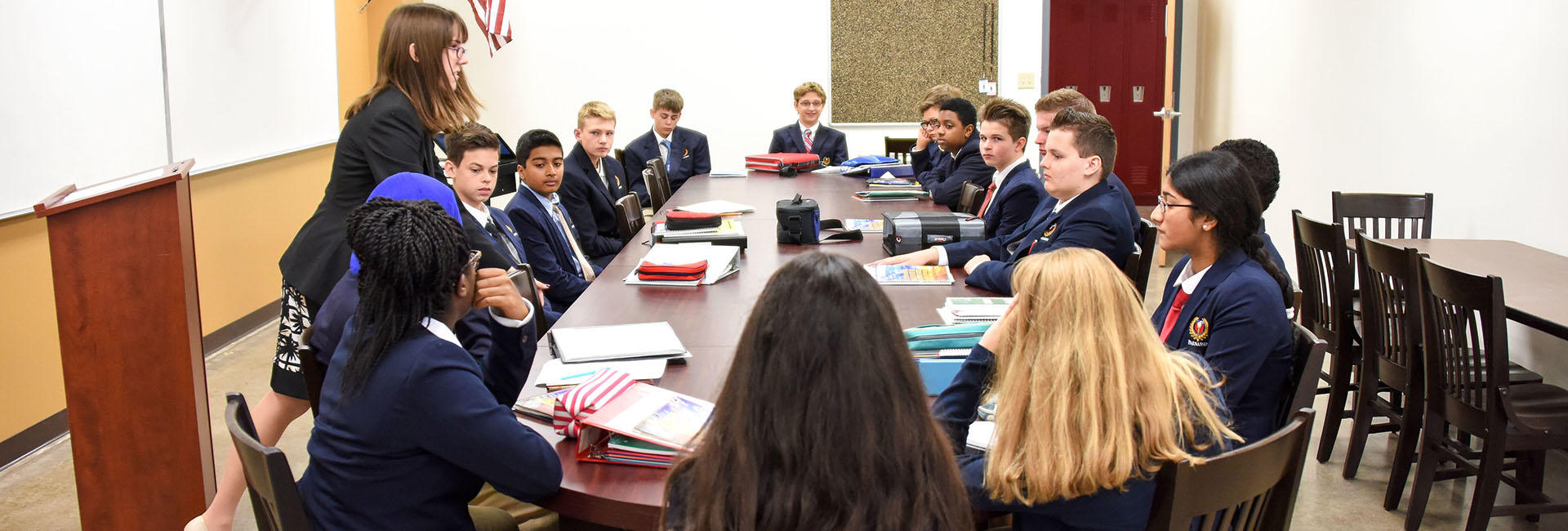
Parnassus Preparatory School provides an excellent education through an academically rigorous curriculum. Our school day is structured around teacher-led direct instruction in the School of Grammar, lectures and the Socratic method of questioning and answering in the School of Logic, and through Harkness Table discussions in the School of Rhetoric. At Parnassus, we believe in knowledge-centered education where the teacher is the leader of classroom instruction. You will not find cooperative learning centers or student pods in our classrooms or observe project-based, child-directed instruction taking place. In the Schools of Grammar and Logic, desks face the front of the room. Our students stand when they answer or address teachers as a sign of respect as well as means toward training our young scholars to be comfortable in standing and speaking in front of others. In the School of Rhetoric, the Harkness Table method is the center of our instruction technique for most courses. Classroom bookcases are filled with classics and other well-written literature and our classroom space is used to educate, not decorate. The following list provides an overview of what you will and will not see in a Parnassus classroom. Classroom Appearance What Parnassus Classroom IS Scholarly setting Students seated at desks squared facing front in the Schools of Grammar and Logic Students seated around the “Harkness” style table for discussions in the School of Rhetoric in most courses Organized, uncluttered room free from distractions Visuals related to curriculum only Students’ curriculum-based work exhibited What Parnassus Classroom IS NOT Students teaching their peers Students working on the floor with improper body posture and increased distraction Students seated at tables during instruction facing many directions Students needing to adjust their bodies to face the front Student work displayed that is not related to the curriculum or is categorized as “cute” Busy knick-knacks Holiday decorations Classroom Discipline and Expectations What Parnassus Classroom IS Successful discipline system in action Clear expectations set forth Students exhibit respect addressing others Mr./Ms., Magister/Magistra, Sir, Madame, et cetera Students stand tall every time they address the teacher Students stand tall when participating in curriculum-related exercises such as disputation/debate, discussions, mock trials High-expectations in every aspect of the school Homework supports the curriculum and reinforces the concepts that are taught What Parnassus Classroom IS NOT Discipline system not respected or successful Unclear expectations Students address authority “dude” “bro” “Mr. D.” et cetera Students lounging in their chairs Low expectations; “they are just kids” type of attitude Homework is limited, non-existent, or busy work

Enrollment

Parnassus is a tuition-free college preparatory classical school. We welcome all applications!

Enrollment

Parnassus seeks and supports students from all backgrounds and our proven rigorous classical program demonstrates that every Parnassus scholar will thrive in the school’s challenging academic environment. Enrollment at Parnassus comprises of several steps. Step One First, interested families should submit an application for the academic year and grade levels of interest. The application submission does not obligate the family to attend Parnassus nor does it guarantee enrollment at the school. If submitted during our open enrollment period – October 1st to January 31st – the application will be included in the lottery. If submitted after our open enrollment period, the application will be added to the waiting list in the order in which it was received. Step Two If you submitted the application during our open enrollment period, you will receive a letter in the mail regarding the results of the lottery. The lottery is held each February, and the letters are mailed out shortly after the lottery. The results of the lottery will be either an offer for an opening at Parnassus or to let you know where your child is on the waiting list. If your child was placed on the waiting list, we will contact you once we have an opening and your child is the next in line. If you submitted the application after our open enrollment (after January 31st), we will add your child to our waiting list in the order in which the application was received. We will contact you once we have an opening and your child is the next in line. Until you have an offer for an opening at Parnassus, no further action is required from you. Step Three If you have received an offer for enrollment at Parnassus, either through the lottery or through the process described above, you will be asked to complete enrollment forms to confirm your acceptance to enroll your child at Parnassus. There are three ways to accomplish the enrollment: 1) Families can come to Parnassus and complete the enrollment forms in person; 2) We can email the enrollment forms in PDF format that families will need to print, fill out, and either scan and email to the school or drop them off at the school; 3) Parnassus can mail the forms to be completed and returned by mail or dropped off at the school. Regardless of the enrollment method you choose, once you complete the enrollment forms and they are verified as received by the school, your child will be enrolled at Parnassus Preparatory School.

Special Information for Prima (Kindergarten)

Prima: Beginning Your Child’s Classical Education Prima (Kindergarten) at Parnassus is like no other program addressing this student age group. The program is challenging while also providing an exciting and enjoyable learning methodology. Learning time is structured, knowledge-based, and teacher-led; however, students also enjoy many opportunities for movement, songs, and chants, read-aloud stories from them teachers, and of course, recesses. In addition to the Parnassus classical core curriculum, our Prima scholars have Spanish and Latin daily, taekwondo, physical education, music, and art. Please note that Prima scholars must be five years old by September first of the academic year they will start Prima. To apply for Parnassus Preparatory School’s Prima level (as with all other levels), you must submit an application. Please visit Submit Your Application page to submit your application. A Parnassus enrollment representative will contact you once your child is first on our waiting list and we have an opening. Thank you for your interest in Parnassus Preparatory School. Please visit our School of Grammar section to learn more about Prima!

Lottery Process

2018-2019 Open Enrollment Our Open Enrollment for the academic year of 2018-2019 began on October 1, 2017 and ended on January 31, 2018. Applications submitted during the open enrollment period participated in the lottery. Families who submit applications after the open enrollment deadline of January 31, 2018 will be admitted if there are any remaining openings, or will be added to a waiting list in the order in which the application was received. 2019-2020 Open Enrollment Our Open Enrollment for the academic year of 2019-2020 will begin on October 1, 2018 on January 31, 2019. Applications submitted during the open enrollment period will participate in the lottery. Families who submit applications after the open enrollment deadline of January 31, 2019 will be admitted if there are any remaining openings, or added to a waiting list in the order in which the application was received. Lottery Parnassus usually receives more applications than available spaces. In this situation, the school holds a lottery to randomly select applications submitted during open enrollment for the open positions and waiting list order. The lottery is held in mid February and results are mailed to families by the end of February. Siblings Siblings of currently enrolled students who complete and submit an application by the end of the open enrollment period are automatically enrolled if there are available seats in the grade. After the open enrollment period, siblings of already enrolled students receive preference. If the number of siblings exceeds the number of available seats in the grade, a sibling lottery will be held to identify admitted students and to establish the order of the sibling waiting list for that grade. If all seats in the grade are filled by siblings, the lottery continues and establishes the sibling waiting list, which has preference over the general waiting list and the teacher children waiting list. Prima (Kindergarten) Age Requirement Children entering Prima must be 5 years old by September 1st of 2018 (for the 2018-2019 school year). Submitting an Application Visit our Application Overview page for additional details about applying to Parnassus.

Enrollment Policy

Parnassus Preparatory School seeks to enroll a diverse and representative student body, welcoming applicants regardless of race, ethnicity, socio-economic status, gender, special needs or English-as-a-Second-Language status. Sibling Preference Siblings of currently enrolled students who submit an application by the application deadline will receive preference for admission, provided the currently enrolled student submits an “Intent to Return” Form (which was provided to all students by the school). In the event we have more sibling applicants than open spaces at any grade level, we will conduct a lottery among all of the sibling applicants who met the deadline to determine admission for that grade. Siblings who are not chosen in the lottery will be placed on a waiting list and notified promptly if a space becomes available. For additional information on our enrollment policy, please see our Board Policies page.

Donate

Parnassus Preparatory School is a tuition-free, college preparatory classical school. Your support, of any kind, is greatly appreciated.

Help us create the next generation of thoughtful leaders and virtuous citizens. Parnassus offers an elite education in a free, public school setting. Whether you choose to support us with a financial contribution or through the gift of your time, your generosity helps us fulfill our mission of providing students with a tuition-free, rigorous, college preparatory education. Give Now to Parnassus Preparatory School Use the “Donate” button below to easily make your secure gift via credit/debit card or PayPal account today. Donate with PayPal button If you have questions or specific directions about how your gift should be used or acknowledged, please consult our Gift Acceptance Policy or contact giving@parnassusprep.com. Giving Options There are many ways you can support Parnassus. As a registered 501(c)3 organization, your gift is tax-deductible as a charitable contribution. Please read below on information on making a donation to Parnassus and how to maximize the impact of your gift. Give by Mail: If you prefer not to use a credit or debit card or PayPal, you can donate to the school by cash or check by printing our donation form and sending your contribution to: The Parnassus Annual Fund Parnassus Preparatory School 11201 96th Avenue North Maple Grove, MN 55369 Recurring Monthly Gifts: If you would like to provide ongoing support in the form of an automatic monthly contribution, please check the “recurring gift box” within PayPal or complete and submit our donation form to the address above. You can select the amount of each gift and the time frame over which you would like to give. Small, recurring donations can stack up to big support! Corporate Matching Gifts: Many companies and employers offer a matching gift program as a benefit to their employees. Please ask your employer if they offer this opportunity to maximize the impact of your gift. Any requests for documentation can be directed to giving@parnassusprep.com. In-Kind Donations: The school may accept a donation in the form of in-kind goods or services. For more information, please see our Gift Acceptance Policy or contact giving@parnassusprep.com. Donations of Securities or Investments: Parnassus may accept donations in the form of publicly-traded securities. To make a tax-deductible gift of mutual fund shares, bonds, or appreciated stocks, please contact giving@parnassusprep.com. Planned Giving: Parnassus will gratefully accept residual bequests from supporters of the school who wish to include Parnassus in their final plans. Please contact giving@parnassusprep.com for more information about making a planned gift. Give your Time: Parnassus relies on a community of active and involved parent, family, and community volunteers to help us carry out our mission! If you are interested in sharing your time with us, please contact php@parnassusprep.com.

Reviews

4.1
13 reviews
5 stars
10
4 stars
0
3 stars
0
2 stars
0
1 star
3
  • KG
    Kai Good
    Apr 27, 2019
    5.0
    Amazing school! Amazing students!
  • SL
    Sowbhagya Lakshmi
    Aug 21, 2018
    5.0
    Very good high level institution
  • HV
    Hi Vang
    May 18, 2017
    1.0
    well i saw their in 3rd grade now i'm in 6th i dont like it the kids on the bus bullied my sisters and did bad things such as speak badly to others and the teachers make you flip a card for doing the most supidest stuff.
  • MS
    Maria Sak
    Aug 14, 2014
    5.0
    I am a Parnassus 5th grader and I respectfully disagree with your comment. Parnassus is much more than a strip mall! It is a school and a second home for myself and many other children. Parnassus is a place where I get an excellent education, meet proper teachers and make amazingly special life long friends. At Parnassus we read classical literature and study Latin, while other schools just let their students play on i-pads all day.(and no, my mother did not make me write this)

Brand Certified Facts from Parnassus Preparatory School

This information is certified by Parnassus Preparatory School and published from the brand's official system of record. Data is distributed through an enterprise-grade knowledge management platform. Learn more about our data sources
Certified August 16, 2026Yext Knowledge Graph
  • Address
  • Categories
  • Geo coordinates
  • Legal business name
  • Hours of operation
  • Phone number
  • Official website
Syndication Network
Approved business data is pushed to 100+ publishers, including: