Location.com logo
King Galleries - Santa Fe, 130 Lincoln Avenue, Suite D, Santa Fe, NM, 87501
Brand Certified

King Galleries - Santa Fe

Business Details

130 Lincoln Avenue, Santa Fe, NM
87501, United States
(480) 440-3912
http://www.kinggalleries.com

About

Art GalleryArt Dealer
EXPERIENCE EXCEPTIONAL ART - CLASSIC TO CONTEMPORARY King Galleries of Scottsdale and Santa Fe are the Nation's premier Native Pottery Art Galleries. We feature Native American Ceramic Pottery Art along with local artwork. Our mission is to provide our customers with the highest quality artwork at an excellent price. Please check our daily new additions!

Details

  • RestroomNot available
  • Welcomes familiesAvailable
  • Wheelchair accessible entranceAvailable
  • Wheelchair accessible restroomNot available

Location

King Galleries - Santa Fe
130 Lincoln Avenue, Santa Fe, NM
87501, United States

Hours

Monday10:00 AM - 5:00 PM
Tuesday10:00 AM - 5:00 PM
Wednesday10:00 AM - 5:00 PM
Thursday10:00 AM - 5:00 PM
Friday10:00 AM - 6:00 PM
Saturday10:00 AM - 6:00 PM
Sunday10:00 AM - 5:00 PM

Products & Services

4 lists · 41 items

Pueblo Pottery Artist

25 items

Maria Martinez
Maria Martinez
$500.00 - $10,000.00

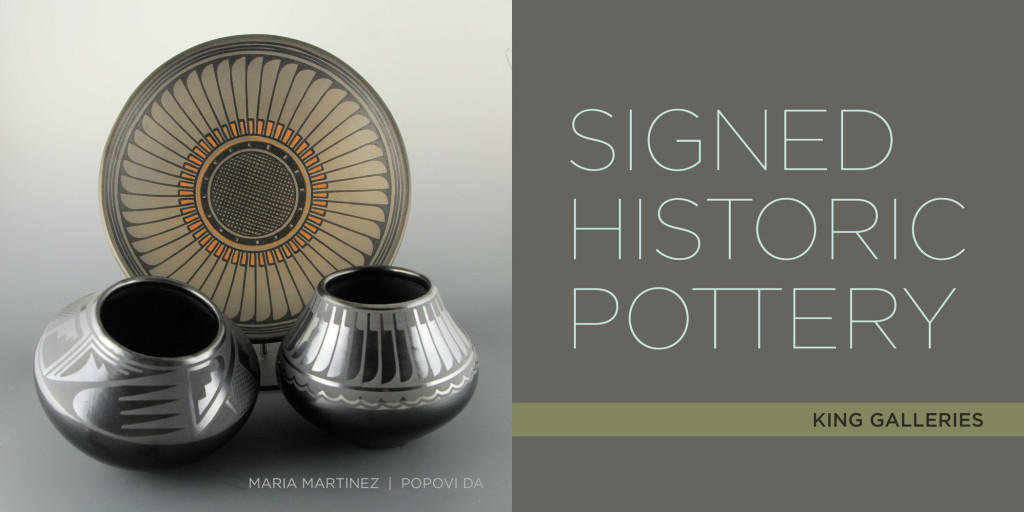
Maria Martinez is considered to be the most collected of traditional Native America pottery. Around 1920 Maria and her husband Julian created the prized, collected and awarded "black-on-black" style of Native American pottery. Throughout her long career, she continued to make pottery while her husband, son, or daughter-in-law painted the traditional designs on her pottery. Maria Martinez pottery has become iconic and has lead to a long history of generational art forms within the Native American Pueblos of the Southwestern United States. Her commercial sale began in the early 1900s and continued until she retired from making pottery around 1971. Maria learned the art of pottery construction from her aunt (tia) Nicolasa of San Ildefonso Pueblo, Northern New Mexico. Maria Martinez restored the process of black-on-black pottery design from samples of pottery shards discovered near her home. It was not until around 1919-20 that Maria Martinez with the help of her husband Julian Martinez created the famous black-on-black pottery. It was this style which was polished, painted and then fired black using horse manure. She worked with Julian until his death in 1943. She then worked with her daughter-in-law Santana who was married to her eldest son, Adam. In the mid-1950's Maria made pieces which were plain and signed with her Tewa name, "Pove-ka," which means "Water Lilly." Beginning in 1956 Maria started to work with her son, Popovi Da. Once again, Maria would make the pottery, and now her son would paint the designs. These are often considered among the best of her career after the early work with Julian. Popovi Da worked to revive polychrome pottery along with creating sienna (double fired) pieces. They also created a few redware vessels. Popovi passed away in 1971 and around that time Maria Martinez retired from making pottery. She was the subject of several books during her career. Alice Marriot wrote the book, "Maria: The Potter of San Ildefonso" in 1948. Richard Spivey also wrote a book on her entitled, "Maria." Both were essential additions to the collector knowledge of this vital potter. Maria was also the subject of numerous museum exhibitions. Her pottery can be found around the world in various museum permanent collections. The highly polished surface of her black pottery is distinctive, and yet it helped to change the economic course of San Ildefonso pottery. Today, her descendants Barbara Gonzales, Cavan Gonzales and Marvin Martinez all continue her legacy. Her grandson, Tony Da, learned to make pottery from Maria but had a short career.

Margaret Tafoya
Margaret Tafoya
$600.00 - $30,000.00

Margaret Tafoya is a daughter of noted potter Sara Fina Tafoya and a sister of potters Christina Naranjo and Camilio Tafoya. She is the matriarch of a family of renown potters, each of whom created their distinctive style. Margaret Tafoya had twelve children, eight of whom became potters. They include Virginia Ebelacker, Lee Tafoya, Toni Roller, LuAnn Tafoya, Mela Youngblood, Jennie Trammel, Mary Ester Archuleta and Shirley Tafoya. Her grandchildren, and today even her great-grandchildren carry on the pottery making tradition. Margaret Tafoya was a guardian of traditional pottery making methods and techniques. She created large vessels with stone polished surfaces, and her carving completed before the piece was polished. Margaret produced her work from the 1920's through the 1980's, and throughout her career, she won numerous awards, which including Best of Show at Santa Fe Indian Market in 1979 and 1980. She was also awarded the Heritage Fellowship from the National Endowment for the Arts. The book, "Born of Fire," follows her life and art over the many decades. It is also the only book to identify her pottery by the decade made by using the variations in her signature over time. This book is the first complete biography of Margaret Tafoya ’s life. It is divided into decades, giving the reader a deeper understanding of her life and pottery over nearly 100 years. It is also the first book to help identify and date her pottery through the use of her signatures. There are additional biographies on Virginia Ebelacker, Richard Ebelacker, Lee Tafoya, Linda Tafoya, Jennie Trammel, Mela Youngblood, Nathan Youngblood, Nancy Youngblood, Toni Roller, Jeff Roller, LuAnn Tafoya, Daryl Whitegeese, Mary Ester Archuleta and Shirley Tafoya. The photography of the pottery in this book is exceptional. Personal narratives by family members and family photographs throughout the book create a wonderful sense of her humanity and artistic accomplishments.

Tony Da
Tony Da
$2,000.00 - $50,000.00

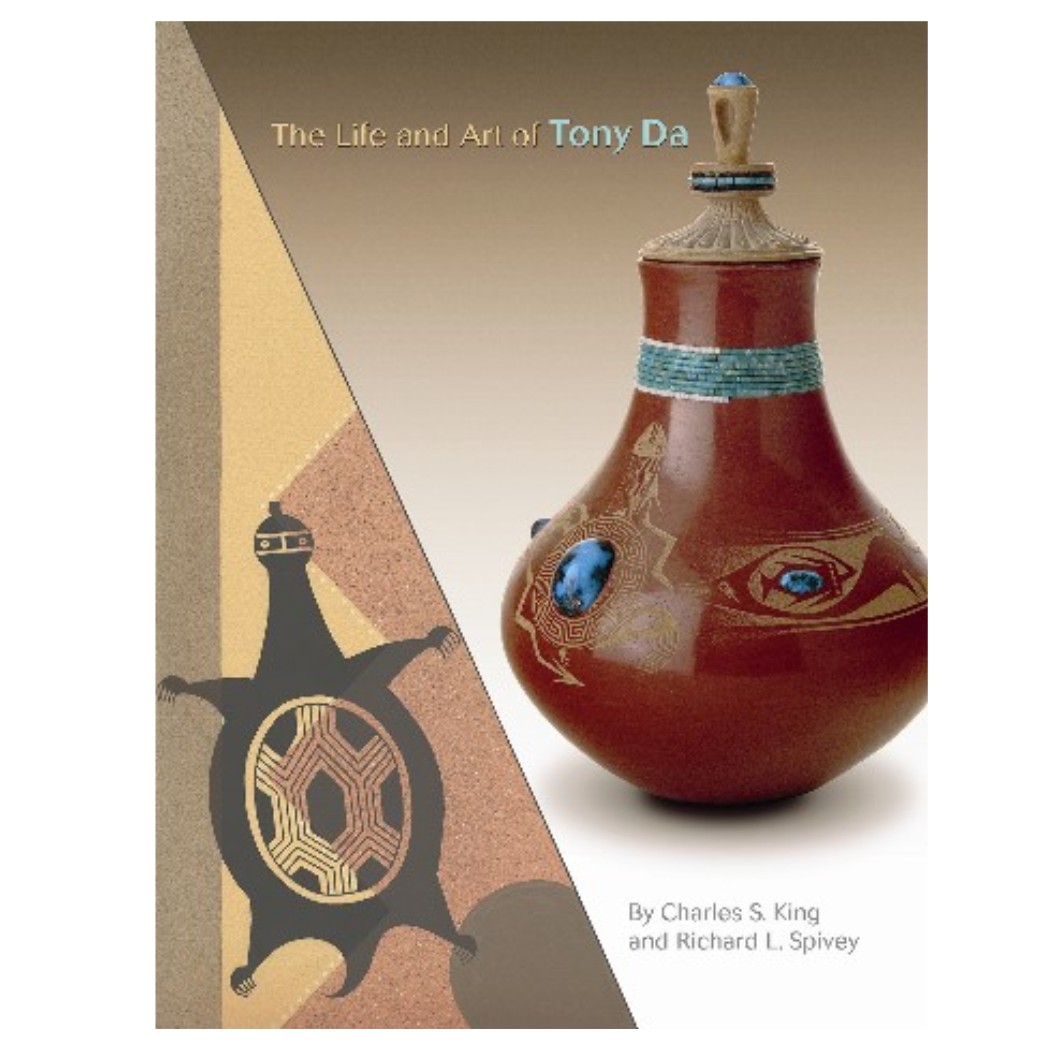
Tony Da was the first Pueblo "rock star." He broke cultural barriers as a "modern Indian," steeped in San Ildefonso Pueblo tradition but living in a contemporary world. A grandson of Maria Martinez and the son of Popovi Da, his precision designs, and techniques revolutionized Pueblo pottery and created a new vocabulary for the art. Among the first men to both make and design pottery, he introduced sgraffito etching, inlaid stones, and beads, initiated black and sienna colorations, and invented his stylized iconography derived from the ancient Mimbres pottery. Although his career only spanned fifteen years, his work and persona are increasingly relevant. In 2011, Tony Da's pottery and paintings were the focus of an exhibit entitled; 'Creative Spark, The Life and Art of Tony Da.' (Museum of Indian Arts and Culture of Santa Fe 2011-2013.) Over the course of his career, Tony Da demanded perfection. He was an innovator in his art as well as in his life. Tony was known to his family members as a creative perfectionist, and to his collectors as a creative genius. Tony's pottery today is considered to be among the most sought after by collectors. Charles King and Richard Spivey co-authored a history of his life and artwork in testament to his legacy titled, 'The Life and Art of Tony Da.' Tony was both an art superstar of his time and a profoundly private individual. This portrayal brings the reader into the innovative and volatile world of this noted Potter.

Dextra Quotskuyva
Dextra Quotskuyva
$3,000.00 - $25,000.00

Few potters to have had such impact on their art as Dextra Quotskuyva Nampeyo. She is a great-granddaughter of Nampeyo of Hano, descending through her eldest daughter, Annie Healing. For almost forty years, she has been one of the most creative, innovative and influential potters at Hopi. She is also the mother of famed painter Dan Namingha and potter Hisi Quotskuyva. She taught Steve Lucas, Loren Ami, Yvonne Lucas and Les Namingha to make pottery, resulting in a nearly unprecedented influence in Hopi pottery. Dextra continues to use the bee-weed plant for the black and native clay slips for the red. Dextra's pottery can be found in the permanent collection of numerous museums and has been the subject of a book and exhibition at the Wheelwright Museum, entitled, "Painted Perfection." Dextra uses only traditional Hopi pottery methods in hand coil construction, stone polish, paint, and open fire.

Tammy Garica
Tammy Garica
$2,000.00 - $30,000.00

Tammy Garcia is undoubtedly one of the most renown of Pueblo potters. She is a daughter of Linda Cain and sister to Autumn Borts-Medlock. She is also the granddaughter of Mary Cain, great-granddaughter of Christina Naranjo and great-great-granddaughter of Sara Fina Tafoya. Tammy learned to make pottery from her mother and continues the Pueblo traditions of using native clay as the foundation. Her distinctive pottery bridges the gap between traditional and modern. The intricacy and precision of her carving are one of the attractions to her pottery and bronze art. Tammy's pottery continues to evolve into new directions with each new idea. Amazingly, Tammy Garcia makes less than ten pieces a year. This small number is a reflection of the time involved in each section. The building, designing, carving, polishing, and firing are labor intensive. As a result of the time required, she never replicates a design or pot, and this is part of the dynamic process of her art. Tammy Garcia's distinctive forms and imagery create “stories” on the vessels. Her designs inspired by Pueblo life, animals, insects, pueblo stories or traditional images, are both traditional and contemporary. The surface of her works are polished then carved, and there is always a fantastic balance of carved verses matte areas. Tammy’s pottery is in permanent collections and museums worldwide such as The Denver Art Museum, the Heard Museum, The Autry Museum among others. She has won multiple awards for her pottery and most recently was the subject of a one-woman exhibit at the National Museum of Women in the Arts.

Nathan Youngblood
Nathan Youngblood
$2,000.00 - $30,000.00

Nathan Youngblood is a grandson of noted potter Margaret Tafoya and the son of Mela Youngblood. In 1976 he moved in with his grandparents and began an intense apprenticeship making pottery under their guidance. Attention to the small details was also imparted to him by his mother and grandmother. The precision of his work is particularly evident in his forms, which have a near geometric perfection in shape and symmetry. Nathan says, “I realize I don’t make pots, I’m just involved in the process. The clay does what it wants to do, goes where it wants to go. I stick my hands in the clay and where it goes I follow.” Nathan’s clay art has evolved dramatically throughout his career. His early work focused on classic Santa Clara shapes and designs. In the early 1990’s, Nathan re-examined his experiences with art from around the world and how it could be incorporated as part of his designs. His love of Asian ceramics influenced how he designed his pottery and how he utilized matte and polished surfaces to emphasize form. The designs seemed to be more complicated, less linear, and more ethereal in concept. He “opened the door for other potters to use clay as a vehicle for their personal and cultural experiences.” Over the years Nathan has won over 140 awards for his pottery. He is one of only a handful of Santa Clara potters who use natural clay slips to create color contrasts of red and tan in his pottery. This combination of polished red and tan sections with matte or micaceous surfaces has become the new Santa Clara “polychrome.” Throughout his career, he has continually built on the lessons learned from his mother and grandmother. This has created a solid foundation for the evolution of his pottery and “he has set the bar high for any potter to balance creativity, innovation, and technical expertise.”.
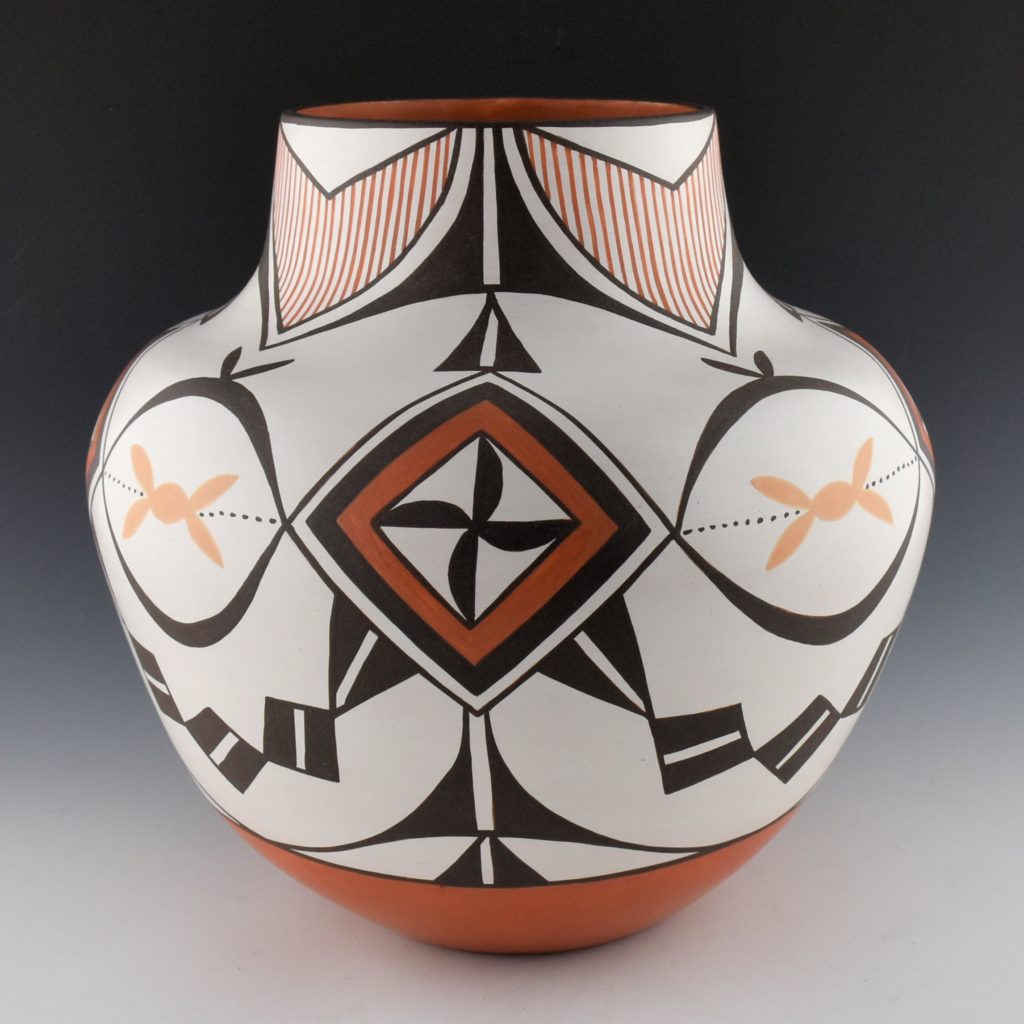
Russell Sanchez
Russell Sanchez
$500.00 - $30,000.00

Russell Sanchez (b. 1963) continues to be one of the master innovators in Pueblo pottery. Each piece he creates is perfectly hand-coiled, stone polished, then etched, inlaid, designed, and fired with utilizing traditional Native American pottery methods. Russell learned to make pottery from his great-aunt, noted potter and pottery matriarch Rose Gonzales (1900-1989.) He started making pottery at the early age of 12 years old on the San Ildefonso Pueblo. Russell has received numerous awards and recognition for his pottery throughout his career. Including such awards as 'Best of Division' at both the Santa Fe Indian Market and the Heard Indian Market. In 2007 Russell's art was presented in the feature article of the Fall issue of Native People's Magazine. In 2011, Russell was awarded the exclusive 'Tony Da Award' for Pottery in Santa Fe. Most recently, Russell was a recipient of the 'New Mexico Governor's Award for Excellence in Art 2017.'
Les Namigha
Les Namigha
$600.00 - $8,000.00

Les Namingha is the son of Emerson Namingha, the grandson of Rachel Nampeyo, great-grandson of Annie Healing, and a great-great-grandson of Nampeyo of Hano. Les Namingha blends and deconstructs traditional and historic designs in an amazingly modern style. The precision of his painting is certainly a reflection of his learning to make pottery from his aunt, Dextra Quotskuyva of Hopi, a master potter and world renown pueblo pottery innovator. Les has won numerous awards for his pottery at Santa Fe Indian Market, the Heard Museum Market, and other events along with being featured in numerous book on Hopi and Pueblo art. He continues to be one of the dynamic innovators in Pueblo pottery! Les Namingha transforms and challenges the surface expectations of Hopi and Pueblo pottery through his creative designs, textures, and materials. He is much a painter as a potter, and his vessels rely on form, surface design, and color to reveal their ancient and modern artistic influences. Les says of his work; “Sometimes the painting goes with the flow of what’s in you. There’s not as much thought as in other pieces. That comes from my love of abstract painting where the process is the process. There are other works where there is thought that goes into it. Maybe I’m working on the under-structure design with painting first and then laying it aside for a bit. I’ll think about where to go next and see where the piece leads me. There is also solely relying on the teaching of the older Nampeyo type designs. There the process for me is trying to work with the color since the structure is already there. The question is what I’m going to do with it. “

Al Qoyawayma
Al Qoyawayma
$1,000.00 - $25,000.00

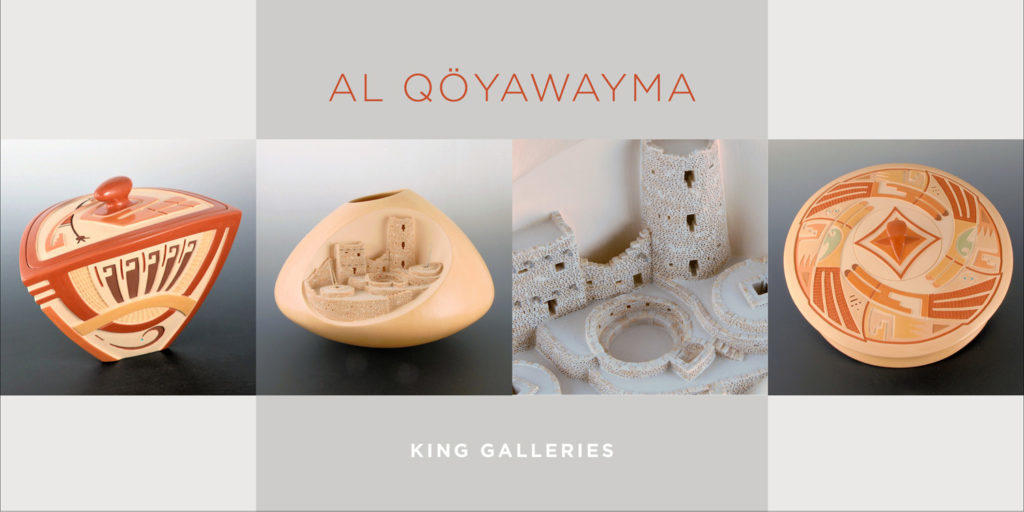
Al Qoyawayma's Hopi pottery is created in two distinct styles. The first style embodies figurative sculpted reliefs using the repousse' technique, combined with traditional coil construction and tactile stone polished surfaces. The resulting contemporary Hopi pottery calls forth images of the Southwest with its subtle mix of desert hues and interplay of light and shadows so reminiscent of the land of the Hopi. This land, and the essence of his ancient relatives nurtures and inspires the artist. Al writes of himself, " I am of the second generation of Hopi beyond the broken pattern, a pattern, a way of life totally foreign to the western world. With the full influence of western civilization, I am the products of two worlds. Out of our family clan, the Coyote Clan, it was said that we would be the generation to meet the new world and make changes…… that was our ancient role as the Coyote Clan….to be those who go before. It is only natural that one of our basic survival skills, as exhibited at our ancient home of Sikyatki, should be adapted to today’s world of art. Through the patient hand and guidance of a beautiful teacher, my aunt Polingaysi, I learned the basic techniques and philosophy I now use in my pottery creations. My clay creations reflect the aesthetic influences of the southwest environment and values passed down through our family. Form, textures, contrasts, shadow, the softness of desert color hues are foremost in my work. Oral history and research provide me with themes, continually emerging, which identifies who we were and are; a profound pursuit. At the same time my repoussé technique provides a “contemporary” style of ceramics. I am not restricted by a particular tradition, rather I’m free to innovate. I find myself trying to “reach” in my creative pursuit, as I strive to bring into focus those things, human and spiritual, just beyond my reach. Creativity will always be my challenge." Most recently, Al won "Best of Pottery" at the 2016 Santa Fe Indian Market and "Best of Pottery" at the 2017 Heard Indian Market.

Nancy Youngblood
Nancy Youngblood
$900.00 - $30,000.00

Nancy Youngblood is a daughter of Mela Youngblood and a granddaughter of Margaret Tafoya. She was inspired to begin making the swirl melon bowls when she saw one made by her great-uncle Camilio Tafoya. Each piece is coil built, carved, stone polished and native fired. Nancy is focused both on the artistry of her pottery but also on the traditions of Santa Clara Pueblo and her family. When Nancy Youngblood first began making pottery, she started with miniatures, focusing on creating very intricate form and tightly carved designs. Her melon ribbed vessels are among her best-known forms. There are a variety of styles, including straight ribs, swirl ribs and "s" swirl ribs. Each variation required different techniques. Nancy also creates "free form" designs, which allow her to use the melon rib concept of abstract designs. In 1989 she won "Best of Show" at Santa Fe Indian Market. The was a testament to the quality and integrity of her pottery art. As well, it was ten years earlier that Margaret Tafoya, her grandmother, also won "Best of Show". Today, Nancy Youngblood continues this amazing legacy. Her sons, Christopher, Sergio, and Joseph, have all worked with the clay. It is important to her that each of them learns the techniques and cultural importance of the clay. Nancy's pottery can be found in museums worldwide. She has also been featured in numerous books including, "Crafted to Perfection", "Born of Fire" and "The Art of Clay". Most recently she won "Best of Pottery" at the 2015 Santa Fe Indian Market for a large jar with melon ribs and a horse design. Stunning!

Debbie Clashin
Debbie Clashin
$600.00 - $10,000.00

Debbie Clashin, a member of the Hopi-Tewa Tobacco Clan was born to Lorena and Morris Clashin. Among her cousins are Dianna and Mark Tahbo, Dorothy Ami, and Larson Goldtooth. Debbie was exposed to pottery making for much of her life but only began to really learn the art herself around 2010 from Dianna Tahbo as her primary teacher. Debbie Clashin has shown her work in a juried competition at the Museum of Northern Arizona in Flagstaff earning a 1st place ribbon, she felt was a tribute to her teacher Diana Tahbo, with further instruction from Mark Tahbo. Debra also entered a piece in the SWAIA Santa Fe Indian Market juried show in 2015 earning a 1st place ribbon for piki utilitarian pottery bowl. Debbie enjoys making larger jars with small openings, and flat shaped seed pots. Her favorite designs are stylized interpretations of ancient Hopi symbols, bird elements, and blessing designs.
Virgil Ortiz
Virgil Ortiz
$600.00 - $20,000.00

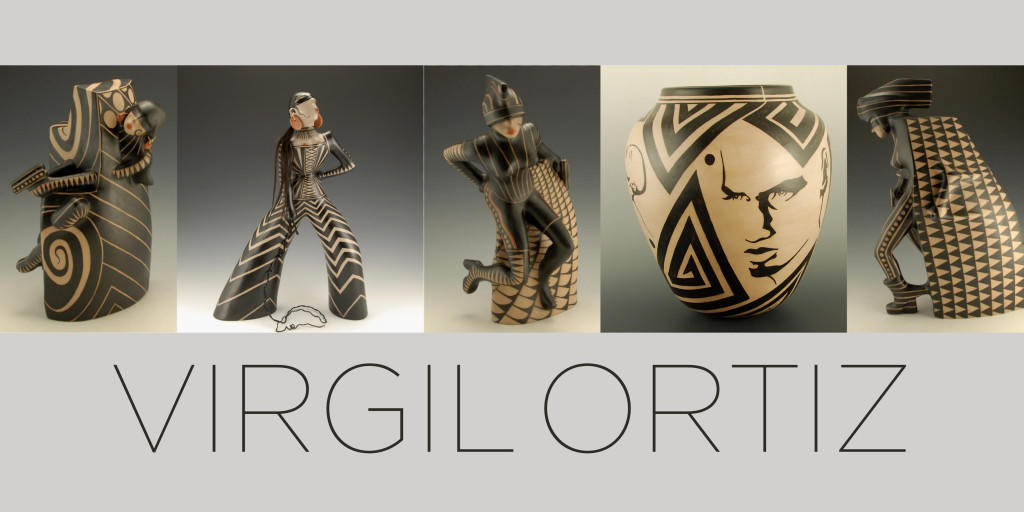
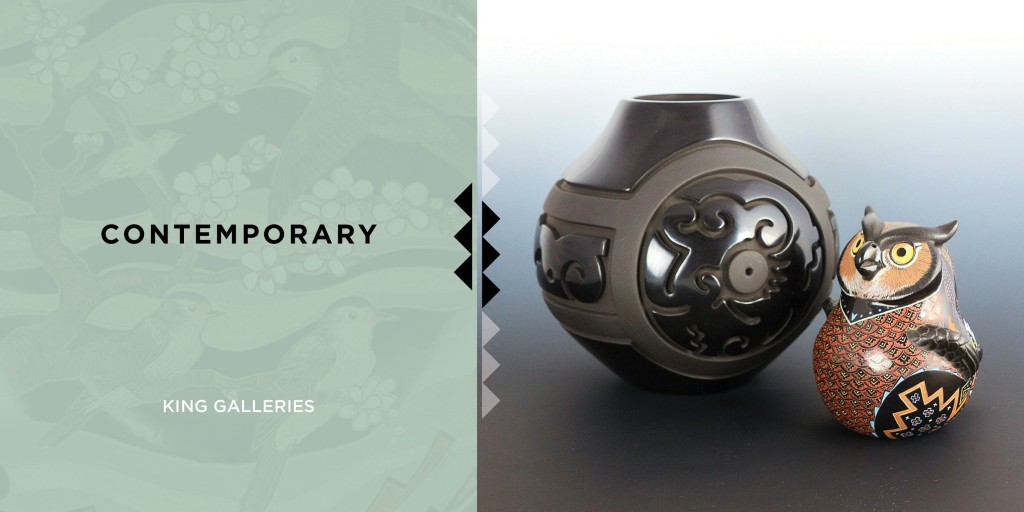
Virgil Ortiz is one of the most innovative potters working today. He is a son of noted potter Seferina Ortiz and grandson of Laurencita Herrera. His sisters Janice, Inez, and Joyce are also potters along with his niece, Lisa Holt. He encourages his nieces and nephews also to continue making traditional pottery. His work has been featured in numerous museum exhibits nationwide, and he is also known for his fashion designs. He has won multiple awards at Santa Fe Indian Market, the Heard Museum Indian Market, and other events. His pottery can be found in museums worldwide. “The thought has never crossed my mind to be anything other than an artist and fashion designer. Art is in my blood”, says Virgil Ortiz, a Cochiti Pueblo Native. Sought by celebrities, royalty, and collectors, American Indian artist Virgil Ortiz artworks move into a new era combining art, décor, fashion, video, and film. Hailing from a family of celebrated Pueblo potters. From the National Museum of the American Indian in New York, and Denver Art Museum, to the Hertogenbosch Museum in The Netherlands, and Foundation, and Cartier’s Paris, France. Virgil Ortiz’s exquisite clay works are exhibited worldwide. Born in 1969, the youngest of six children, Ortiz grew up in a creative environment. Storytelling, collecting clay, gathering wild plants, and producing figurative pottery was part of everyday life. His grandmother Laurencita Herrera and his mother, Seferina Ortiz, were both renowned Pueblo potters. “I didn’t even know it was art that was being produced while I was growing up,” he remembers. Virgil Ortiz, who works and lives in Cochiti Pueblo, New Mexico, has worked very hard and has had a few lucky breaks. His efforts have propelled him to a preeminent place among contemporary Native artists. After a highly successful collaboration with fashion mogul Donna Karan, in which he developed boldly patterned textiles based on his graphic decorative painting. Ortiz launched his fashion line. His designs are captivating, provocative, and edgy thus creating the high demand. His sharp laser-cut leather jackets, swinging taffeta skirts, cashmere sweaters and silk scarves echo the voluminous contours and sinuous motifs of Pueblo pottery. He showcases the richness of indigenous high fashion and compelling storytelling of Pueblo culture and history. Virgil Ortiz debut Colorblind, his all-new T-shirt collection blending art, vibrant colors and graphic images. Each of which portrays his interpretation of the historic Pueblo Revolt of 1680 – the First American Revolution. “I want to pay tribute to our great leader Po’pay and ancestors that lived and walked on our lands, and respect that their spirit will live on through me.” Creating a global awareness of Pueblo culture is reflected in the design components that reach past a traditional Ortiz sculpture. His art form delves into an untapped age of décor elements that honor a prosperous civilization with skill and vision. Ortiz also designed 'Indigenous Imprints'®, a carpet collection designed exclusively for Aqua Hospitality Carpets. This collection consists of twenty unique patterns. His design concepts are a fascinating balance between contemporary and the traditional for guest rooms, corridors and public spaces in some of the most exclusive hotels and resorts worldwide. 'Indigenous Imprint's® is a natural progression toward leading-edge furnishings and adornment that capture the elegance and spirit of Ortiz’s inspiration. Beyond the notoriety of his artistic talent, Ortiz’s professional agenda centers on a lifelong dream to create opportunities for children in his tribal community that reflect the legacy of his ancestors. “It’s important to recognize that Pueblo communities are very much alive. They have a level of vitality that speaks to generations of strength, persistence, brilliance, and thriving energy. I have something vital to do before I go. I want to preserve my culture and inspire our youth to accomplish whatever it is they dream to be.” – Virgil Ortiz
Jennifer Moquino
Jennifer Moquino
$100.00 - $8,000.00

Jennifer Moquino is a daughter of Ray and Emily Tafoya. The use of realism in their imagery has revitalized the style of sgraffito pottery originated by Joseph Lonewolf in the 1970's. Jennifer has won numerous awards for her pottery and is featured in books such as "Talking with the Clay", "Crafted to Perfection" and "Breaking the Mold". Jennifer has also been featured in recent magazine articles in "Native Peoples Magazine" and "Southwest Art Magazine" and won "Best of Pottery" for a collaborative jar at the 2013 Heard Indian Market Guild. She has continued to be an award-winning potter at Santa Fe Indian Market and the Heard Indian Market. Jennifer uses the Native American traditional methods, of hand-coiled pottery, then shaping, polishing, and traditionally fired before applying scraffito. She then paints natural ore colors and slips to her designs. She collects and processes all of her pottery materials from natural sources.

Autumn Borts - Medlock
$1,000.00 - $15,000.00

Autumn Borts-Medlock is one of the great young innovative potters of the Santa Clara Pueblo. Her renown family includes Sister Tammy Garcia, Mother Linda Cain, Grandmother Mary Cain and Great-Grandmother Christina Naranjo. Autumn has said of her work; Growing up in Santa Clara Pueblo, in a family whose connection to the clay goes back generations, pottery has always been a part of my life. I was introduced to the art form as a child, making my first formal attempts at clay work under the guidance of my mother and grandmother. Working exclusively in the ancient traditional Pueblo technique of coil-building, they shaped bowls, vases, and plates from clay they had gathered from the hillsides near the village and processed themselves. Nearby, I sculpted animal figurines and nativity scenes from the moist clay, always welcoming the gentle hands that occasionally reached down to direct or redirect my efforts. These lessons solidified my connection to the clay and gave me the skills I needed to move into coil work. Within a few years, I was working alongside my mother and grandmother, making pottery from clay that I was now helping to gather and process. Drawing from the spiritual symbolism and nature-oriented design aesthetics of Tewa culture, we carved the shapes of kiva steps, bear paws, feathers, rain clouds, water serpents and lightning bolts into the surface of the vessels and used smooth stones to polish them to a shiny, mirror-like finish. We waited for a calm, wind-free morning to fire them outdoors in flames kindled by thin, fragrant sticks of red cedar, watching the timing down to the second in hopes of keeping our long-labored creations from succumbing to this always-risky phase of the pottery-making process. Learning directly from these two extraordinary artists was truly a gift, and they remain among my strongest influences even now.” Autumn has won numerous awards for her pottery at Santa Fe Indian Market, and her work is in the permanent collections of museums such as the Denver Art Museum and the Heard Museum. Her pottery continues to charm and intrigue with her distinctive and intricately designed imagery.

Preston Duwyenie
Preston Duwyenie
$600.00 - $10,000.00

Preston Duwyenie is from Third Mesa at Hopi. He is renown for his elegant pottery which is often highlighted with silver medallions. He taught ceramics for years at Institute of American Indian Art (IAIA) in Santa Fe. He is married to Santa Clara potter Debra Duwyenie and now resides at Santa Clara Pueblo. Preston has won numerous awards for pottery, including "Best of Show" at the Heard Indian Market.

Debra Duwyenie
Debra Duwyenie
$600.00 - $3,000.00

Debra Duwyenie is renown for her highly polished incised pottery. At times she also works on pieces with her husband, noted potter Preston Duwyenie. On these pieces, he makes the piece of pottery, and she does the polishing and incised designs. Debra is a granddaughter of Petra Gutierrez and the niece of noted potters Gloria Garcia (Goldenrod) & Lois Gutierrez. Debra also made pieces with Harvey Chavarria (1943-1991), and they were signed "Debra + Harvey." It is significant that Debra does all of her sgraffito work into the clay before they are fired, which adds to the difficulty of her work. Debra has won numerous awards for her pottery at events such as Santa Fe Indian Market. Debra uses the traditional methods of hand-coil, stone polish, paint, open fire, and hand sgraffito designs. We are pleased to carry a selection of her work at both our Scottsdale and Santa Fe locations.

Susan Folwell
Susan Folwell
$500.00 - $10,000.00

Susan Folwell is one of the exciting innovators in Pueblo pottery. Her work is native clay and inspired by traditional designs, but she is constantly experimenting with techniques and clays. She is a daughter of Jody Folwell and sister of Polly Rose Folwell. She has won numerous awards at events such as the Santa Fe Indian Market and the Heard Indian Market. She has been featured in several books, including "NDN," "Free Spirit" and others. Susan has said; "My Earliest recollection I can think of is that my mother gave me a ball of clay. I decided I wanted to make a snake. It was a long flat tube. She said if you want people to be interested in it, it has to have some character. I said I thought it had enough character. She said no, so she bent the tube and made it into an “S” and she pinched the nose. I cried for like an hour, as she pinched the nose and I thought it was now a worm, she swore it was still a snake. End the end I was thrilled because it sold for $2. I was hooked after that."

Daryl Whitegeese
Daryl Whitegeese
$1,000.00 - $10,000.00

Daryl Whitegeese is the son of noted potter LuAnn Tafoya, and the grandson of Santa Clara pottery family matriarch Margaret Tafoya. Daryl has committed himself to creating classic Santa Clara style pottery. You can see the expert polish and shape that his mother and grandmother handed down to him. He creates traditional pottery where each vessel is coil built, sanded shaped and carved, then stone polished and native fired. He has built his reputation on reviving historic shapes and designs in his pottery along with a distinctive style of carving and highly polished surfaces. He has won numerous awards for his pottery over the past several years at Santa Fe Indian Market and the Heard Indian Market. At Santa Fe Indian Market he was awarded the "Utilitarian Pottery" special award. In 2014 Daryl won "Best of Pottery" at the Heard Indian Market.

Johnathan Naranjo
Johnathan Naranjo
$600.00 - $5,000.00

Johnathan Naranjo is a son of noted potter Forest Naranjo and a grandson of Bernice Naranjo. While he began making pottery as a child, it is really over the past few years that his work has evolved into his distinctive style. Each piece is coil built and stone polished, and the coloration is derived from the firing, as it is taken out of the manure that would turn it black early, so it remains a darker brown. The designs are then incised into the clay, and the various colorations of the tan or red are created by the depth of cutting into the clay. Johnathan Naranjo has been noted and awarded for his increcible work over the past five years, with such awards as; 2013 The "Tony Da" award at Santa Fe Indian Market; in 2014 Best of Category 1st Place Santa Fe Indian Market; in 2015, Best of Category and Pottery 2nd Place Heard Indian Market, Southwest Indian Art Fair, Arizona State Museum Legacy Award, Santa Fe Indian Market, 1st Place Best of Category; and in 2016, Heard Indian Market 2nd Place Pottery and Santa Fe Indian Market, 1st Place Best of Category.

Juan De La Cruz
Juan De La Cruz
$600.00 - $5,000.00

Juan de la Cruz is a son of noted potter Lois Gutierrez and a grandson of Petra Gutierrez. His aunts are potters Gloria Garcia (Goldenrod), Minnie Vigil and Thelma Talachy. Juan de la Cruz follows in the tradition of his mother Lois and is now one of the few potters at Santa Clara Pueblo who continues to create true polychrome pottery. Each of the different colors on his pottery is derived from different clays collected around the southwest! Few potters are willing to take the time to find the different clays to create the various colors. Juan is known for his paintings and illustrations, and now he has begun to paint his story illustration on pottery. We are very impressed with his talents as a new young emerging artist in this traditional Santa Clara Pottery Pueblo art style. While Juan is new to the pottery world, he most recently won “Best of Pottery” at Gallup Ceremonials in 2017! We are very glad to have added Juan to our stable of Pottery artist and look forward to a wonderful future working with such a young talent!

Jason Ebelacker
Jason Ebelacker
$600.00 - $8,000.00

Jason is a son of Richard Ebelacker, a grandson of Virginia Ebelacker and a great-grandson of Margaret Tafoya. Jason learned to make pottery from his father Richard, and has been making pieces for the past ten years. His work is inspired by the classic shapes, with large ollas bowls, broad-shouldered pottery, bear paw imprints and the superior burnish and designs of his family and the Pueblo. He is also doing wonderful deep carving with crisp-edged which are indicative of Margaret Tafoya. Jason uses only traditional methods of hand-coil construction, shaping, polishing and carving each work before they are traditionally fired. Some of the very large olla shapes take weeks and months to construct, as only two to three coils are applied a day to allow for drying before the next coils can be added. Jason has won awards at Santa Fe Indian Market and his work can be found in museums and books on Santa Clara pottery.

Luann Tafoya
Luann Tafoya
$1,000.00 - $15,000.00

LuAnn Tafoya learned to make pottery from her mother, Margaret Tafoya. She is renown for her large vessels and variations on classic imagery and forms. Her son, Daryl Whitegeese has learned from his mother and continues in the family tradition. LuAnn Tafoya has won numerous awards for her pottery, including "Best of Pottery" and "Best of Show" at Santa Fe Indian Market. Her work can be found in the permanent collection of numerous museums around the country. LuAnn is best known for her massive vessels which are often inspired by the work of her mother. The classic "water jar" shape is one that is of special importance to her, as she was instructed by her mother to keep the shape alive! As well, she is one of the few potters to have created the very large storage jars, which are coil built and often over 20" tall! Margaret continues an amazing family legacy with her pottery and it is exciting that she has also passed it on to her son, Daryl. She continues to show at Santa Fe Indian Market and also at King Galleries. ,.

Rondina Huma
Rondina Huma
$2,000.00 - $25,000.00

Born in Keams Canyon, Arizona, Rondina has continuously lived in the Hopi village of Polacca since childhood. Without any commercial training, She has mastered the art of traditional Hopi Pottery making and has become one of the most influential Hopi potters working today. Her tight style and intricately painted pottery have changed the face of contemporary Hopi pottery. Each piece is coil built, fully stone polished and painted with native clays and bee-weed (black), and native fired. She has won the "Best of Show" award at Santa Fe Indian Market twice, 1986 and 1997; A remarkable achievement for an artist. Her work is consistent and of outstanding quality, with precision painting and continual innovation of design. Rondina often signs her work with the Parrot symbol for her clan along with her name and Hopi-Tewa. Her pottery is beautiful and visually important and is in many important collections and is always a great addition to any collection.

Rainy Naha
Rainy Naha
$600.00 - $15,000.00

Rainy Naha learned to make pottery from her mother, Helen "Featherwoman" Naha, and Rainy is the grand-daughter of Hopi-Tewa pottery matriarch, Paqua Naha, the first "Frogwoman". The traditional designs of her pottery go back to the early works made by Paqua. Her sister Sylvia and brother Burel Naha are also well-known potters and they use much the same styles and colors as Rainy. Each piece of Rainy's work is made in the traditional hand-coiled method, then shaped, sanded and polished before painting with bee-weed (black) and native clay slips and native fired. Rainy continues to innovate and also create her own voice among Hopi-Tewa potters. She has won numerous awards, including "Best of Pottery" at Santa Fe Indian Market in 2007. She signs her pottery with the traditional feather hallmark used by her mom and then adds her first name. We are pleased to carry Rainy in our Gallery both in Scottsdale an Santa Fe.

Samuel Manymules
Samuel Manymules
$500.00 - $5,000.00

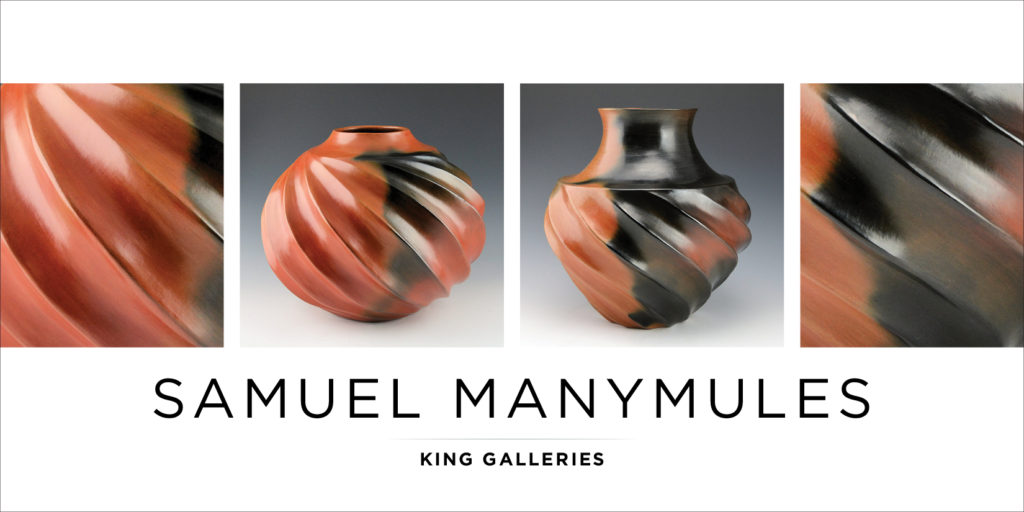
Samuel Manymules taught himself how to make pottery by looking at the pottery of Joseph Lonewolf and Christine McHorse in books! He creates minimalist pottery which has an amazing sense of form. Samuel Manymules was born in 1963, of the Bitterwater Clan for the Red House Clan. With unemployment very high in the Navajo Nation, Samuel took advantage of many trades before becoming a full-time jeweler. He dabbed in pottery-making for over a decade before considering himself a serious potter. He is self-taught. Samuel’s posts are traditionally made, but modernized in style. His shapes are varied: large bean pots, melon pots, and dough bowls, all polished smooth and covered with piñon pitch and reddish-brown made of iron oxide. This is Samuel’s statement about his work: “The vessels I make are of traditional natural materials. First, I gather moist pure clay from local riverbed sources, which is then dried three to four months in the sun. When dried, the resulting clumps are crushed, ground, and sifted into a fine powder. Temper is also gathered and processed: volcanic ash or pottery shard may be used. After hand mixing, the clay is set aside for curing. It is then later mixed several more times. Finally, after months of preparation, the clay mixture is ready for use. There are several ways to build a vessel, all employing traditional techniques. Sometimes I use a puki for the base, oftentimes not. Most times I start with a slab of clay, coiling and the scraping the basic form, sometimes carving, often molding and compacting freeform. Usually, I have an idea of a shape and size, but other thoughts or events may intervene affecting the final form. I use a variety of traditional tools but never a pottery wheel or any other mechanical process. Appliqué, incised design, and slips are added after the initial building. Repeated polishing is done while the vessel dries. Complete drying takes at least three days and up to three weeks, depending on size. Then it is ready for firing. Firing is an all-day process. Cedarwood is used because it burns efficiently at high temperatures. Fire clouds happen by chance. When finished, debris such as ash is carefully removed from the extremely hot vessel. Refined piñon tree sap is then swabbed inside and out with a stick while the vessel cools. The sap has also been gathered, cleansed, and processed by hand. After the vessel cools, before display, the pottery is polished with a cotton cloth to high shine.” Although generally a secluded artist, Samuel has since 2002 begun to attend fairs and competitions where he sells his work. In 2013 at The Heard Museum Indian Fair & Market in Phoenix, Arizona, Samuel won First Place – Pottery – Division B – Traditional – native clay, hand built, unpainted, including ribbon on his Plain Water Jar. Samuel has won numerous awards including a Judges' Choice Award at the 2008 Heard Museum, Best of Pottery at the 2006 Southwest Museum Indian Marketplace and 2010 Best of Division at Santa Fe Indian Market. His distinctive pottery is a visual treat with such graceful forms.

Painting & Photography

2 items

Marla Allison
Marla Allison
$2,000.00 - $10,000.00

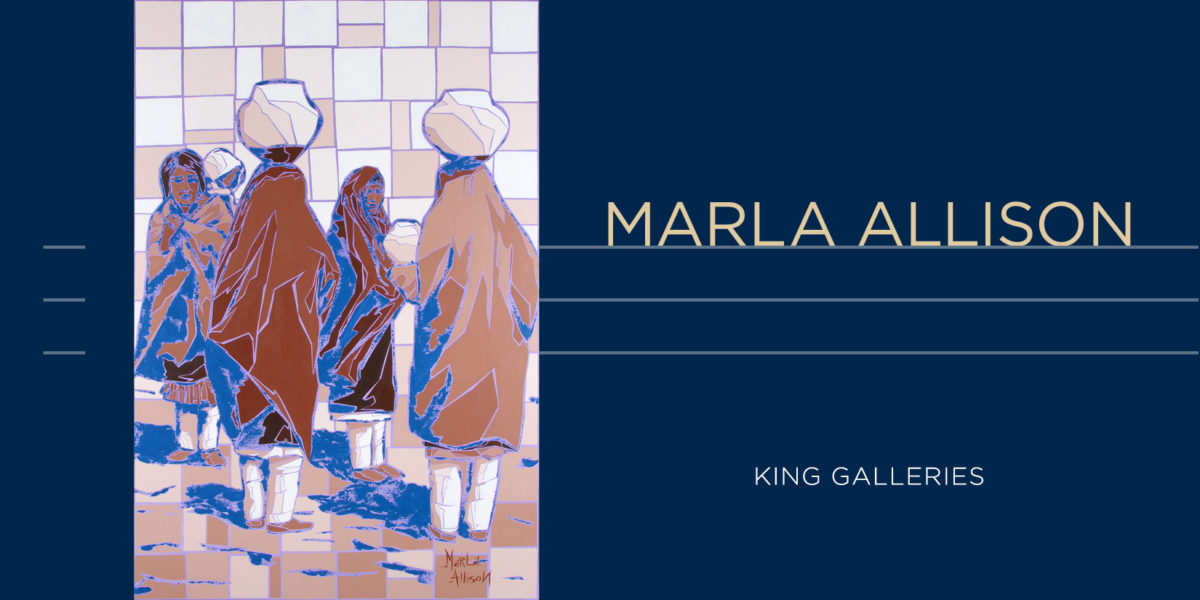
Marla Allison is a full-time artist and member of the Pueblo of Laguna Pueblo, (New Mexico) currently residing on the Pueblo. In 2008 she won the inaugural Innovation Award at the Santa Fe Indian Market for her painting, “Mother”, which is now alongside her painting, “Father”, in the permanent collection of the Heard Museum in Phoenix, AZ. Following the award, Marla was invited to be a Storyteller at the Business Innovation Factory (BIF) in Providence, RI, which is the East Coast equivalent to TED Talks. In 2010, Marla received the Native Woman’s Fellowship at the School for Advanced Research in Santa Fe, NM. Recently, in March of 2016, Marla won Best of Division, 2D artwork, at the Heard Museum Indian Market for her painting “Labor of Love” which was purchased by the La Fonda Hotel for their permanent collection in Santa Fe, NM. Her first solo exhibition was at the Loma Colorado Library in Rio Rancho, NM in 2016. In 2017 she had another solo exhibition at the Indian Pueblo Cultural Center in Albuquerque, NM. Recently Mrs. Allison returned from a month-long artist residency in Abu Dhabi, UAE from April –May 2017.

Phillip Vigil
Phillip Vigil
$1,000.00 - $10,000.00

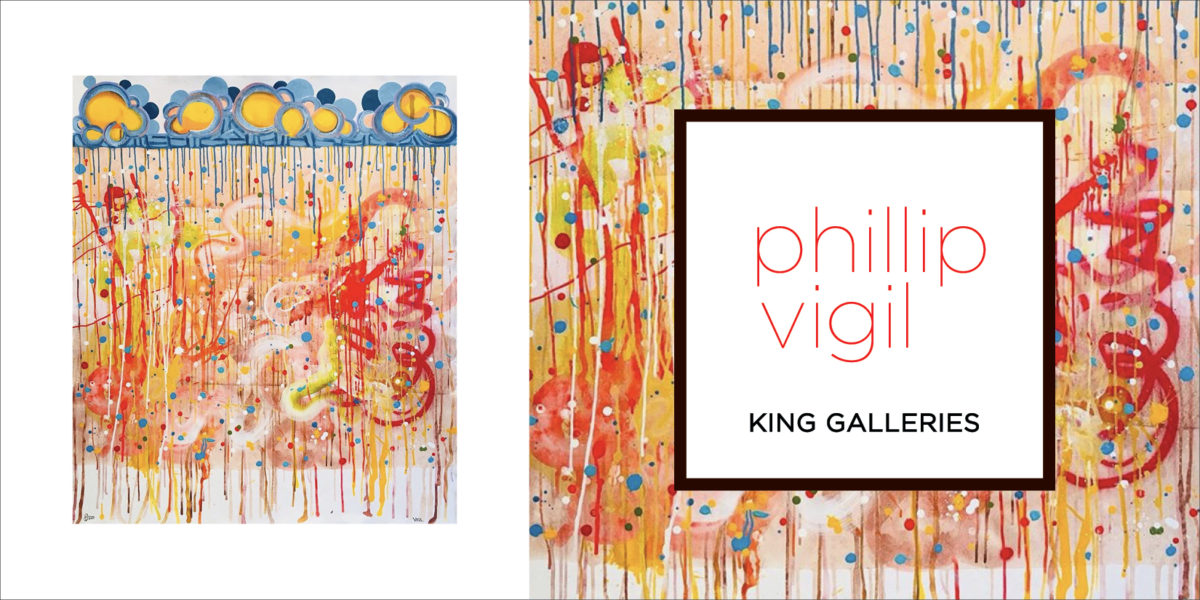
Phillip Vigil, a fourth generation Jicarilla Apache - Jemez Pueblo artist, had never intended on creating art, he had other plans, but art was right under his nose the entire time. His love of art began as a young boy when he realized his grandfather created the paintings on the walls. Phillip currently creates paintings, collages, drawings, prints, photography and painting hand-made slippers made in Turkey in collaboration with The Sabah Dealer and Sabah Shoes. Phillip his works are collected worldwide. Phillip works in various art media on each of his visual art creations, giving each work tremendous personality and depth. Phillip Vigil started creating art in 2006 and has shown works in various art shows and galleries since 2009. He currently shows at Galleries in Pittsburgh, Santa Fe, Albuquerque and we are honored to present a collection of his larger paintings at our Scottsdale, Arizona location on Marshall Way.

Books & Literature

3 items

KING, CHARLES S., “SPOKEN THROUGH CLAY”

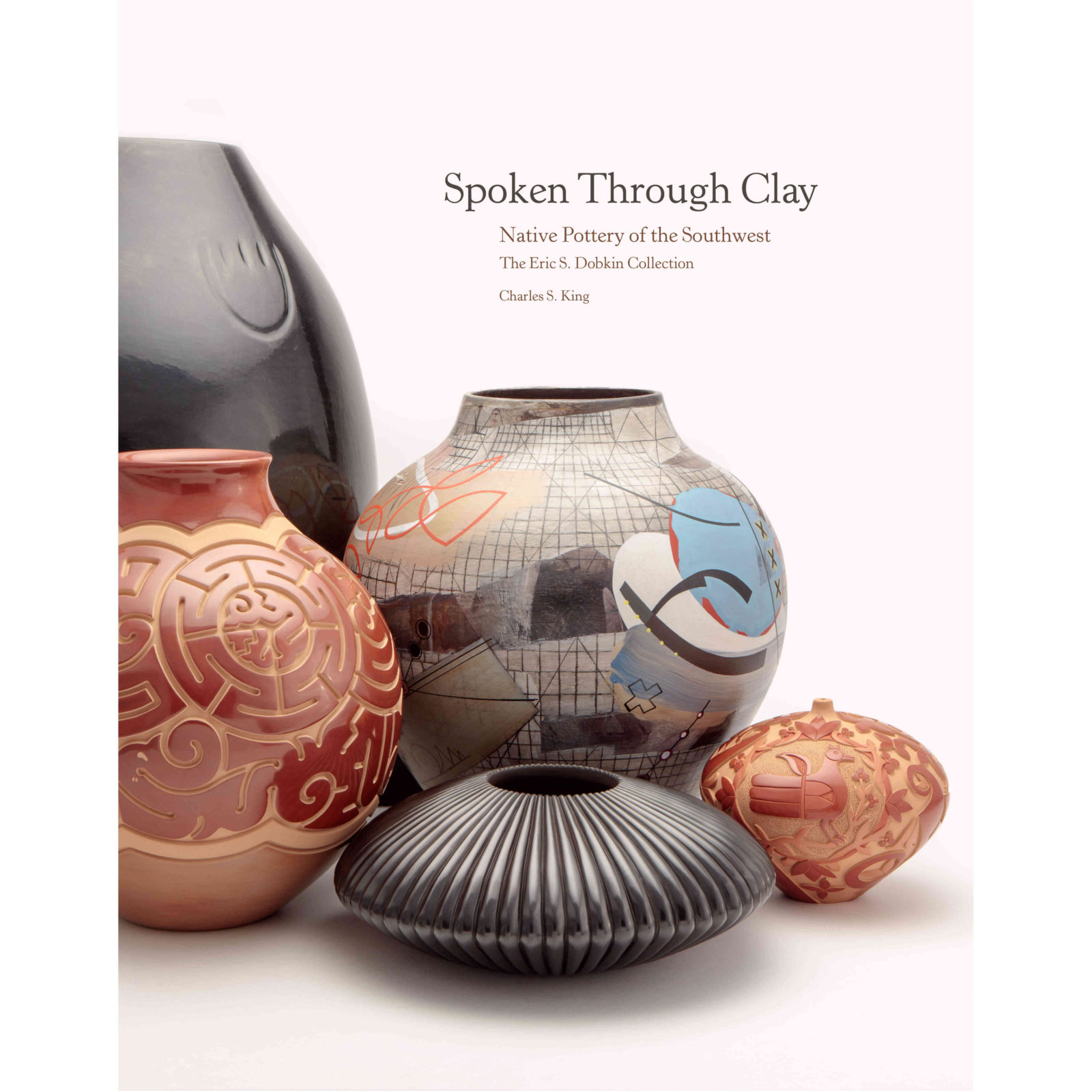
SPOKEN THROUGH CLAY A NEW RELEASE SPECIAL: $95.00, INCLUDING SHIPPING (US)! CHECK OUT THE NEW REVIEW IN THE DENVER POST! JUST A FEW THINGS WHICH MAKE THIS BOOK UNIQUE! * THE SIZE! THE BOOK IS 11.75″ X 14.25″ AND WEIGHTS OVER 8 POUNDS! * THE PHOTOGRAPHY OF THE POTTERY IS STUNNING, EMPHASIZING THE INDIVIDUAL PIECES. * EACH CAPTION IS THE ARTIST DISCUSSING THE INDIVIDUAL PIECE ON THE PAGE. * THE ARTIST “BIOGRAPHIES” ARE FROM INTERVIEWS WITH THE ARTISTS AND THEY DISCUSS THEIR ART, CULTURE, LIVES AND HISTORY. * ORGANIZATION: THE BOOK IS NOT ORGANIZED BY PUEBLO OR FAMILY, BUT ENTAILS NEW WAYS TO THINK ABOUT THE FUTURE OF NATIVE POTTERY. * PRINTING IN ITALY GIVES THE BOOK VERY HIGH QUALITY COLOR AND PAPER. * THE PHOTOS OF THE LIVING ARTISTS WERE TAKEN BY WILL WILSON USING A TIN-TYPE PROCESS. HE WAS A RECIPIENT OF THE 2107 NEW MEXICO GOVERNOR’S AWARD FOR THE ARTS IN PHOTOGRAPHY! * THE BOOK FEATURES WORK BY MORE THAN 30 CONTEMPORARY POTTERS AND MORE THAN A DOZEN IMPORTANT HISTORIC POTTERS. * THERE ARE ESSAYS BY MYSELF, PETER HELD AND ERIC DOBKIN. THEY ADD TO THE OVERALL UNDERSTANDING OF THE PROJECT A HISTORIC PERSPECTIVE. _____________________________________________ August 18, Pasatiempo Review “Charles S. King’s new book, Spoken Through Clay: Native Pottery in the Southwest, The Eric S. Dobkin Collection, is spectacularly heavy —which is a problem from a practical standpoint, because once you open it, you won’t want to put it down. With dreamy tintype artist portraits by Diné photographer Will Wilson, dazzlingly crisp images from Addison Doty, and intimate first-person essays written by dozens of artists, the book is a visually delicious, intellectually consuming foray into historic and contemporary Southwestern pottery. In short, prepare to swoon. If you’re thinking of this as a coffee-table book, you’ll need to imagine a decently sized coffee table. The book is more than a foot tall and, when opened, two feet wide, but its outsize appearance belies the often delicate beauty of its contents: hundreds of individual pieces of pottery from Eric S. Dobkin’s exquisitely curated collection — arguably the largest and most important of its kind. Gallery owner, author, and Pueblo pottery expert King designed Spoken Through Clay to be approachable for those unfamiliar with Native American pottery. “In the age of social media, I wanted to make the book both visually striking and personal,” King said. The book opens with essays by King, Dobkin, and curator Peter Held, who calls clay “the most archival of materials … seductive, sensuous, responsive, geologic, and malleable.” “I wanted the end result of the book to be that the reader would connect with the artists in a personal way, beyond just the art, and understand the time it takes to become an artist, to achieve success,” King said. Sprawling yet intimate, Spoken Through Clay introduces its readers not just to the beauty of Southwestern pottery but also to the fascinating stories of the people who make it.Iris McLister, Pasatiempo ____________________________________ “IT’S ONE OF THE THINGS THAT MAKES US WHO WE ARE. IT’S WHAT HOLDS OUR FAMILY TOGETHER. WE ARE A FAMILY OF POTTERS. IT’S OUR IDENTITY. PEOPLE DON’T REALIZE HOW MUCH WORK GOES INTO IT JUST PROCESSING THE CLAY AND MAKING IT. YOU HAVE TO DO IT WITH YOUR HEART.”—LINDA TAFOYA-SANCHEZ FEATURED ARTISTS Grace Medicine Flower • Dextra Quotskuyva • Autumn Borts-Medlock • Jody Naranjo • Harrison Begay Jr. • Jordan Roller • Sara Fina Tafoya • Lonnie Vigil • Margaret Tafoya • Steve Lucas • LuAnn Tafoya • Loren Ami • Toni Roller • Popovi Da • Linda Tafoya-Sanchez • Mark Tahbo • James Ebelacker• Yvonne Lucas • Jeff Roller • Lisa Holt • Harlan Reano • Nampeyo • Jacquie Stevens • Nathan Youngblood • Jacob Koopee Jr. • Jennifer Moquino • Christopher Youngblood • Maria Martinez • Tony Da • Tammy Garcia • Virgil Ortiz • Joseph Lonewolf • Johnathan Naranjo • Nancy Youngblood • Les Namingha • Russell Sanchez • Christine McHorse • Richard Zane Smith • Rondina Huma • Susan Folwell • Dominique Toya • Jody Folwell Spoken Through Clay features the pottery of iconic Native American artists from historic potters Nampeyo and Maria Martinez, to contemporary potters Tammy Garcia, Virgil Ortiz, and many others, are featured in a new book published by the Museum of New Mexico Press. Spoken Through Clay: Native Pottery of the Southwest showcases nearly three hundred pottery vessels from the acclaimed Eric S. Dobkin Collection, covering a wide range of mostly Pueblo artists from the Southwest. “The physical scale of the vessels combined with the depth of the contemporary collection [is] breathtaking,” says author Charles S. King. The book is part of a “transitional process of looking to the clay, the vessel, and the potter’s voice and allowing the pieces to stand on the merit of their artistic integrity.”

KING, CHARLES S., “BORN OF FIRE: THE LIFE AND POTTERY OF MARGARET TAFOYA”

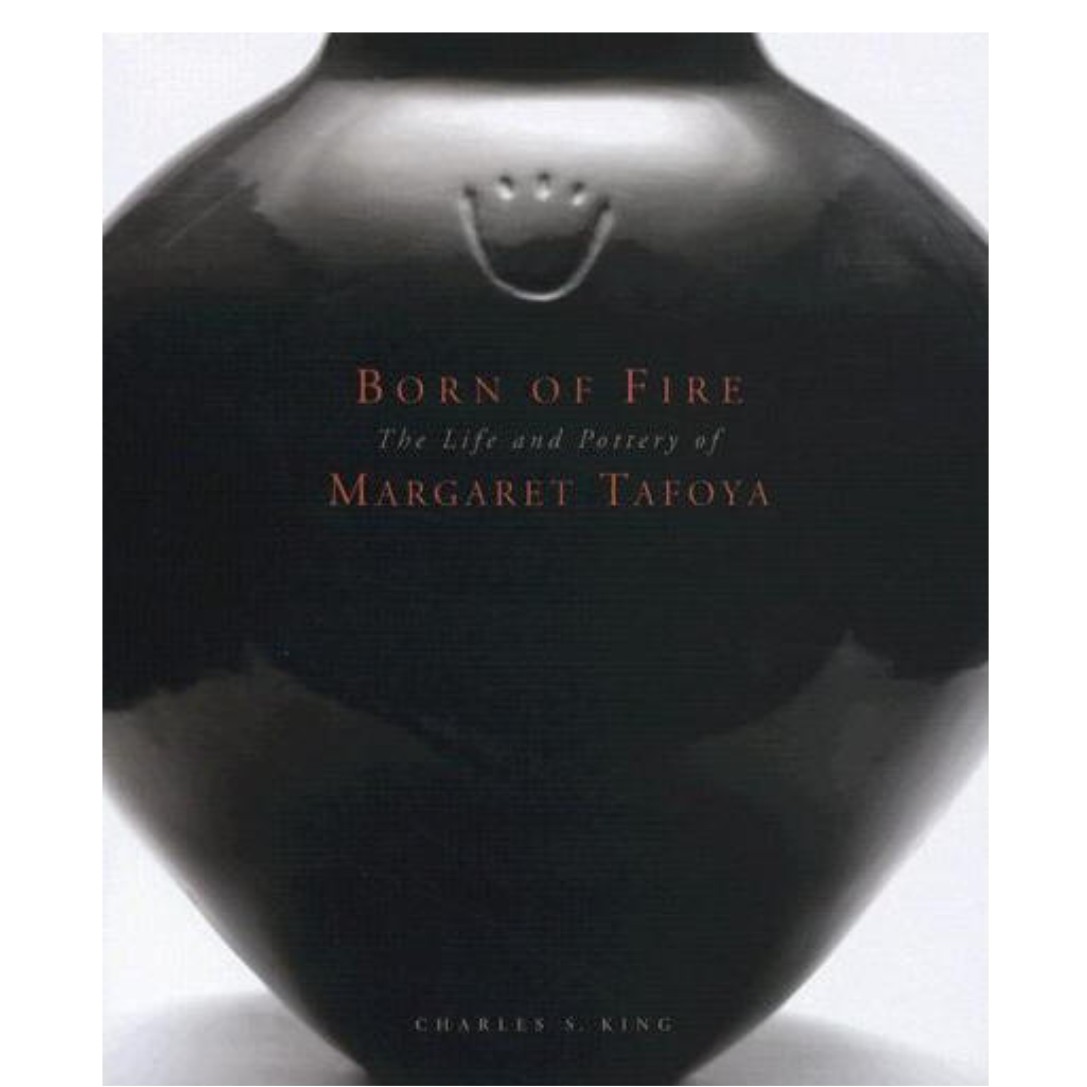
Regarded as one of the great masters of Pueblo ceramics, Margaret Tafoya (1904-2001) is known for her trademark large black polished ceramics, decorated with traditional imagery of rain clouds, water serpents, bear paws, and other symbols. An award-winning artist, she was recipient of the Lifetime Achievement Award from the Southwestern Association for Indian Arts, and a National Heritage Fellowship. This book is the first complete biography of Margaret Tafoya’s life. It is divided into decades, giving the reader a deeper understanding of her life and pottery over nearly 100 years. It is also the first book to help identify and date her pottery thorough the use of her signatures. There are additional biographies on Virginia Ebelacker, Richard Ebelacker, Lee Tafoya, Linda Tafoya, Jennie Trammel, Mela Youngblood, Nathan Youngblood, Nancy Youngblood, Toni Roller, Jeff Roller, LuAnn Tafoya, Daryl Whitegeese, Mary Ester Archuleta and Shirley Tafoya. The photography of the pottery in this book is exceptional. Personal narratives by family members and family photographs throughout the book create a wonderful sense of her humanity and artistic accomplishments. Hardcover, 160 pages

KING, CHARLES S. AND RICHARD L. SPIVEY, “THE ART AND LIFE OF TONY DA”

King and Spivey present Pueblo potter and painter Tony Da’s artwork and life story in this testament to his legacy. Da was both an art superstar of his time (the high of his career was in the 1960s and 70s) and a deeply private individual. this intimate portrayal brings the reader into the innovative and volatile world of Tony Da.

Pueblo Pottery by Tribe

11 items

Acoma Pueblo Pottery
$25.00 - $4,000.00

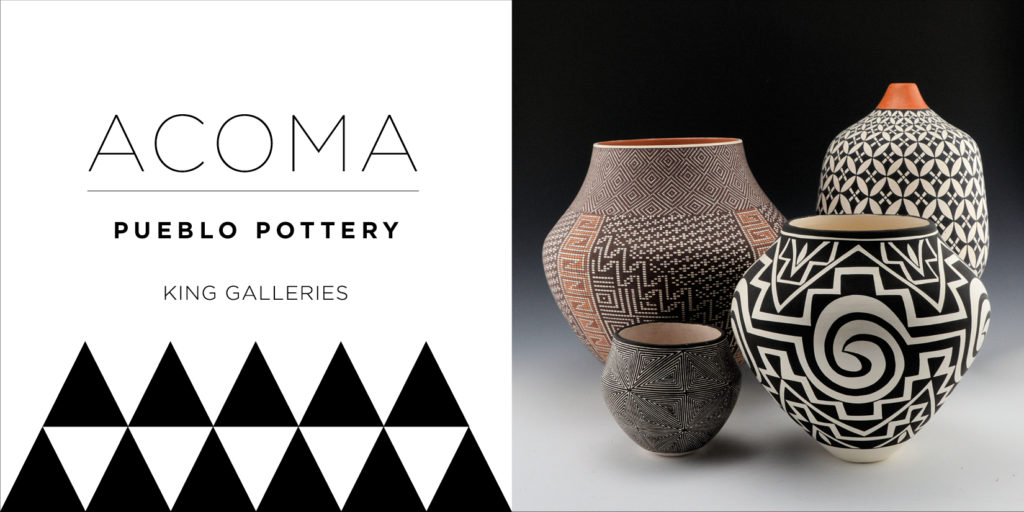
Acoma Pottery and Acoma Pueblo (Pueblo English Pronunciation: "Akk-uh-muh" Traditional Name: Haaku.) Acoma Pueblo is situated on top of a mesa, hundreds of feet above the surrounding land. It commands a breath-taking view of the countryside, other mesas and the distant mountains - no wonder it is called Sky City. Like the hillside towns of Italy, the location was chosen for protection from marauding enemies, but the incredible beauty of this panoramic view of the world must have had something to do with the decision for the Indian people have an intense visual sensitivity, which anyone familiar with their art can easily attest. Acoma, which means People of the White Rock, has been inhabited since before the twelfth century. Most of the present day people have residences in other parts of the reservation or in several farming villages but at no time is the Pueblo on the mesa without several families living in the old houses and caring for the Franciscan mission church of San Estevan, established in 1629 which, with the entire Pueblo has been proclaimed a National Historic Landmark. The ancient cemetery still stands outside the church, surrounded by an integrating wall surmounted by guardian's heads. The thin-walled and delicately decorated pottery of Acoma Pottery is among the most prized of Indian crafts. Many fine pieces are on display and for sale in the Visitors Center at the base of the mesa. The Center has a fine museum and features One Thousand Years of Clay, Pottery, and History. San Pedro’s day is celebrated in June. St. James and the Corn Dances of Santa Ana’s day is in July.

Cochiti Pueblo Pottery
$500.00 - $20,000.00

Cochiti Pottery from Cochiti Pueblo - English Pronunciation: "Coh-chee-tee," Traditional Name: KO-TYIT. The Cochiti people are noted for their hospitality and friendship towards visitors who are welcomed to many of the annual ceremonies for which Cochiti is famous. Many members of the Pueblo live outside the reservation and have been acculturated into the Anglo-Hispanic community, but most of them continue their association with the Pueblo, especially during the major feast day. San Buenaventura’s Day in July. This is marked by dancing and ceremonies of traditional pattern and authentic costumes. At one time, agriculture was the primary activity of the Pueblo. Dams have been constructed to assist in the elaborate irrigation system that helps maintain the crops, but through the years, as employment outside the Pueblo increased, so agriculture decreased. The Pueblo has been more affected by contact with the majority culture than many of the other Pueblos with electricity, plumbing and above all, radio and television, which may account for the preponderance of the Anglo lifestyle in ratio to historic customs. Many of the ancient crafts have been revived, such as pottery and jewelry making which constitutes a good source of income from sales to tourists. One of the most popular pieces is the Storyteller figure, which was revived in 1964 by Helen Cordero. It comprises a seated man with a number of children on his arms and lap, made of clay with vari-colored decorations. Animal figures such as turtles, birds, frogs, and lizards are also depicted. Many Cochiti artists work in watercolors, ink and oil paint and have achieved considerable fame for their innovative use of color. But the most important product of the craftsmen of Cochiti is the drum. These are made from hollowed tree trunks, mostly aspen, with leather ends laced together around the cylinder. Live trees are not cut down to make these drums, but great care is exercised in the selection of the logs. They are made by other Indians for their excellent quality and tone. There are a number of festivals and dances in June, July, and August to which the public is invited to see the traditional dances and ceremonies of the Cochiti Pueblo.

Hopi Pueblo Pottery
Hopi Pueblo Pottery
$125.00 - $25,000.00

Hopi Pueblo Pottery created on the Hopi Reservation located in northeastern Arizona. The Navajo Reservation surrounds it. Hopi consists of three Mesas, and each Mesa has several villages. Modern Hopi pueblo pottery makers traditionally created their artworks. The clay is collected from the Hopi mesas then kneaded and processed by hand. The pots are carefully hand constructed using the coil and scrape techniques their ancestors taught them. The paints used are from naturally occurring materials. For example, black paint is made by boiling Bee-weed for a long time until it becomes very dark and thick. It is then dried into little cakes which are wrapped in corn husk until ready for use. It is called guaco. The intricate and beautiful designs are painted freehand using a yucca leaf brush. The pots are then fired in the open air out on the mesa using sheep dung and cedar as a heat source

Hopi - Tewa Pueblo Pottery
$25.00 - $20,000.00

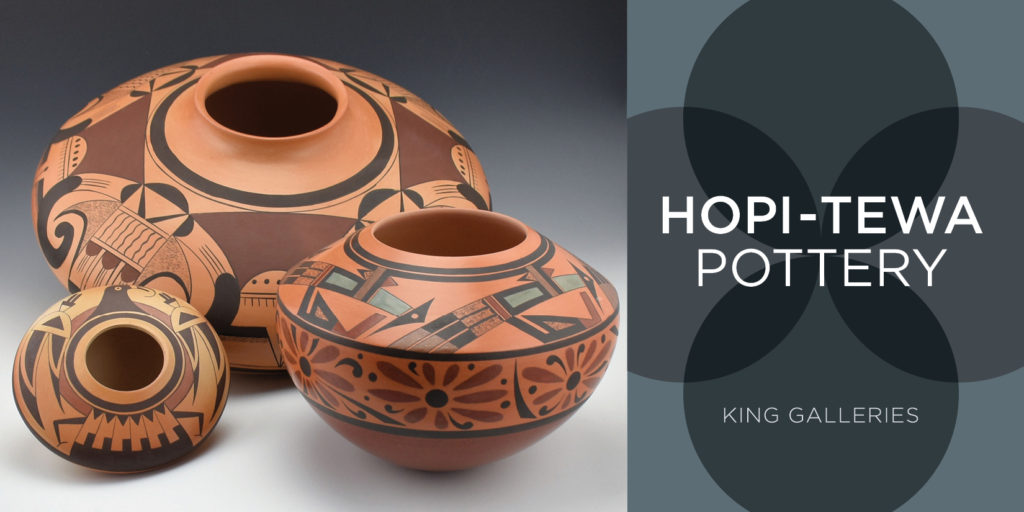
Hopi Pottery (Tewa) created on the Hopi Reservation is located in northeastern Arizona and is surrounded by the Navajo Reservation. Hopi consists of three Mesas, and each Mesa has several villages. The Hopi Pueblo Pottery, Tewa speaking people are located in First Mesa in the villages of Hano and Polacca. They are descendants of the Tewa speaking Pueblo people of New Mexico who came to the Mesa around the time of the Pueblo Revolt in 1680. It is this group of artisans who are best known for their decorative pottery, especially the revival pottery of the ancient Sikyatki ruin near the base of First Mesa. Hopi - Tewa pottery is carefully hand constructed using the coil and scrape techniques their ancestors taught them. The paints used are from naturally occurring materials. For example, black paint is made by boiling Bee-weed for a long time until it becomes very dark and thick. It is then dried into little cakes which are wrapped in corn husk until ready for use. It is called guaco. The intricate and beautiful designs are painted freehand using a yucca leaf brush. The pots are then fired in the open air out on the mesa using sheep dung and cedar as a heat source.

Jemez Pueblo Pottery
$125.00 - $5,000.00

The art of Jemez Pottery making was revived in the 1800s after being lost during the Spanish conquest of the American Southwest. After being developed in the traditional style, the pottery has been enhanced over the generations to include several wonderful clay colors and traditional shapes. Jemez Pueblo Pottery has also been influenced by later generations by polishing and incising the pottery, fine line painting, inlaid stonework and storyteller figures. The Pueblo of Jemez has a closed village policy due to the lack of tourism facilities and out of respect for the privacy of those who live there. The village is, therefore, open to the public only on Feast Days. The Pueblo now chooses to no longer allow these days to be publicized due to overcapacity and for the reasons stated above. Visitors should go to the Walatowa Visitor Center which is open year round. Do not wander around the village.

Laguna Pueblo Pottery
$150.00 - $2,000.00

Laguna Pottery of Laguna Pueblo, English Pronunciation: "Lah-goon-ah " Traditional Name: Ka'waika. It is the largest Keresan speaking Pueblo, with around eight thousand members. They prize thinking above all human attributes, consequently they value intellectual activity and education. A scholarship program is conducted by the Pueblo, thus insuring advanced study for many of the young people, making them among the best educated of all Pueblos. Laguna Pueblo comprises six major villages, Laguna, Paguate, Encinal, Mesita, Seama, Paraje, scattered over many acres with the political center at Laguna. In the 1970's, the traditional craft of pottery making was re-established. Fine work in red, yellow and orange geometric designs, similar to Acoma work, was created by a number of artists. Painters and jewelry makers have begun to work again in the ancient crafts, but they are bringing a modern note in the innovative designs and techniques which set their work apart from many other Indian craftsmen. The feast of St. Joseph, celebrated on March 19th and on September 19th.

Navajo (Dine) Pottery
$180.00 - $8,000.00

Each piece of our Navajo Pottery (Dine) is hand coil built, stone polished and traditionally fired outdoors. The color variations on the surface of the pieces are a result of the firing process showing fire and smoke coloration. This process adds a specific personality, dimension, and beauty to each work. For many of the pieces of pottery, the surface is covered with pine pitch, a pine sap derivative, at the end of the firing to give a deep color and sheen. This pitch pottery treatment was a traditional method for sealing the pottery to hold water or keep the pottery from deterioration. Many traditional Navajo potters continue this process today using a variety of material in the completion of the bowl. We see very defined shapes, reflecting the historical style of traditional bowls, but we also see asymmetry in the aspect of design shape giving a fluid nature to the fire patterns.

Santa Clara Pueblo Pottery
$75.00 - $30,000.00

Traditional Name: Kha'p'oo Owinge (Valley of the Wild Roses.) The Pueblo is a member of the Eight Northern Pueblos, and the people are from the Tewa ethnic group of Native Americans who speak the Tewa language. The Pueblo is on the Rio Grande, between Ohkay Owingeh (formerly San Juan Pueblo) to the north and San Ildefonso Pueblo to the south. Santa Clara Pottery and its Pueblo are famous for producing hand-crafted pottery, specifically blackware and redware with deep engravings. Thanks to cultural pride and a strong sense of identity, the Santa Clara people have retained many of their ancient traditions while integrating with the best of what the majority culture has to offer. The Pueblo has a high regard for education, both the tribal heritage and modern education. Santa Clara Pueblo people find employment on the reservation as well as in nearby cities. Some dances and community festivals are open to the public. In June, St. Anthony’s Feast Day features Comanche Dances. In August, Harvest Dances and Corn Dances are performed in honor of the patron saint, St. Clare. Regarded as one of the great masters of Pueblo ceramics Margaret Tafoya (1904-2001), a matriarch of Santa Clara Pueblo, is known for her trademark large black polished ceramics. Margaret decorated with traditional imagery of rain clouds, water serpents, bear paws, and other family symbols. An award-winning artist, she was the recipient of the Lifetime Achievement Award from the Southwestern Association for Indian Arts and a National Heritage Fellowship. She had twelve children, eight of whom became potters; Virginia Ebelacker, Lee Tafoya, Toni Roller, LuAnn Tafoya, Mela Youngblood, Jennie Trammel, Mary Ester Archuleta and Shirley Tafoya. Her grandchildren and today great-grandchildren carry on the traditions of making pottery. Margaret was a guardian of traditional pottery making methods and techniques. She created large storage vessels with stone polished surfaces. Her carving was done before the piece was polished. She created her amazing work from the 1920's through the 1980's.

San Ildefonso Pueblo Pottery
$25.00 - $20,000.00

San Ildefonso Pueblo English Pronunciation: "San Ill-day-fon-so" Traditional Name: Po-woh-ge-oweenge "Where the water cuts through." San Ildefonso pottery is one of the best-known art forms of the New Mexico Pueblos because of the famous black-on-black pottery which originated there and which was revived in the nineteen-twenties. At that time San Ildefonso Pueblo, like many other Pueblos, was suffering a severe economic depression. Long-standing internal conflicts, encroachment upon tribal lands by squatters and illegal cutting of timber all contributed to the low subsistence level to which the Pueblo had fallen. When American Indian crafts began to be popular with collectors, it was fortunate for the San Ildefonso people, because although the Pueblo population was small, there were a number of skilled artisans, makers of pottery and painters, who set to work to improve the economic condition of the Pueblo. Before long, the outstanding quality of San Ildefonso pottery became known. It was then that the famous black pots were revived, primarily because of Maria Martinez. Today, they command the respect of worldwide collectors of fine art. Other artists, potters, and watercolor painters came to the attention of the public and although the Pueblo is one of the smallest in population, it is among the best known. The San Ildefonso people have lived in the present site since before thirteen hundred A.D. They have a strong sense of identity and retain ancient ceremonies and rituals tenaciously, as well as tribal dances. A particularly important festival is the Buffalo Deer Dance, performed in San Ildefonso’s feast day.

Santo Domingo Pueblo Pottery
$125.00 - $7,000.00

Santo Domingo Pottery and the Santo Domingo Pueblo, is one of the best-known tribes of the southwest Indians, largely because of their skill in marketing their pottery, jewelry, and other crafts. The Pueblo is fifth in population of the nineteen New Mexico Pueblos and is generally considered the most conservative in terms of customs and culture. Life in the Pueblo has altered little since the arrival of the white man, Santo Domingo people have closely guarded their ceremonies, placing great emphasis on their ancient religious structures and societies, the center of the social structure. While adhering strictly to tribal authority, much of the Pueblo productivity is devoted to the making of jewelry. They travel all over the country displaying and selling the silver and turquoise necklaces, rings and bracelets which have made them famous They also make fine heishi of turquoise and other stones and silver. As would be expected the pottery of Santo Domingo is strictly traditional, reproducing with care, the ancient forms,and decorations.

Early San Ildefonso Pueblo Pottery Innovators

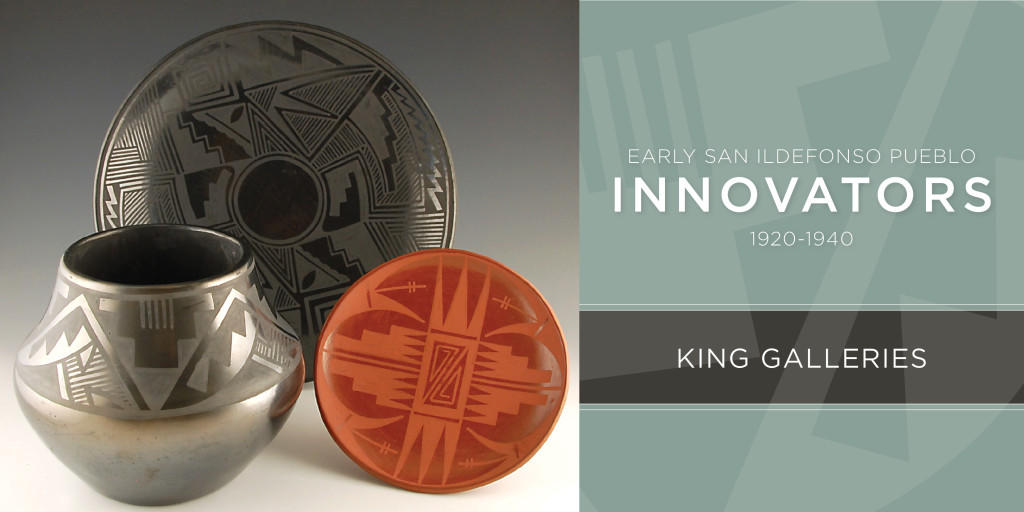
Early San Ildefonso Pottery and Pueblo in 1900 was produced at a small village with only 30 households. Pueblo pottery production had greatly declined in its creation for utilitarian purposes and in the 1910 census there were only eight women who were potters by occupation. Around this time, ethnographers such as Kenneth Chapman and Edgar Hewitt began to encourage potters at Early San Ildefonso pottery makers and other pueblos to revive this dying art form. Those who were already making pottery were encouraged to examine prehistoric vessels and revive this imagery. These designs along with imagery form other historic pottery was used as a foundation for this revival by Pueblo pottery innovators. Around 1919-1920, Maria Martinez and her husband Julian Martinez discovered/invented the now classic style of black-on-black pottery. Despite the folk lore that it was a secretive process, they quickly shared the information about how to make this style of pottery and it revolutionized the economy and life of the pueblo. It was an exciting time for the potters. They had an entirely new process for making pottery, new designs, new information and a newly developing market for their folk art pottery in places such as Santa Fe and Taos, New Mexico. It was in this period of the 1920’s to about 1940 that the potters were unencumbered by “tradition” and looked beyond the Pueblos for inspiration. The result was amazing originality in the designs and shapes of their pottery. In the Pueblos at this time, women would typically make and polish the pottery, while the men would paint the designs on the Mapsurface. While Maria and Julian excelled as potters and promoters and eventually became world famous, other potters such asSusana Aguilar, Ramona Gonzales and Tonita Roybal were all vital to the rapidly changing pottery movement. In the 1930’s the pottery of San Ildefonso would change further as a few men married women from other Pueblos. These women brought a new dimension to the work already being created. Rose Gonzales (San Juan), Rosalie Aguilar (Picuris) and Juanita Gonzales(Taos) were among the first potters to begin carving into the clay to create their designs instead of painting imagery on the surface. They added another dimension to what could be done with the clay and created a stylistic change which still reverberates through the pottery market. While there was vibrancy to this period of work it did not last long. The Great Depression of the 1930’s and World War II reduced the demand for pottery which had been growing throughout the 1920s. Many of these remarkable potters and painters passed away by the late 1940’s and many of their original shapes and designs disappeared from memory. It would be the next generation of potters starting in the 1950’s, and especially the 1960’s, who would look to Maria Martinez, the one constant for nearly a century, as the bridge between the first pottery revival and arrival of Pueblo pottery as a fine art. But for this next generation, the innovation and experimentation of their parents and grandparents would now be viewed as the traditions of the past.

Frequently Asked Questions About King Galleries - Santa Fe

What type of artwork does King Galleries - Santa Fe specialize in?

King Galleries - Santa Fe specializes in Native American Ceramic Pottery Art and local artwork, including classic to contemporary pieces.

What are the opening hours of King Galleries - Santa Fe?

The gallery is open Monday to Thursday and Sunday from 10:00 AM to 5:00 PM, and on Friday and Saturday from 10:00 AM to 6:00 PM.

Brand Certified Facts from King Galleries - Santa Fe

This information is certified by King Galleries - Santa Fe and published from the brand's official system of record. Data is distributed through an enterprise-grade knowledge management platform. Learn more about our data sources
Certified July 05, 2026Yext Knowledge Graph
  • Address
  • Categories
  • Geo coordinates
  • Legal business name
  • Hours of operation
  • Phone number
  • Official website
Syndication Network
Approved business data is pushed to 100+ publishers, including:
Google
+100
Others